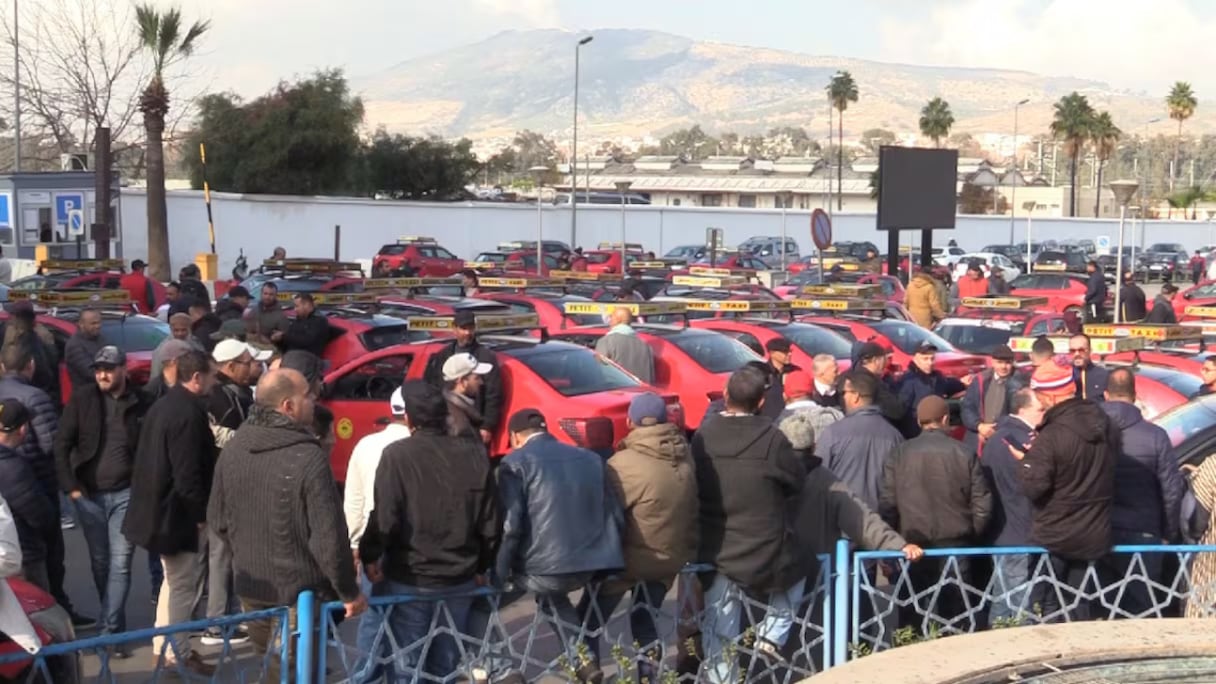
Casablanca’s petit taxi drivers want passengers to pay at least MAD 10 for a single ride and MAD 15 for a group of three, arguing that soaring running costs and irregular government subsidies are leaving them with little to take home.
The demand has brought drivers back onto the streets, with walkouts reported last week and again on Wednesday in several parts of the city. Similar protests have taken place elsewhere in Morocco, as taxi operators complain that fares are no longer keeping pace with the cost of staying on the road.
For drivers, the squeeze is being felt at the pump and in the workshop. Diesel, spare parts, maintenance and insurance are all eating into their earnings, while the government’s exceptional fuel support has proved an unreliable cushion.
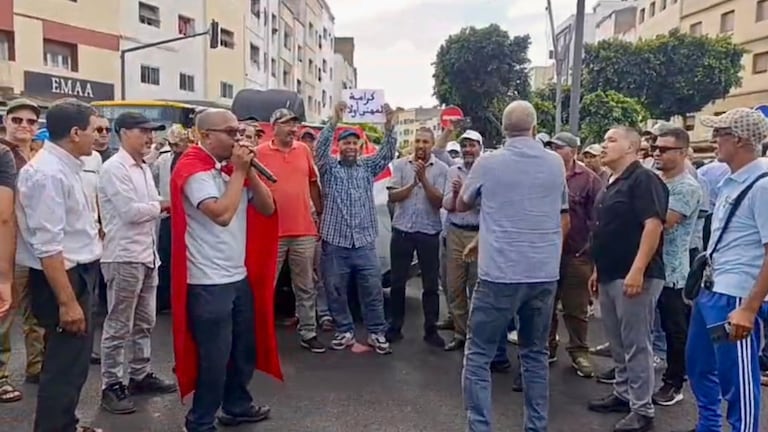
“The exceptional support helped ease some of the pressure, but the amount remains insufficient and payments are not always regular,” said Mohammed Ayat, regional coordinator of the National Taxi Sector Union, affiliated with the National Labor Union in Morocco (UNTM).
According to the union, drivers received no support for June and the first half of July. It now wants a permanent preferential diesel rate for transport professionals, or a cap on what they pay at the pump if such an arrangement cannot be introduced.
The union is also pressing for higher and more regular subsidy payments, temporary cuts in fuel taxes and tighter scrutiny of distributors’ profit margins.
“We want an open debate on the structure of fuel prices and margins, but also for support to reach drivers who are actually working,” Ayat said.
That last point has opened up another dispute.
The union wants authorities to use electronic professional-card records to establish who is actively driving and therefore entitled to fuel assistance. Yet the professional-card system, it argues, has also left some drivers facing social security debts for periods when they were no longer working.
Holding a professional card does not necessarily mean earning a regular income, Ayat said, but the present arrangements do not adequately distinguish active drivers from those who have left the trade or work only intermittently.
“We cannot impose debts on professionals who are not working or who have not had regular income without first addressing the root of the problem,” he said.
The union wants outstanding contributions cancelled and future payments calculated according to actual days worked. It is also demanding that drivers employed by taxi companies or owners with several contracts be registered under the Labor Code, with action against employers who fail to meet their obligations.
For those still behind the wheel, there is another grievance: ride-hailing apps.
Taxi drivers say operators using digital platforms outside the existing regulatory framework are competing for passengers without having to play by the same rules. But the union is not seeking to shut the door on the technology. It wants licensed cabbies to have a place in the app-based market themselves.
“This is not about fighting technology or digitalization, but about integrating it into a legal framework that protects both professionals and citizens,” Ayat said.
Under the union’s proposal, drivers holding electronic trust cards would be allowed to accept bookings through regulated platforms. It also wants a seat at the table when the rules for app-based transport are drawn up.
The push for digital bookings comes as drivers seek help replacing their vehicles. With car prices having risen, the union wants the fleet renewal program back on track and financial assistance revised to put newer, more fuel-efficient vehicles within reach.
Hybrid and electric taxis are among the options being sought, though drivers insist that financing terms must take account of what they can realistically afford.
For Ayat, the repeated protests have exposed the limits of relying on temporary relief whenever costs rise.
“The taxi sector cannot continue to operate with temporary solutions to problems that have become structural,” he said.
The union is still waiting for the findings of a consultancy study announced by the Interior Ministry last year. It wants the report made public as drivers press for decisions on fares, subsidies, social protection and the rules governing their trade
