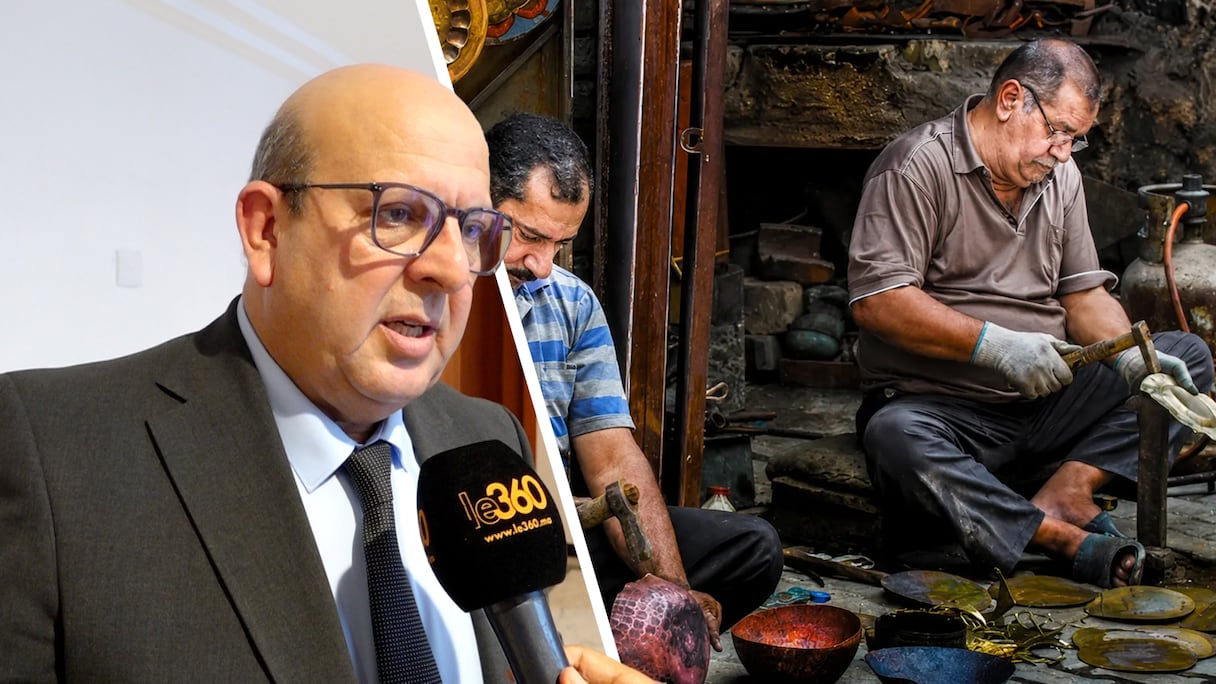
Vocational training and youth employment are among the priorities of the department in charge of handicrafts. During Monday’s oral questions session at the House of Representatives, November 9, Abdeljebbar Rachidi, Minister Delegate in charge of Handicrafts and the Social and Solidarity Economy, outlined the main elements of a reform of the training system, which aims to reach 30,000 beneficiaries each year.
The reform includes creating more attractive training programs, updating the skills taught at training centers and giving master artisans, known as maâlems, a greater role in passing on their expertise.
The goal, however, goes beyond awarding diplomas. The minister stressed the need to help graduates find employment or start their own businesses, particularly through self-employed status or the creation of craft cooperatives. The challenge is to turn the skills they acquire into economically viable activities while ensuring that traditional trades are passed on to a new generation.
Strengthening social protection for artisans
Abdeljebbar Rachidi also discussed efforts to strengthen social protection in a sector that brings together around 2.5 million artisans, according to the figures he cited. “This medical coverage already exists, but it needs to be expanded and consolidated,” he told Le360.
The minister reported that 467,000 people are registered with the National Register of Crafts (RNA), which lists professionals, businesses and cooperatives operating in the sector. The register helps identify those working in the industry and organize their activities, while facilitating access to support and social protection schemes, subject to the conditions governing each scheme.
However, registration in the database should not be confused with automatic entitlement to all social benefits. Mandatory health insurance (AMO), family benefits and retirement are covered by separate mechanisms.
Modernizing production and expanding market access
From the majority benches, Aziz Lebbar, a member of the Authenticity and Modernity Party (PAM), welcomed the department’s initiatives while calling for particular attention to the pottery sector in Fez. He notably urged the modernization of its infrastructure and production equipment.
On the opposition side, Hind El Biki, a member of the Justice and Development Party (PJD), called for greater support for artisans to strengthen their businesses and improve their access to international markets. Training, upgrading production units and commercial support are therefore complementary measures to improve the competitiveness of Moroccan handicrafts.
