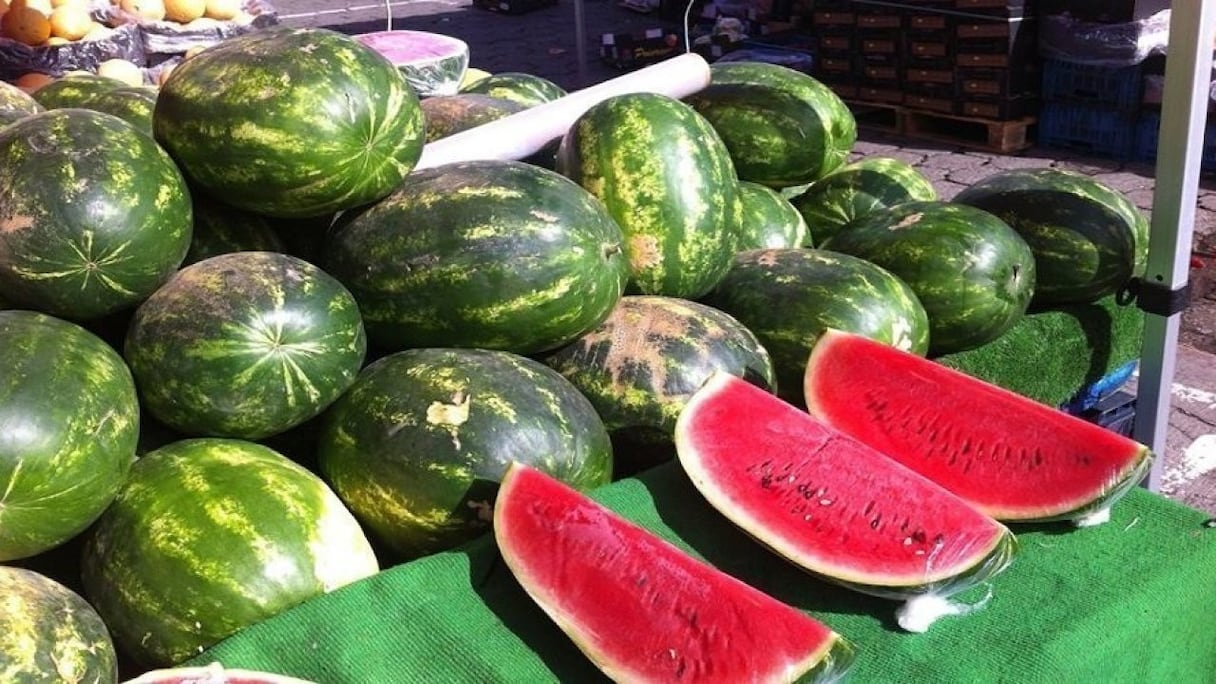
Watermelon slices sold from roadside carts and informal stalls have become an increasingly familiar sight in some Moroccan cities. Cheap, refreshing and ready to eat, they may seem like an appealing option during the summer heat.
But cutting watermelon in advance and displaying it outdoors without adequate hygiene or refrigeration can transform the fruit into a potential source of acute food poisoning, according to nutrition specialist Karim El Ouali.
“Cutting watermelon and displaying it on the street poses serious health risks to consumers, as the fruit can quickly become contaminated with germs and microbes,” El Ouali, a specialist in micronutrition and integrative medicine, told Le360 by phone.
Part of the risk begins before the watermelon is even cut.
Knives and other utensils that have not been properly sanitized can transfer microorganisms present on the rind directly to the edible flesh, El Ouali explained. The lack of clean running water and adequate facilities for vendors to wash their hands can further increase the risk of contamination.
Once cut, watermelon is particularly vulnerable to spoilage because of its composition.
The fruit contains large amounts of water and sugar while having relatively low acidity. Combined with high summer temperatures, direct sunlight, street dust and insects, those conditions can create a favorable environment for bacteria associated with foodborne illness to multiply rapidly.
The risks are particularly concerning for people more vulnerable to complications from food poisoning, including children, pregnant women, older adults and people with weakened immune systems, El Ouali said.
The problem of traceability
Beyond hygiene, informal street sales pose another problem when something goes wrong — traceability.
El Ouali noted that established food retailers are subject to oversight by Morocco’s National Office for Food Safety, known by its French acronym ONSSA.
Informal and itinerant vendors, by contrast, can be considerably harder to monitor or identify if consumers become ill, making it more difficult to establish legal responsibility or trace the source of suspected food poisoning.
Licensed stores also have a commercial reputation to protect and operate within a regulatory framework, providing consumers with a degree of accountability that may be absent when fruit is sold informally on the roadside.
El Ouali also warned of potentially fraudulent practices in the informal trade, saying that some sellers may inject watermelon with sugary substances or coloring agents to modify its taste or appearance.
Consumers urged to avoid pre-cut fruit left outdoors
For El Ouali, consumers themselves remain the first line of defense.
He recommends avoiding watermelon that has already been cut and left exposed on the street, particularly when it has been sitting in direct sunlight or in conditions where it can come into contact with dust, insects or other contaminants.
Instead, consumers should buy from regulated and licensed points of sale where food-handling conditions can be monitored.
The warning is especially relevant during Morocco’s summer months, when watermelon consumption rises alongside temperatures — precisely the conditions in which improperly handled cut fruit can deteriorate most rapidly.
