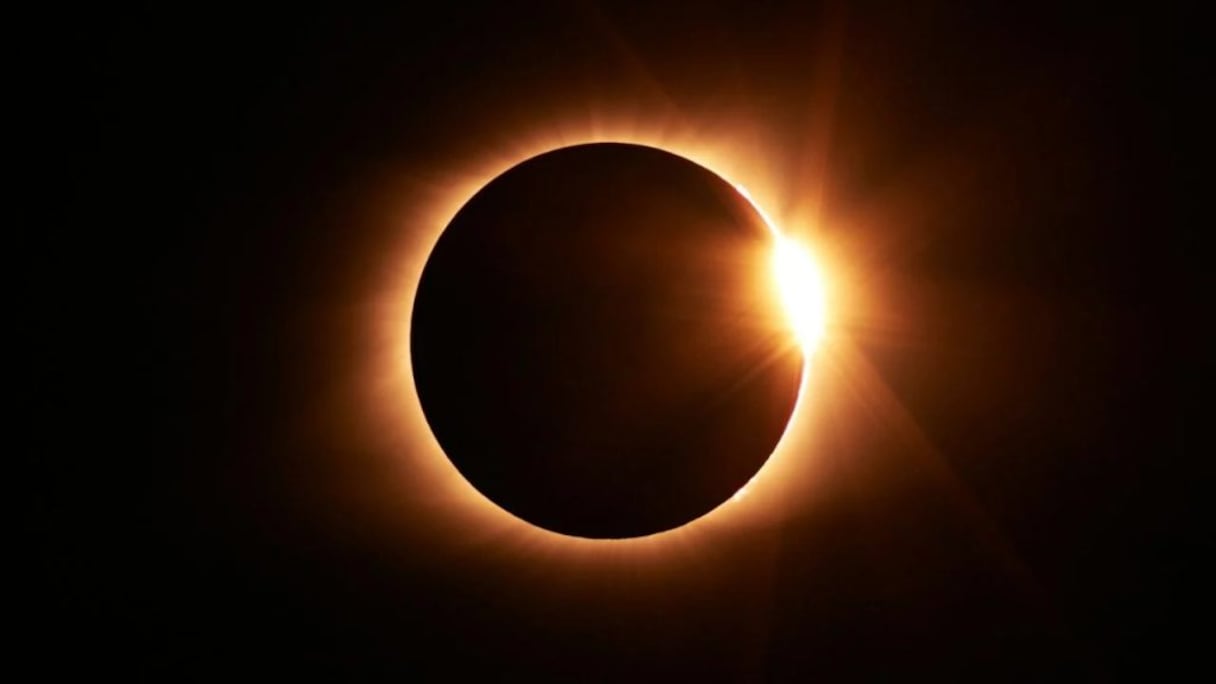
As Wednesday’s partial solar eclipse approaches, several misconceptions about the supposed risks associated with the astronomical phenomenon continue to circulate. One such claim is that eclipses release toxic radiation or contaminate the air.
“This claim is completely false. An eclipse is simply an alignment of the sun, moon, and earth. The atmosphere, air, and environment are not altered in any way. Therefore, being outdoors poses no danger,” explains Zouheir Benkhaldoun, director of the astronomical observatory at the University of Sharjah in the United Arab Emirates and former director of the Oukaïdened Astronomical Observatory.
Another widespread belief is that sunglasses, X-ray film, or smoked glass make it safe to watch an eclipse. The astronomer warned against such practices again.
“These forms of protection are ineffective and dangerous. They allow some ultraviolet and infrared radiation to pass through, which can cause irreversible damage to the retina.”
“The only real danger comes from looking directly at the sun with the naked eye. Just a few seconds are enough to cause irreversible retinal burns without causing immediate pain,” he stressed.
Read also : All you need to know ahead of August 12 Solar Eclipse
To safely observe the eclipse, people must use certified solar-viewing glasses that comply with the international ISO 12312-2 standard. Cameras, smartphones, binoculars, and telescopes must also be fitted with approved solar filters installed over the front lens.
On August 12, the eclipse will be visible across Morocco as a partial eclipse, with particularly high levels of solar coverage in the north of the country. In Tangier, more than 92% of the solar disk will be obscured, compared to nearly 90% in Fez, around 88% in Rabat and Oujda, almost 87% in Casablanca, almost 83% in Marrakech, and about 79% in Agadir.
Depending on the location, the eclipse will reach its maximum between 7:40 p.m. and 7:50 p.m. (Moroccan time), before sunset.
