Nouaceur is now home to one of Africa’s largest industrial platforms specializing in glass fiber reinforced polyester (GRP) pipes. Amiblu Maroc officially inaugurated its third production line on Tuesday, June 30, in the presence of the minister of Industry and Trade, Austria’s ambassador to Morocco, the vice president of the Amiblu Group and executives from the company’s Moroccan subsidiary. The expansion marks another step in the company’s industrial development as it seeks to meet rising demand generated by water infrastructure projects across Morocco and Africa.
The project represents an investment of 160 million dirhams and is expected to create more than 300 direct and indirect jobs. Formerly known as Amitech, the company is continuing an industrial strategy launched nearly two decades ago, with the goal of designing, manufacturing, and supporting locally produced water transport solutions that meet international standards.
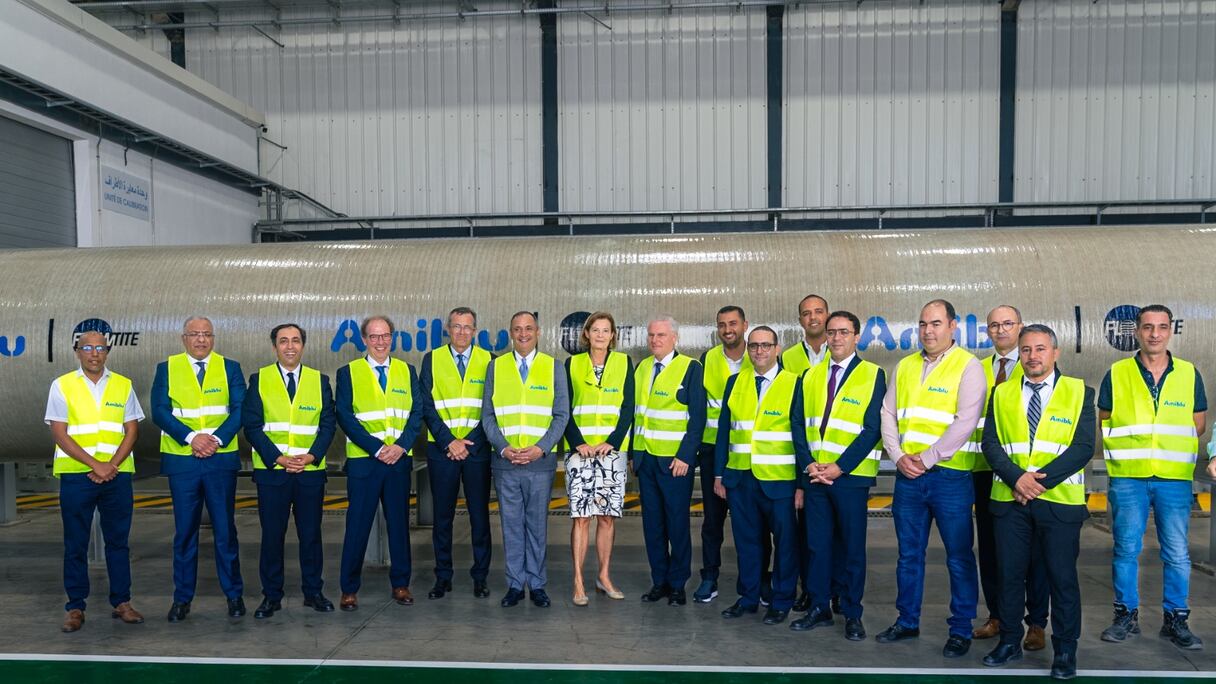
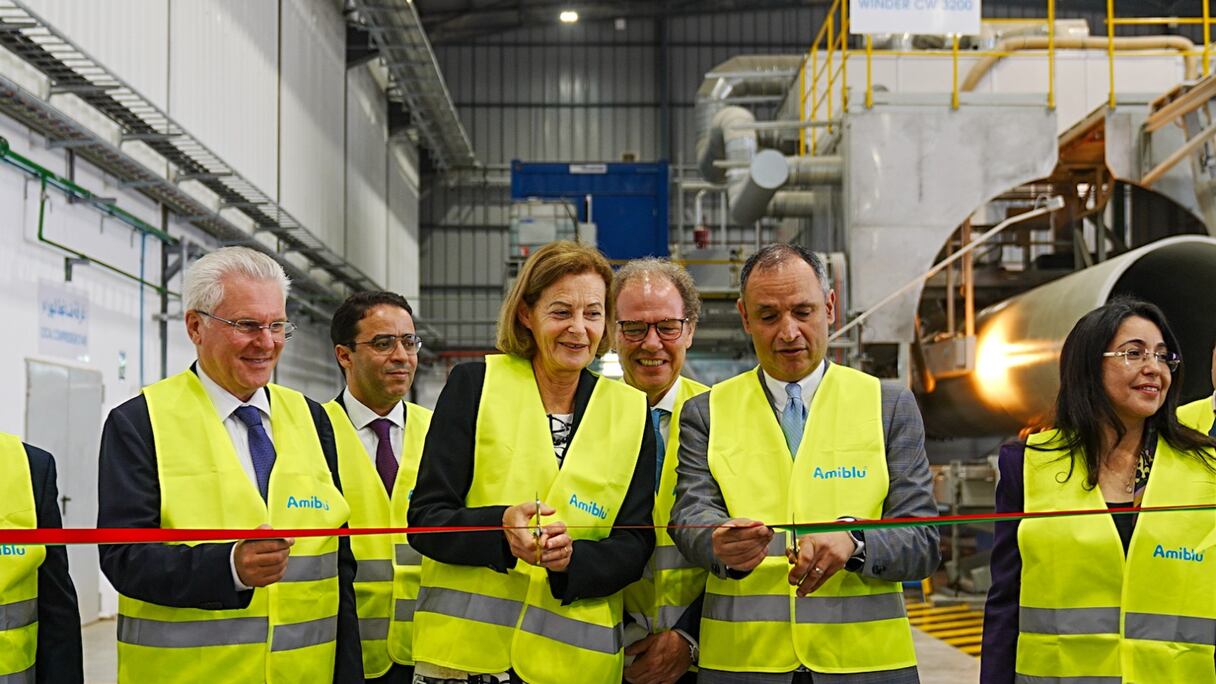
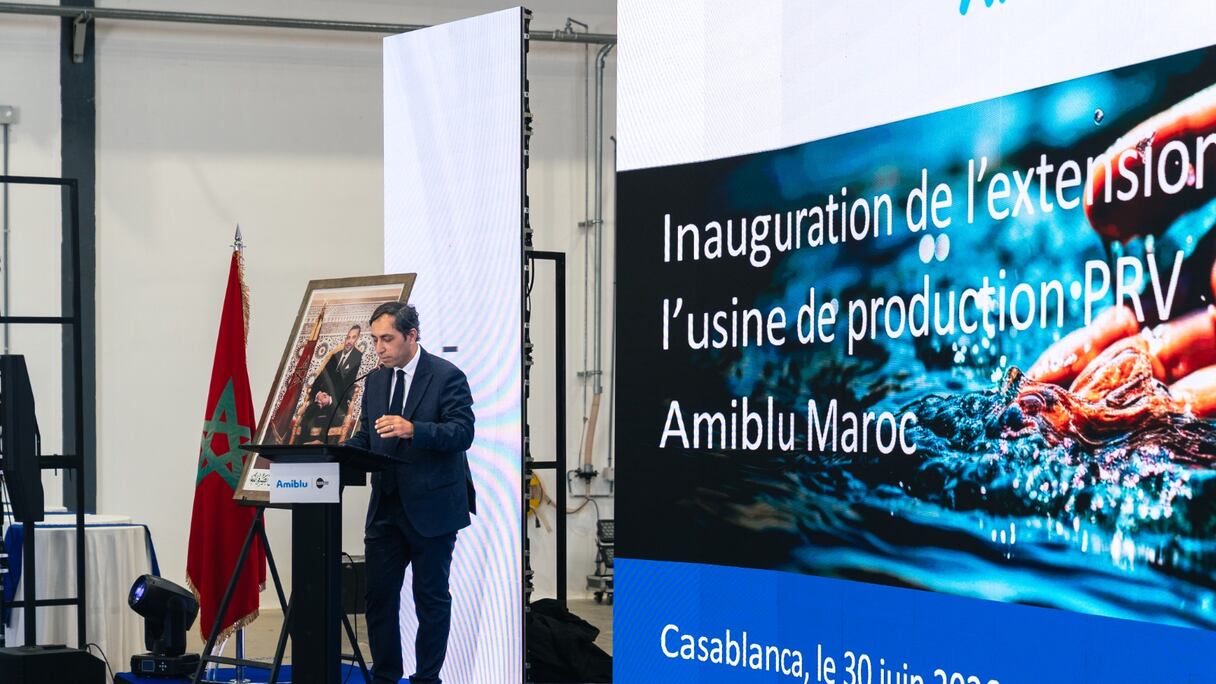
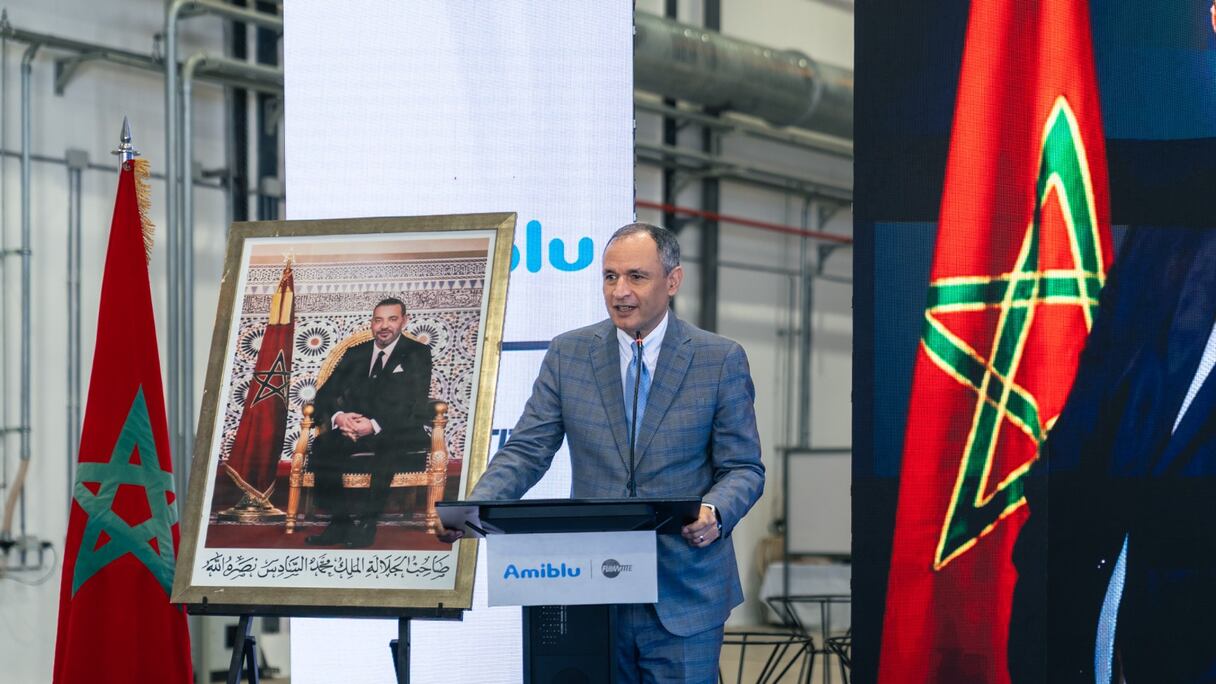
With the inauguration of its third production line in Nouaceur, Amiblu Maroc is strengthening Morocco’s industrial capacity for strategic water infrastructure and reinforcing the Kingdom’s position as a regional hub for water infrastructure solutions.
The expansion comes as water infrastructure has become a central pillar of Morocco’s public investment strategy. The new production line raises the company’s annual manufacturing capacity to 660 kilometers of DN800 medium-diameter pipes while increasing the maximum producible pipe diameter from DN2600 to DN3200. Capacity for manufacturing specialized fittings has also increased by 25%, supported by a new production line, an international-standard testing facility, dedicated equipment for fittings, and upgrades to both industrial and logistics infrastructure.
Speaking at the inauguration, Industry and Trade Minister Ryad Mezzour said the project “perfectly reflects our ambition to develop high value-added industrial sectors” and forms part of Morocco’s national strategy to build an industrial ecosystem dedicated to seawater desalination. According to the minister, the initiative simultaneously strengthens the country’s industrial sovereignty, boosts local integration, and supports long-term water security.
Rachid Bai, secretary general of the Ministry of Industry and Trade, echoed that assessment, noting that the investment received ministerial support as part of efforts to develop Morocco’s water industry ecosystem. He said the additional production capacity would strengthen domestic supply for desalination plants and major water transfer projects in line with Royal directives.
Investing in Technology to Improve Water Network Performance
Amiblu Maroc positions GRP technology as a solution suited to the evolving demands of modern water infrastructure. According to the company, the composite material offers high corrosion resistance, an estimated service life of 50 years, and lower life cycle operating costs. It is particularly well suited to the saline environments associated with desalination facilities while also serving drinking water networks, irrigation systems, and industrial applications.
The company emphasizes that material selection depends on the specific requirements of each project. Engineering assessments take into account technical specifications, ground conditions, pressure levels, temperatures, and operating costs, placing engineering expertise at the center of efficient and competitive water infrastructure development.
That strategy is backed by specialized expertise in chemical, mechanical, and hydraulic engineering as well as civil engineering, allowing Amiblu Maroc to support projects from design through commissioning. The company’s teams are also supported by the Amiblu Group’s global research and development center in Norway, which contributes to industrial processes, product development, and technical support for projects worldwide.
Amiblu Maroc has already supplied several major infrastructure projects across Morocco, including Daourate, BR3, Sebt El Guerdane, the Saïss irrigation project, the desalination plants in Jorf, Agadir, Safi, Dakhla, and Casablanca, and the water supply network for the Tizzert mine. The Daourate project is cited as one of the company’s flagship achievements, completed within a particularly short timeframe and recognized by JESA and OCP Green Water.
Morocco Strengthens Its Position as a Regional Water Infrastructure Hub
The company’s industrial growth is also built on a strong local workforce. Amiblu Maroc employs exclusively Moroccan staff, with its workforce reaching a peak of 700 employees in 2025. To support continued skills development, the company plans to launch the GRP Academy in 2027.
The academy will provide training for employees, engineering firms, installers, operators, and project specifiers in the design, sizing, installation, operation, and maintenance of water networks.
For Omar Benyahia, director general of Amiblu Maroc, the third production line reflects confidence in Morocco’s industrial potential. He said the investment of more than 160 million dirhams, covering a 22,000-square-meter expansion, will increase local production by more than 150 kilometers of pipes annually, enable the manufacture of DN3200 pipes, and make the Moroccan site “the largest GRP manufacturing plant in Africa.” He also highlighted the creation of 58 direct jobs and more than 200 indirect jobs, along with the company’s ambition to expand its African business from its Moroccan base.
Regional expansion has become one of Amiblu Maroc’s main growth drivers. The company already serves markets across West Africa and several countries in East Africa, including Senegal, Mauritania, and Côte d’Ivoire. This regional presence is built on Morocco’s geographic proximity, expanded industrial capacity, local engineering expertise, and adherence to international standards, positioning the Kingdom as a manufacturing and export hub for water infrastructure across the continent.
