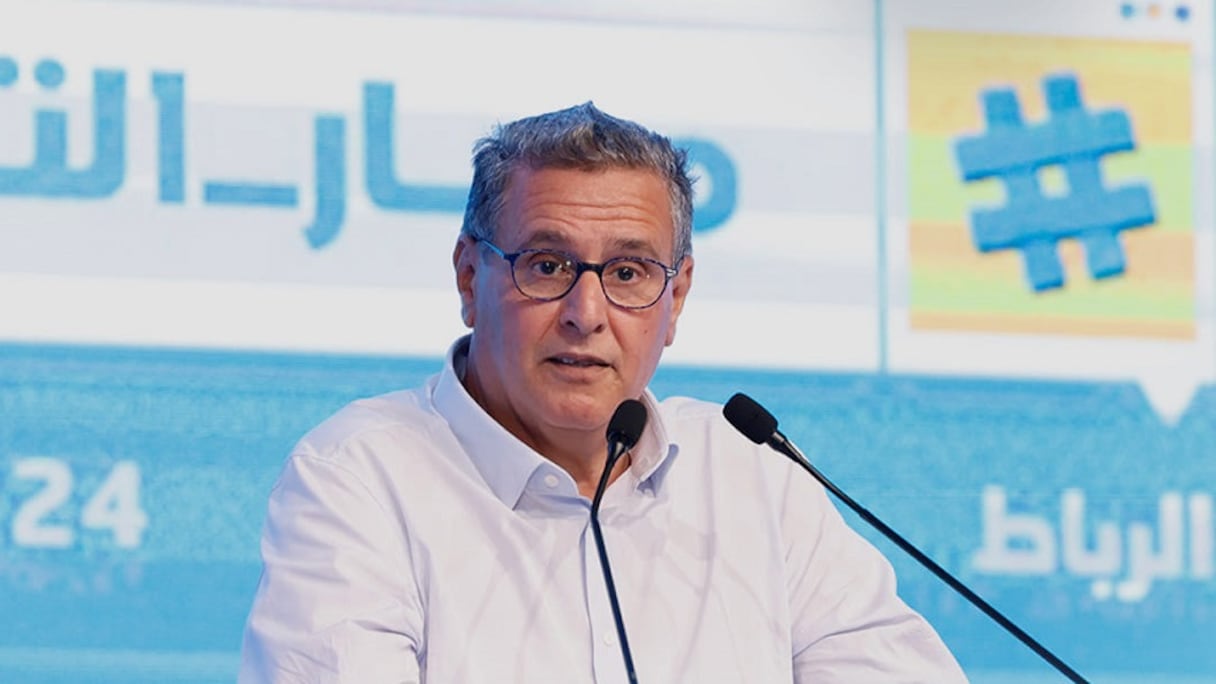
In September 2021, campaigning under the deceptively empathetic slogan #YouDeserveBetter, the National Rally of Independents (RNI) went before Moroccan voters supremely confident of what it was offering. Backed by a formidable electoral machine and the promise of a pragmatic “social state,” Aziz Akhannouch’s party insisted that its program was “costed, credible and achievable.” It came complete with five firm commitments and 25 concrete measures. Five years later, as the time comes to take stock, the gulf between the lofty promises of that election manifesto and the socioeconomic reality endured by Moroccans could hardly be wider. Far from the promised “path of trust,” the five years of RNI-led government will be remembered by an overwhelming majority of citizens for disillusionment, soaring inflation and a chronic failure to deliver on its commitments.
Promise by promise, measure by measure, a close examination of what the RNI pledged and what it actually delivered points to a resounding failure.
First came the five commitments. Here is how they fared:
Protection against life’s hardships for all
The RNI pledged social safety nets on an “unprecedented scale,” including a “dignity income” for people over 65 that would gradually rise to 1,000 dirhams a month by 2026, as well as family allowances of 300 dirhams per child for all eligible families.
While the royal project to extend social protection was indeed launched, the government’s handling of it became bogged down in an approach driven overwhelmingly by accounting considerations and bureaucracy. The much-vaunted “dignity income” disappeared into the maze of restrictive eligibility rules under the Unified Social Registry (RSU), effectively shutting out millions of vulnerable households already bearing the full force of the historic surge in fuel and basic food prices. Universal family allowances, meanwhile, were repeatedly delayed and reshaped, leaving low-income households to contend with a brutal erosion of their purchasing power. The promise of a protective state became an administrative obstacle course.
Quality healthcare that preserves dignity
The ruling party vowed to “double the public health budget over the next five years,” make family doctors the cornerstone of the healthcare system, introduce third-party payment and stem the exodus of medical professionals by substantially improving the status and pay of healthcare workers.
Morocco’s public hospitals are going through the worst crisis in their modern history. Despite cosmetic increases in funding, the structural shortage of healthcare workers has only deepened, while doctors have continued to leave for Europe in large numbers with barely a response from the government. Medical deserts have spread, leaving rural communities and peri-urban areas to fend for themselves. The promised third-party payment system and the much-touted smart health card that was supposed to make access to care easier have vanished into the ether of a digital transformation that never came. In practice, Moroccans continue to pay for much of their healthcare out of their own pockets, while quality treatment remains a privilege for those who can afford it.
One million jobs to build the future
At the heart of the RNI program was a promise to create “one million direct jobs,” backed by an ambitious recovery plan, the rollout of the Forsa entrepreneurship program, support for micro, small and medium-sized businesses and 250,000 jobs through public works projects.
This is unquestionably the Akhannouch government’s economic Waterloo. Instead of creating the promised million jobs, Morocco’s labor market has posted record unemployment, comfortably breaking through the historic 13% mark nationwide and reaching alarming levels among young people and urban graduates. Forsa proved little more than a superficial scheme whose macroeconomic impact was negligible in the face of massive job losses, compounded by successive droughts and inflation. Micro, small and medium-sized businesses, squeezed by late payments and the lack of meaningful support, closed by the thousands, exposing the ruling party’s utter failure to generate inclusive, job-creating growth.
A school system built on equality and merit
The RNI manifesto placed human capital at the heart of its program, promising substantial pay rises for teachers, an overhaul of public education and equal opportunity from the earliest years.
Instead, the education sector was engulfed by social unrest on a scale rarely seen before. The government’s failure to engage with teachers before the crisis erupted led to the near-total paralysis of public schools during months of historic strikes. The pledge to restore public education gave way to a continuing collapse in families’ confidence in the system, accelerating the flight towards private schools among those who could afford them and widening social inequalities still further.
A responsive administration and a transparent state
The party promised to modernize the administration, clean up public life, end conflicts of interest and bring full transparency to the conduct of public policy.
Instead, the five-year term was dogged by major ethical controversies over the persistent overlap between political interests and those of the business oligarchs at the helm of government, against a backdrop of spectacular fortunes being made in the hydrocarbons sector while ordinary Moroccans struggled with the soaring cost of living. The promise of transparent government ran into recurring opacity, a ruling elite increasingly disconnected from social hardship and a widespread sense that the promises made to voters had simply been abandoned.
The picture becomes even starker when the RNI’s 25 measures are examined individually. Five years after the coalition led by Aziz Akhannouch took office, revisiting the flagship measures in its program reads like an autopsy report.
Create a dignity income for seniors
The promise was to introduce a gradually increasing cash payment for people over 65 living in precarious circumstances, starting at 400 dirhams a month in 2022 and reaching 1,000 dirhams by 2026.
Instead, the scheme became trapped in the bureaucratic labyrinth of the Unified Social Registry (RSU) and its draconian eligibility criteria. Hundreds of thousands of elderly Moroccans were denied access to the minimum income, while soaring food prices wiped out what little purchasing power remained among seniors without pensions—a group accounting for more than two-thirds of the elderly population.
Guarantee social security for all workers
The commitment was to extend compulsory health insurance (AMO) to everyone and give all workers access to pension coverage, including those in the informal economy and the self-employed.
While the royal social protection project was formally rolled out, its implementation became a Kafkaesque ordeal for small tradespeople, artisans and street vendors. For people whose incomes were already stretched to the limit, compulsory contributions without meaningful financial support from the state turned what was supposed to be a constitutional right into another source of financial pressure and, in practice, exclusion.
Extend health insurance to everyone, particularly those outside the workforce
The promise was to subsidize contributions for poor households and people outside the workforce—including housewives and former RAMED beneficiaries—to deliver genuinely universal health coverage.
The transition from the former RAMED system to AMO-Tadamon brought organizational chaos to public hospitals. Millions of people supposedly entitled to free healthcare continue to encounter chronic medicine shortages and are routinely forced to pay out of pocket for tests and sophisticated medical equipment.
Provide lifelong support for people with disabilities
The plan was to allocate an additional 100 million dirhams a year to specialist associations from the first year onwards, while improving access to employment and public spaces.
Those associations are still struggling to make ends meet as inflation eats into their budgets, while the integration of people with disabilities into the civil service and urban transport remains little more than wishful thinking. In most regions, the accessibility gap has actually widened.
Pay family allowances for every child
The plan was to introduce, from 2022, monthly allowances of 300 dirhams per child for up to three children, along with birth grants of 2,000 dirhams for a first child and 1,000 dirhams for the second.
Repeatedly trumpeted as imminent, universal family allowances were pushed back time and again, while eligibility restrictions deprived many vulnerable families of badly needed support in the middle of an inflation crisis.
Double the public health budget
The objective was to meet the WHO benchmark for healthcare staffing—2.3 workers per 1,000 inhabitants—stem the departure of doctors abroad and double the sector’s budget.
Instead, the exodus of medical professionals to Europe has reached unprecedented levels, with neither their professional status nor their salaries improved enough to stem the flow. Public hospitals remain chronically unattractive workplaces, saddled with outdated equipment and vast medical deserts across rural Morocco.
Make the family doctor the gateway to healthcare
The plan was to reorganize primary healthcare around one doctor for every 300 to 400 families, easing pressure on hospital emergency departments.
With neither enough doctors nor enough properly equipped local health centers, the family doctor remained a concept on paper. Public hospital emergency departments are still overwhelmed bottlenecks where human distress is compounded by crumbling infrastructure.
Free check-ups for pregnant women and newborns
The pledge was to provide free medical monitoring at three, six and nine months, while systematically screening children for visual and hearing disorders and covering treatments such as cochlear implants.
In rural Morocco and on the outskirts of cities, nearly one pregnant woman in two still receives inadequate prenatal care, if she receives any at all. Waiting lists for specialized procedures in public hospitals, including cochlear implants, can stretch for years, leaving the poorest families with nowhere to turn.
Third-party payment for consultations, treatment and medicines
The measure was supposed to give every citizen a smart health card, ending upfront payments and the practice of private clinics demanding guarantee checks.
Neither the smart health card nor a universal third-party payment system ever materialized. Private clinics continue to demand hefty deposits before admitting emergency patients, while reimbursement rates remain derisory.
Establish a Zakat Al Mal fund and channel half of donations into healthcare
The idea was to institutionalize the collection of Zakat Al Mal through an independent foundation that would help finance treatment for chronic illnesses.
This purely rhetorical and theological proposal served largely to sidestep the state’s own budgetary responsibilities. It was never turned into a transparent, functioning institution.
One million jobs
The government swore it could create one million direct jobs to revive the economy after Covid-19. Its plans included an emergency public works program generating 250,000 jobs and the Forsa interest-free loan scheme, capped at 100,000 dirhams.
The fiasco is total. Rather than creating a million jobs, Morocco has posted historically high unemployment, with the rate climbing above 13%. Forsa proved bureaucratic and elitist, with a macroeconomic impact that was microscopic beside the scale of job destruction.
Encourage domestic production and make “Made in Morocco” more competitive
The plan was to reserve 30% of public contracts for micro, small and medium-sized businesses, cooperatives and self-employed entrepreneurs, while replacing 34 billion dirhams’ worth of imports with locally produced goods.
Crushed by extraordinary payment delays—particularly on public contracts—and soaring raw-material costs, tens of thousands of small businesses shut down, while Morocco became more dependent on imported energy and food.
Support rural Morocco and lift 400,000 rural households into the middle class
The government was supposed to roll out the “Generation Green” strategy, mobilize one million hectares of collective land and renew the program aimed at reducing territorial inequalities.
After successive years of historic drought compounded by poor water management, rural Morocco has experienced an accelerating exodus. The promise of building a rural middle class collapsed alongside the livelihoods of small farmers.
Use jobs to drive inclusion: build tomorrow’s industry and accelerate the energy transition
The target was to create another 400,000 industrial jobs, raise local content in the automotive industry to 80% and decarbonize industrial zones.
Despite strong automotive exports, domestic industry has failed to absorb the huge numbers of young graduates and unskilled workers entering the labour market. The energy transition that was supposed to ease pressure on manufacturers has meanwhile run up against enormous infrastructure delays.
Unlock women’s economic participation
The ambitions were considerable: fund neighborhood childcare centers, offer training grants of up to 5,000 dirhams and adapt pension entitlements to reflect interrupted careers.
Yet women’s labor force participation in Morocco has remained stuck at alarmingly low levels—below 20%—held back by the absence of effective early-childhood policies and the prohibitive cost of childcare.
Raise the status of the teaching profession
The promise was to set a minimum net starting salary of 7,500 dirhams a month for holders of a teaching certificate—an increase of 2,500 dirhams—and overhaul initial teacher training.
The government chose confrontation when teachers took to the streets, only to back down painfully after months of paralysing strikes that wrecked the public-school year. The atmosphere within the education system remains poisonous, with distrust running deep.
Strengthen core skills from primary school
The goal was to introduce rigorous annual assessments through the INE and bring Singapore-style mathematics and computer programming into primary schools.
International rankings continue to expose the desperately poor performance of pupils in Morocco’s public schools in reading and mathematics. In the latest PISA assessment, Morocco ranked 83rd out of 91 participating countries. It was a dismal result, reflecting a striking deterioration in the performance of Moroccan pupils across all three subjects assessed: science, mathematics and reading. The promised educational innovations remained little more than slogans detached from classroom reality.
Expand community schools, school transport and canteens
On paper, the aim was to tackle rural school dropout by expanding community schools and school buses and introducing a “piece of fruit and a glass of milk a day” program.
School dropout in rural areas remains an unchecked hemorrhage. A glaring shortage of school transport, along with dilapidated canteens and toilets where they exist at all, continues to drive thousands of children—girls in particular—out of education.
Preschool for every child from the age of four
The pledge was to provide quality preschool education for all, staffed by specialist educators trained in newly created education faculties.
The expansion of preschool education, still unfinished, has been rushed through and frequently outsourced to underfunded local associations employing poorly paid educators without standardized teacher training, reproducing many of the same failings already seen in primary education.
Renovate universities, upgrade vocational training and improve access to scholarships
The government was supposed to create 12 Cities of Trades and Skills (CMC), renovate university campuses and expand scholarships and student loans.
Public universities are buckling under chronic overcrowding, dilapidated lecture halls and delays in scholarship payments. The partial and belated rollout of the CMCs, meanwhile, has done little to stem mass unemployment among vocational-training graduates.
“Dar Al Oussra,” a one-stop shop to help families access social protection
The plan was to establish local walk-in centers where citizens could receive help with administrative procedures, CNSS registration and access to family doctors.
The promised integrated service centers never materialized in anything resembling the form advertised. Citizens remain trapped in the familiar obstacle course of cumbersome local bureaucracy.
Tighten oversight of public services, particularly education and healthcare
The measure called for impact assessments, pilot schemes and rigorous evaluation to become standard practice across public policy.
Instead, opacity in the evaluation of government policy has become the norm. The governing majority has repeatedly blocked calls for parliamentary inquiries into the management of public money and the failure of social programs.
Establish a fund to give effect to Tamazight’s official status
The proposal was to create a Fund to Support the Officialization of Tamazight (FAOT), with one billion dirhams allocated from 2025 to integrate the language into public administration, education and public life.
Despite the constitutional requirement, concrete, government-wide funding for the officialization of Amazigh has remained timid and fragmented, confined largely to symbolic announcements that fall well short of the expectations of cultural and civil-society organizations.
A “Youth Pass” to promote inclusion and mobility
On paper, the scheme was to provide 16- to 30-year-olds with a digital card offering discounts on public transport—buses, trains and trams—as well as cultural and leisure facilities.
Stripped of substance, the promised “Youth Pass” was never rolled out nationwide in an effective, universal form. Young Moroccans, already hit hard by the cost-of-living crisis and bleak employment prospects, continue to bear the consequences of the absence of meaningful public policy aimed at them.
Speed up the digital transition for citizens
The plan was to roll out 5G, make mobile payments standard for social assistance, simplify procedures through idarati.ma and drastically cut the time Moroccans waste dealing with the administration.
5G was indeed launched, but not thanks to the government. And while a few cosmetic improvements were made to online government services, the digital divide remains deep. Moroccans still lose dozens of hours a year navigating an administration that, for all the talk of “smart government,” remains slow, opaque and poorly digitized at local level.
By trying to run Morocco like a corporate holding company, the RNI and the coalition it led failed to turn campaign slogans into the structural reforms the country needed. The record of the 2021-2026 term is defined by what is missing: promises left unfulfilled, a middle class under mounting strain, deepening insecurity and a collapse in public trust. The failure is total. Once confronted with the realities of government, the party’s gilded technocracy showed just how vast the distance can be between the triumphant promises of a campaign manifesto and the hard realities of public administration. The ballot box will now have the final say.
