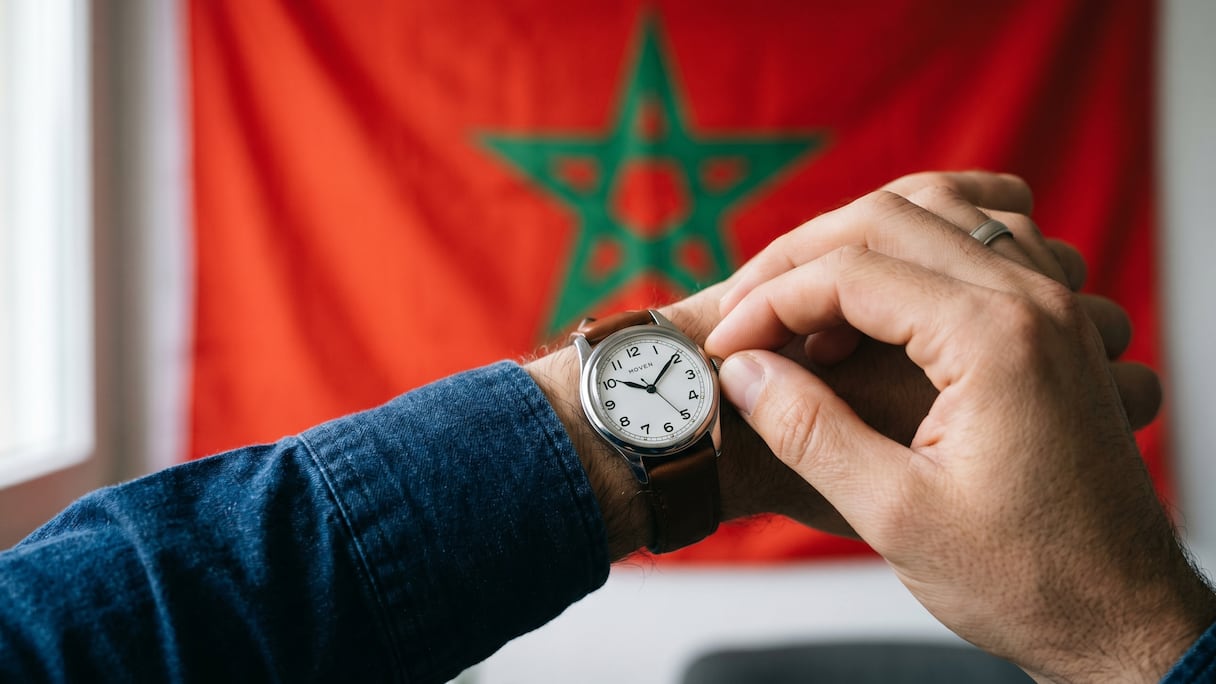
Clocks will go back by one hour at 2am on Sunday as Morocco returns permanently to GMT, ending the GMT+1 regime introduced nearly eight years ago and doing away with an extra hour that remained a source of complaints over school hours, sleep and dark winter mornings.
The change takes effect on Sept 20 under Decree No. 2.26.530, issued on June 25. It repeals the October 2018 decree under which the Saadeddine El Othmani government kept the country on GMT+1 throughout the year, barring the customary return to GMT during Ramadan.
The 2018 decision was meant to put an end to repeated clock changes. Until then, Moroccans could find themselves resetting their watches four times in a year—forward for summer time, back for Ramadan, forward again after the holy month and back once more in autumn.
Keeping the extra hour solved the switching. The winter mornings remained.
Read also : Morocco Time Change 2026: When will clocks go back, and what time zone will Morocco follow?
The arrangement drew sustained opposition over pupils travelling to school before sunrise, particularly in rural areas and the outskirts of cities. Unions and parents’ associations raised concerns over concentration and safety, including road accidents and assaults during early-morning journeys.
Studies and opinion surveys reported chronic sleep disturbances and psychological problems among more than two-thirds of citizens surveyed, with effects on daily life and work.
Energy savings, one of the arguments long advanced for the extra hour, were put at less than 0.5pc nationally in recent official assessments. Any gains also had to contend with greater use of lighting and heating during cold, dark winter mornings.
Morocco has been changing its clocks in the name of energy for much longer than the eight-year GMT+1 experiment.
The country’s first one-hour advance came in May 1918, five years after GMT had been adopted as the official time under the Protectorate. Coal was being conserved for the French and Allied war effort during the First World War.
Another change followed in February 1940 during the Second World War. GMT returned after independence in 1956.
Royal Decree No. 455.67 of June 2, 1967 subsequently established GMT as the Kingdom’s legal time while allowing temporary changes by decree—the same legal time being restored on Sunday.
The oil shock of 1973 sent the clocks forward again. Summer-time arrangements were used from 1974 to 1978, returned for about 15 months in 1984 and made another brief appearance in 1989.
The clock was then left largely untouched for nearly two decades.
It moved again on June 1, 2008, when the Abbas El Fassi government brought back summer time as oil prices climbed above $140 a barrel. Keeping business hours closer to Europe, particularly for banks and offshoring companies, was another consideration.
The Abdelilah Benkirane government formalized the seasonal arrangement in 2012, with GMT+1 running between March and October and GMT returning for Ramadan.
Six years later, the El Othmani government chose to stop moving the clock back.
On Oct 26, 2018, it made GMT+1 permanent, except during Ramadan. The decision was followed by opposition in schools, workplaces and online, much of it centered on starting winter days before sunrise.
Decree No. 2.26.530 has now repealed that decision.
At 2am on Sunday, the clock will be put back to 1am. GMT will again be Morocco’s permanent legal time.