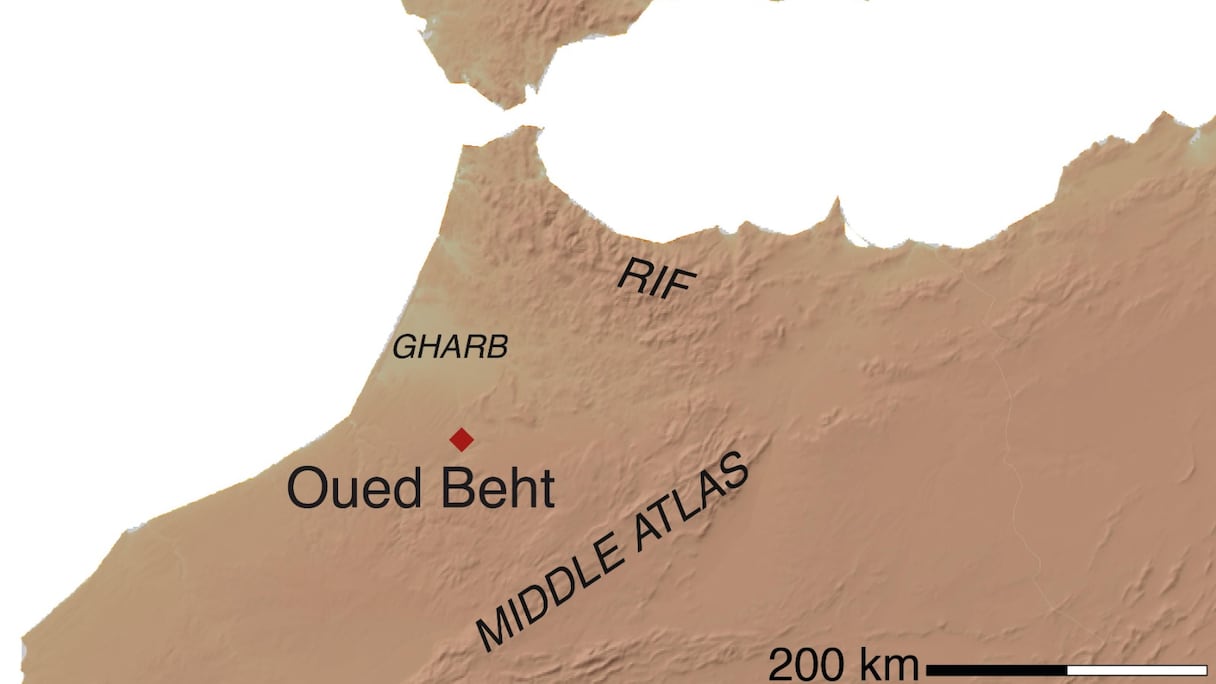
An international team of archaeologists has uncovered at the Oued Beht site in Khemisset province the oldest large-scale defensive system discovered in Africa outside the Nile Valley, dating back 3,500 to 4,000 years.
Published in the journal Libyan Studies, the scientific discovery is based on 17 radiocarbon dates that made it possible to reconstruct the sequence of occupation of a landscape inhabited for five millennia. Initially a vast agricultural village during the Late Neolithic, the site later saw the construction of a large ditch and an earthen rampart during the Bronze Age, before being reinforced by a stone wall in the medieval period. The scale of these structures points to organized collective labor and shows that the Maghreb was fully integrated into the major exchange networks of the western Mediterranean.
Youssef Bokbot, director of research and head of the archaeological project, explains the findings in greater detail in this interview with Le360.
Le360. The oldest documented defensive system in North Africa to date was discovered at the Oued Beht site in Khemisset province. What exactly does it consist of?
Youssef Bokbot: This discovery was not a matter of chance. It is the result of long-term work that began in 2005 at Oued Beht, in an area that was completely unknown to us at the time. We began with surveys and detailed mapping of the site’s archaeological potential, before starting the first excavations in 2006 at the Ifri N’Amrmmoussa cave in Khemisset. This work received extensive media coverage. As the excavation progressed, local workers who were working with us at the cave told us that the very rare archaeological material we were finding there could be found in considerable quantities in the surrounding area.
«In 2017, we introduced preventive archaeology using a mechanical excavator, a method that was unprecedented in Morocco. By scraping away the first 50 centimeters of surface soil, we preserved the occupation layer located 60 centimeters below the surface. We collected organic material from grain storage silos and sent it to the carbon-14 dating laboratory in Miami.»
— Youssef Bokbot, archaeologist
How did you move from research in the cave to discovering such a large open-air site?
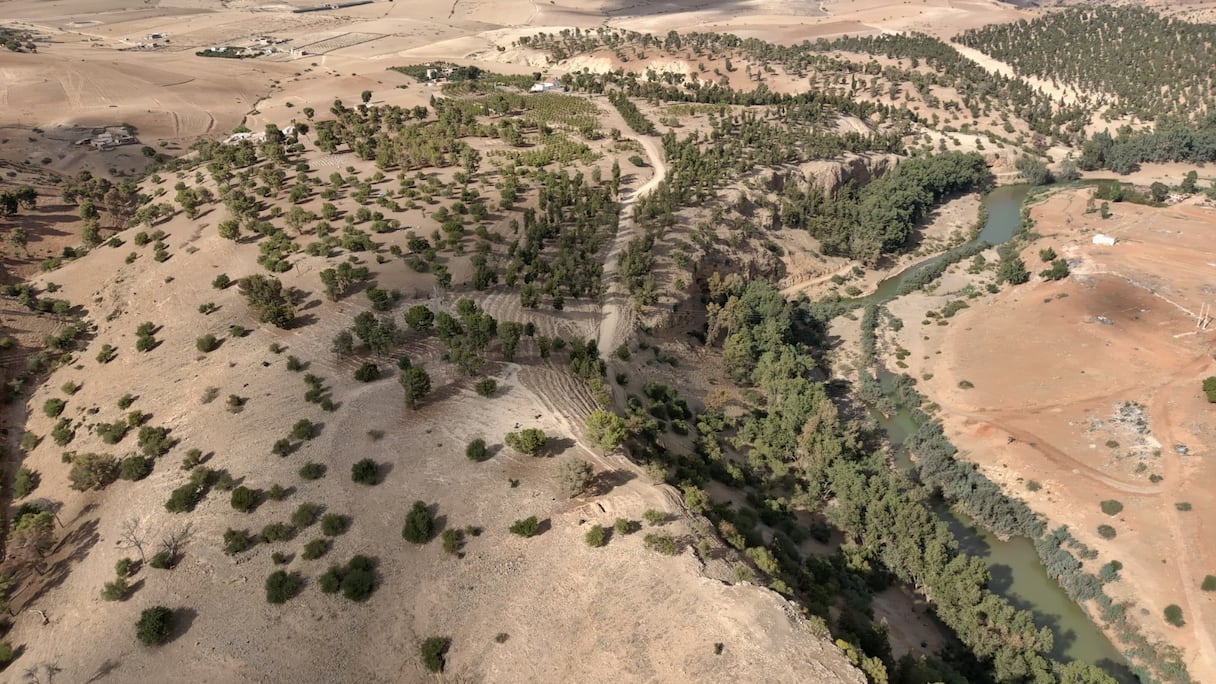
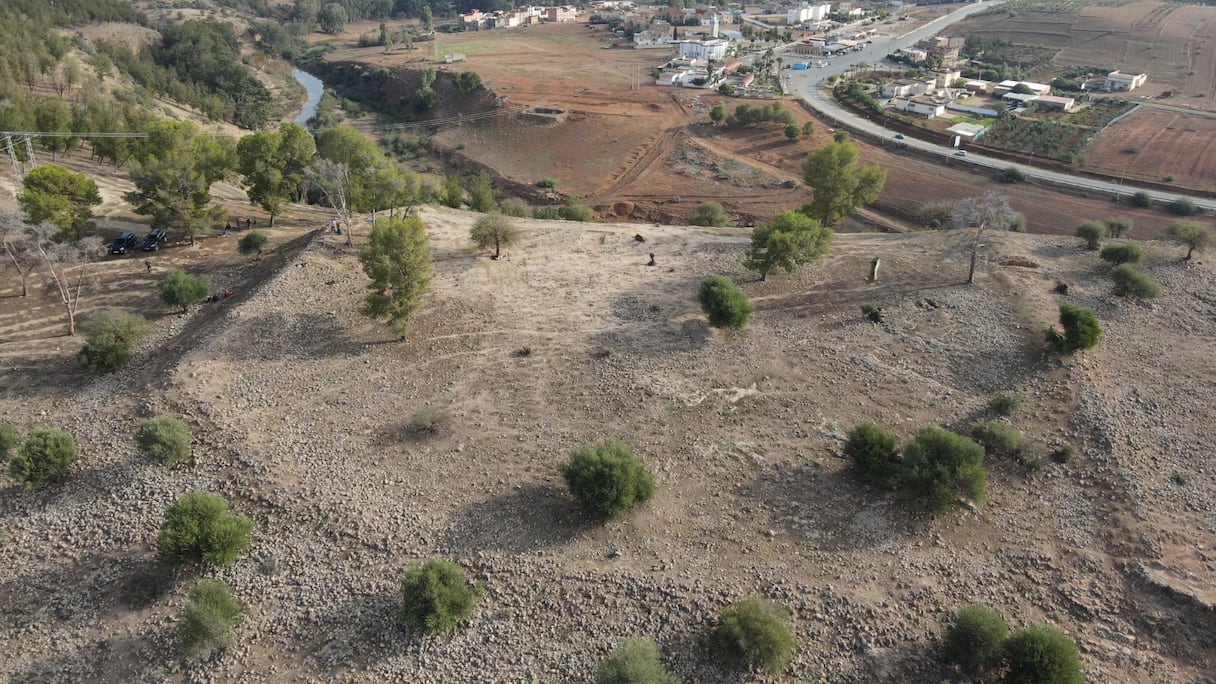
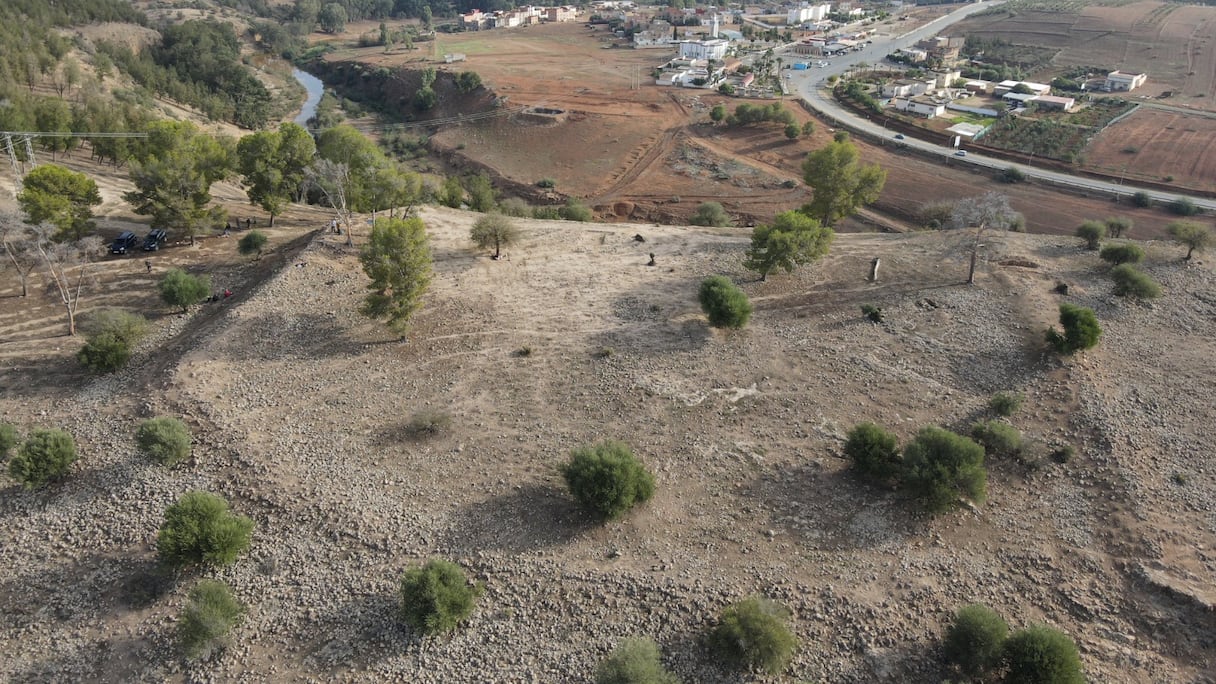
After listening to local residents and drawing up a preliminary map, I realized that we were dealing with a colossal site covering more than 20 hectares. In 2016, the Water and Forests administration dug thousands of holes 50 centimeters deep to reforest the land. Since there had been no rain that year, my team and I analyzed the soil excavated from these holes and found large quantities of the objects the locals had mentioned. In 2017, we introduced preventive archaeology using a mechanical excavator, a method that was unprecedented in Morocco. By scraping away the first 50 centimeters of surface soil, we preserved the occupation layer located 60 centimeters below the surface. We collected organic material from grain storage silos and sent it to the carbon-14 dating laboratory in Miami. The results produced dates ranging from 3,500 to 2,900 BC, corresponding to the Late Neolithic.
Several other research campaigns preceded this one. What did the subsequent excavations, including the 2023 campaign, reveal?
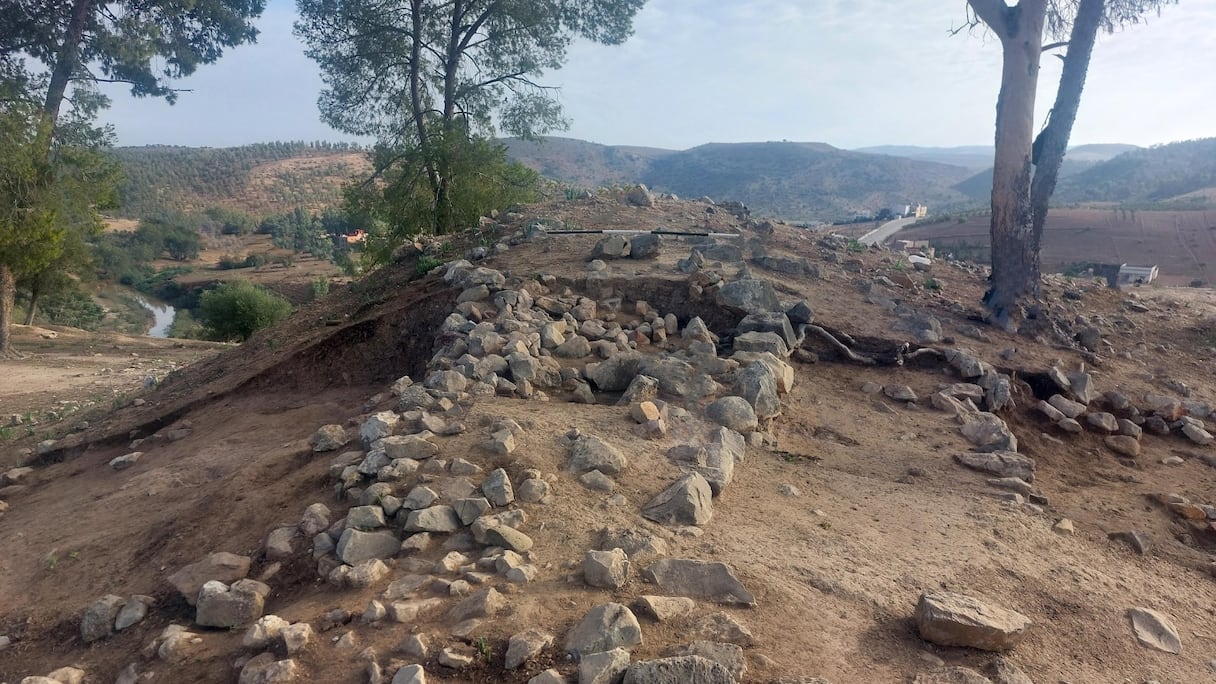
After publishing our initial findings on the agricultural village of Oued Beht in the journal Antiquity in 2023 and receiving several international awards, we carried out our third excavation campaign. While conducting test excavations south of the village, we came across an occupation dating to the Bronze Age and identified a prehistoric fortification system. The 17 radiocarbon dates we carried out confirmed that it is the oldest prehistoric fortification system in all of Africa, with the exception of the Nile Valley.
«Because access to ore deposits was not equal among all groups, this created competition and wars. Faced with threats of outside attacks around 2000 BC, the inhabitants withdrew to a restricted area of four hectares bordered by natural rocky cliffs that were easy to defend.»
— Youssef Bokbot, archaeologist
What does the emergence of such a fortification system tell us about the social organization and threats of the time?
It shows a profound change. During the Neolithic, around 4,000 BC, the village was open and peaceful, with no security concerns because agricultural and pastoral societies were egalitarian. The trigger for conflict was the emergence of metallurgy around 2,400 BC. Because access to ore deposits was not equal among all groups, this created competition and wars. Faced with threats of outside attacks around 2,000 BC, the inhabitants withdrew to a restricted area of four hectares bordered by natural rocky cliffs that were easy to defend. On the most accessible and vulnerable side, they built an earthen wall estimated to have been six meters high to protect their village.
«The Oued Beht site has a unique feature in North Africa: continuous prehistoric open-air occupation for nearly 3,000 years.»
— Youssef Bokbot, archaeologist
What materials were used in this metallurgy?
The first ore exploited was copper, around 2,400 BC. Later, realizing that copper was too malleable, they added tin or zinc to produce bronze, a much stronger material.
Was there continuous occupation, or were there different populations between the Neolithic and the Bronze Age?
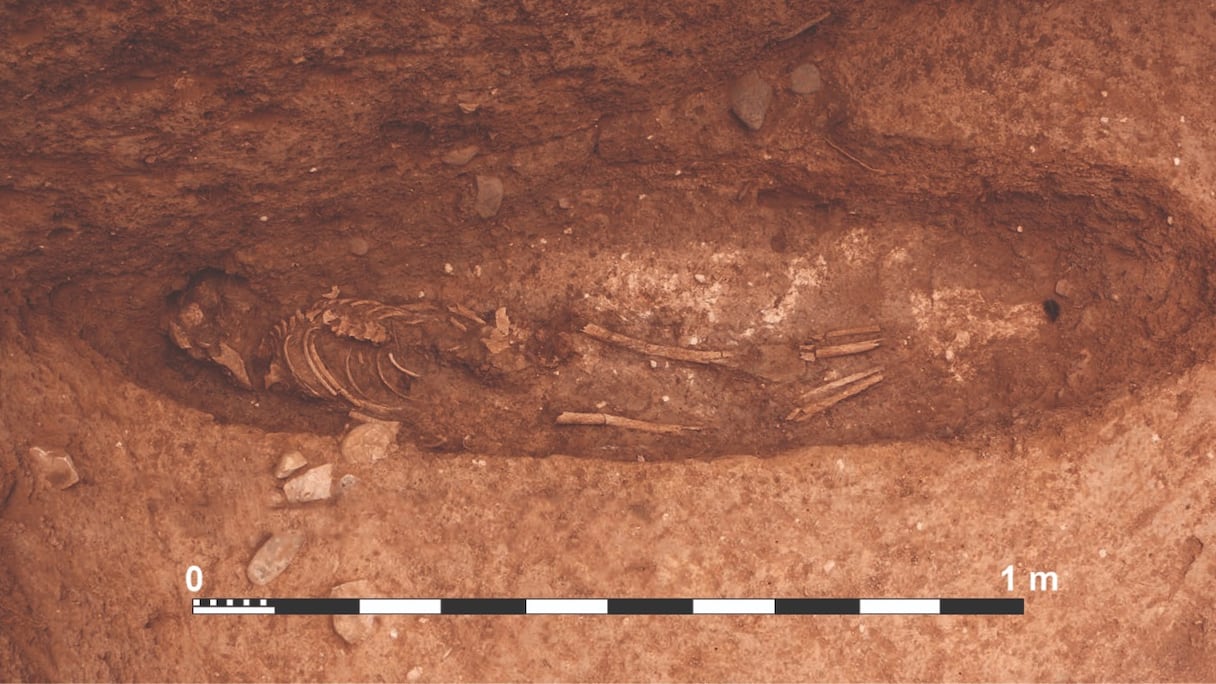
The Oued Beht site has a unique feature in North Africa: continuous prehistoric open-air occupation for nearly 3,000 years. It is quite possible that it was the same population that evolved there over time, but we cannot confirm this without DNA analysis. We will need to discover burials from both periods to study their genetic heritage and formally establish their family links.
Read also : Oued Beht excavations shed new light on Morocco’s Bronze Age origins
How do these discoveries change our understanding of North African prehistory?
They overturn the colonialist view that claimed indigenous populations were incapable of creating a civilization without outside influence. Our work proves that the people of Oued Beht were builders and pioneers. They maintained cultural and commercial exchanges as far as Seville in Spain, nearly 900 kilometers away. We discovered around 9,000 polished axes at the site, a number far exceeding their local needs and demonstrating genuine production intended for external trade. They also produced pottery decorated with polychrome paint that was unprecedented for the period.
The agricultural village covered an area of up to 12 hectares. How was the village organized?
The agricultural village covered between nine and 12 hectares. For the first time in North Africa, we have documented a population of more than 1,000 inhabitants, whereas it was previously thought that communities consisted of small groups of no more than 50 people. The site included residential areas, craft areas for potters, and large storage spaces containing numerous silos for preserving cereals and legumes. It is quite likely that excavations in other parts of the site could uncover occupations dating to the Copper Age (2500-1800 BC).
The Oued Beht site revealed a population with abundant resources. What factors explain this wealth?
Several factors came together. First, the village was close to the metallurgical resources of the Middle Atlas and Oulmès. It was also located five kilometers from the only rock salt mine known to have existed in prehistoric North Africa. At the time, salt was an extremely valuable and sought-after resource. By controlling the salt supply, the inhabitants of Oued Beht acquired considerable wealth. This prosperity allowed them to import goods from distant areas, such as tuna caught on the Atlantic coast and consumed locally. They also maintained commercial and cultural ties with contemporary Iberian populations. This concentration of wealth also aroused the interest of neighboring communities.
Research at this site benefited from Italian collaboration. How was this partnership organized?
I launched the program on my own in 2005. Since the Ministry of Culture did not provide the financial resources needed for excavations on this scale, we have had to rely on international cooperation to secure the necessary funding. I initially worked with Spanish teams between 2008 and 2012, then with the University of Montpellier between 2014 and 2016. In 2017, I initiated a partnership with the University of Cambridge. The Cambridge researchers later sought to bring an Italian research institute into the project.
The Italian Foreign Ministry was the one that communicated the results of this research...
They are simply taking the opportunity to highlight the work of their researchers. On our side, our officials have not responded. The site nevertheless received three major international awards in 2024 and 2025, and we were approached by the FAO to present our discoveries at its museum in Rome. I sent an official letter to the Minister of Culture proposing a plan to develop the site for tourism, but I received neither a response nor any action. This is regrettable because the site makes Morocco a driving force for archaeological research across the region and offers us multiple opportunities to enhance Morocco’s global profile.
In light of this latest discovery, what do you see as the future prospects for archaeological research in Morocco?
For two years, I have been fighting to persuade decision-makers to capitalize on the scientific and media attention generated by these exceptional archaeological discoveries of the highest international standard and to highlight this enormous potential so that it can contribute to the socio-economic development of Khemisset province. Today, more than ever, the creation of an archaeological and ecological park is essential.
