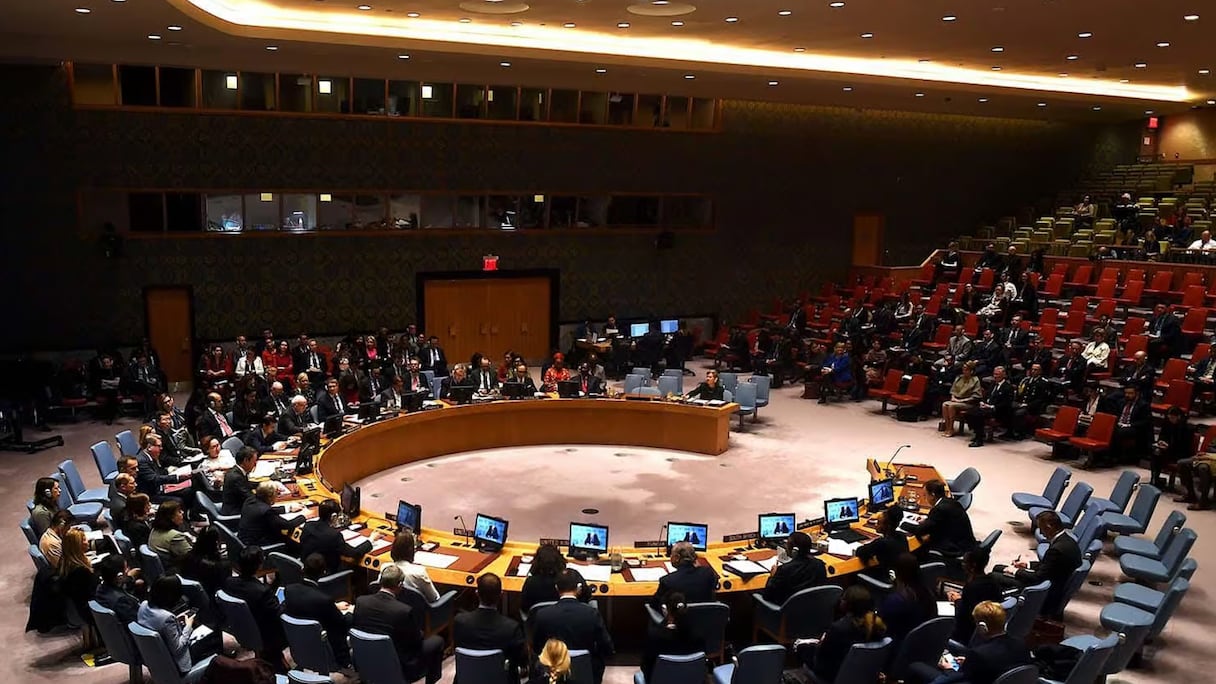
The UN Security Council failed to adopt a US-drafted resolution on the Moroccan Sahara on Friday, October 30, 2026, after Russia, a permanent member, exercised its veto. The vote was 11 in favor, one against—Russia—and three abstentions from China, Pakistan and Somalia. A resolution needs at least nine votes and no veto to pass. The American text was therefore defeated not for lack of support, but by a single veto.
In doing so, Russia chose diplomatic obstruction and the status quo. Yet while its stance may delay the resolution’s formal adoption in New York, it is powerless to reverse the strategic momentum that has taken hold on the ground. The rejected text, and the overwhelming majority of 11 Council members that backed it, show that Morocco’s autonomy initiative has become more firmly established than ever as the only viable political path forward.
The first major takeaway from the draft is that Morocco’s autonomy proposal was recognized as the exclusive framework for all future negotiations. The wording submitted to the Council marked a decisive shift in international language: autonomy was no longer merely described as “serious and credible” but explicitly established as the “only basis” for negotiations. The text welcomed the mediation efforts of the United States and the UN Secretary-General’s Personal Envoy during three rounds of direct talks held in Washington and Madrid involving Morocco, the Polisario, Algeria and Mauritania. By making Morocco’s proposal the sole reference point for those discussions, the Council sought to rule out unrealistic alternatives and settle the political framework once and for all.
The draft blocked by Russia also envisaged a sweeping institutional change: MINURSO would become MINUSO — the United Nations Mission in Western Sahara — from November 1, 2026. The planned removal of the word “referendum,” represented by the “R” in the mission’s original acronym, would have marked a clear legal break with the past. In doing so, the drafters acknowledged that the referendum process had become obsolete and sought to bring the mission’s structure and staffing into line with present-day realities on the ground.
Read also : Sahara: What has changed in the UN Security Council draft—and what has not
For decades, opponents of Morocco’s territorial integrity have sought to portray the Polisario as the sole representative of the Sahrawi population. The draft resolution challenged that claim by calling on the UN Secretary-General’s Personal Envoy to consult a broader range of interlocutors: elected representatives from Laâyoune-Sakia El Hamra and Dakhla-Oued Ed-Dahab, civil society figures, members of the diaspora and alternative movements such as the Sahrawi Movement for Peace. The text also confronted the lack of transparency surrounding the Tindouf camps on Algerian territory. Citing deteriorating humanitarian conditions, it would have required the UN refugee agency, UNHCR, to complete a full registration of the camp population within a strict six-month deadline. The requirement that the process be conducted “without interference from any entity” was aimed squarely at the Polisario and Algeria, with the objective of preventing the diversion of international aid.
Russia’s obstruction, driven by considerations extending far beyond the region, amounts to little more than a temporary delay in the Security Council’s timetable. Politically and diplomatically, however, the message could hardly be clearer: autonomy takes precedence, the referendum is obsolete, African countries are united in their support, and an international consensus is taking shape around Moroccan sovereignty. The veto grants the Algerian regime and the Polisario an artificial reprieve, but it cannot conceal the strategic dead end they have reached after half a century of hostility. The course is set: despite the delay imposed by Moscow, Morocco’s autonomy plan remains the only path towards a definitive political settlement.
That leaves the question of MINURSO’s mandate, which has, in effect, not been renewed. At best, the failure to extend it because of Moscow’s veto would leave the mission operating on a bare-minimum basis under the administrative authority of the UN Secretariat. The diplomatic deadlock effectively hastens the obsolescence of the mission in its current form. On this, as on so many other points, Russia’s veto raises serious questions.
