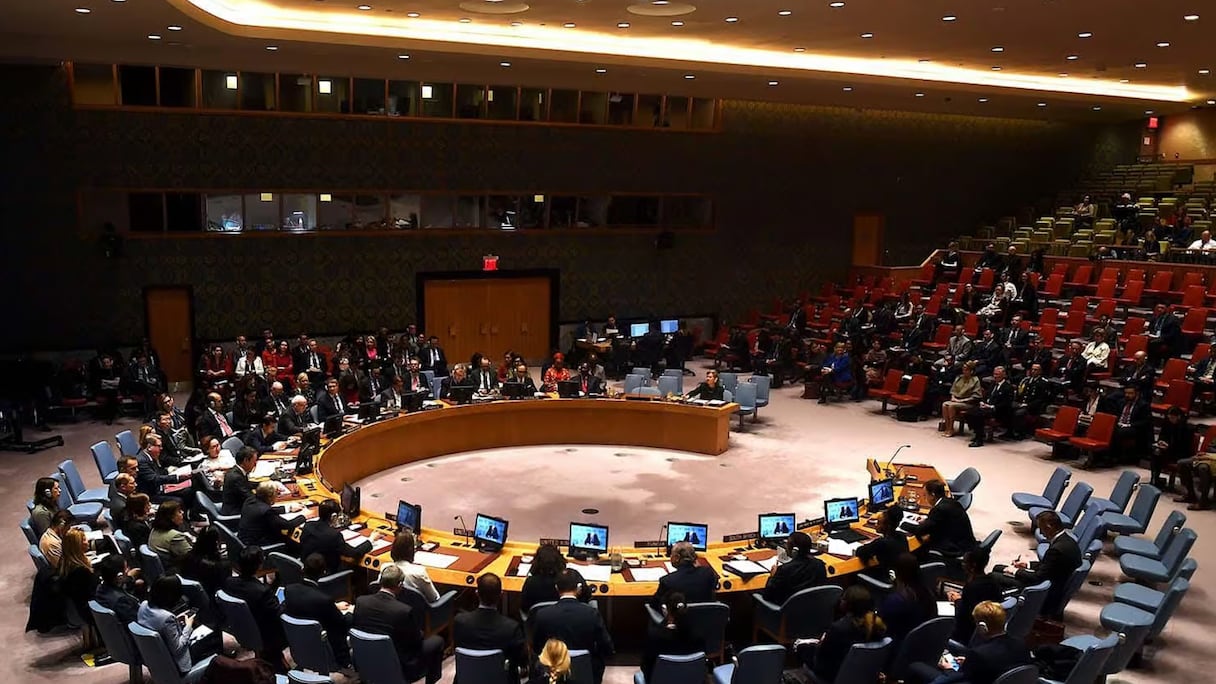
The numbers tell the story. On October 30, the US-drafted resolution secured 11 votes in favor, one against, from Russia, and three abstentions, from China, Pakistan and Somalia. The text therefore commanded a substantial majority. It failed for one reason alone: the opposing vote came from a permanent member. The draft would have established Morocco’s autonomy initiative as the sole basis for negotiations, renamed the UN mission MINUSO by removing the reference to a referendum, and extended its mandate until October 31, 2027.
The veto marks a shift in Russia’s position. A year earlier, when Resolution 2797 was adopted, Moscow had merely abstained. Russia’s permanent representative, Vassily Nebenzia, had described the text as “unbalanced” and condemned Washington’s “cowboy approach,” while explaining that Russia would not block it in order to “give the peace process another chance.” Since then, Algiers has been busy lobbying. Ahmed Attaf met Sergei Lavrov in New York on September 24 and again in Moscow on October 27, just three days before the vote, with the Sahara on the agenda. Algeria, no longer a member of the Council, secured from its main arms supplier what it could no longer achieve through votes of its own.
What happens next? Four scenarios are emerging.
The first is a technical extension. This is the most common solution when the Council is divided: a short resolution renewing the mandate for a few weeks or months without changing its terms, allowing time for further negotiations. According to Reuters, Russia had circulated a counterproposal extending the mission for a year without changing either its name or its responsibilities. But that text stands no chance of securing nine votes in its current form: the 11 members who backed the American draft are not going to vote for its exact opposite. A short-term compromise remains possible. It would change nothing of substance.
Read also : Sahara: Russian veto delays 2026 resolution but cannot halt momentum behind Morocco’s autonomy plan
The second scenario is a revised American draft. Washington, which leads the drafting of Security Council resolutions on the Sahara, could return with language softened in tone but unchanged in substance, seeking to persuade Russia to abstain as it did in 2025. That would be a concession in wording, not principle. The central point—autonomy as the basis for negotiations—is already enshrined in Resolution 2797, which the veto does not overturn and which remains the Council’s reference point.
The third scenario is the most paradoxical: the mandate simply expires. If no resolution is adopted, MINURSO loses its legal basis. There is a precedent. In February 1999, China vetoed an extension of the UN Preventive Deployment Force in Macedonia, known as UNPREDEP, forcing the mission to withdraw. For Morocco, the mission’s disappearance would change nothing on the ground: it administers its southern provinces, invests in them and holds elections there. For the Polisario and Algiers, it would mean losing the last UN mechanism whose very name still carried the promise of a referendum. A veto intended to save MINURSO could thus hasten its demise.
The fourth scenario unfolds outside the Security Council. Since 2022, any use of the veto has triggered a General Assembly meeting within ten working days, at which the permanent member responsible must explain its decision. Algiers will find a platform there. But the General Assembly does not decide the mandates of peacekeeping operations, and its debates are not binding. Meanwhile, the political process continues elsewhere: the American draft welcomed the three rounds of talks held in Washington and Madrid between Morocco, the Polisario, Algeria and Mauritania. Those negotiations do not depend on the renewal of an observer mission.
Whichever scenario plays out, one fact stands out. Eleven of the Council’s 15 members supported a resolution establishing autonomy as the sole basis for a settlement. Even China, traditionally aligned with Moscow on such matters, abstained rather than vote against it. Algeria, which only two years ago presented itself as Africa’s voice on the Council, can now count on just one vote—and it is not its own.
Russia, for its part, is not defending the Sahrawi cause out of conviction. It is using an issue it has never considered a priority to exert leverage against Washington and accommodate a customer that buys most of its weapons from Moscow. Those calculations could change. Relations between Moscow and Rabat have not been severed, and the veto was not accompanied by any challenge to the 2025 resolution.
The veto delays a resolution. It does not give Algiers back its referendum. It merely shows that Algiers has only one voice left in the Security Council—and that voice speaks Russian.
