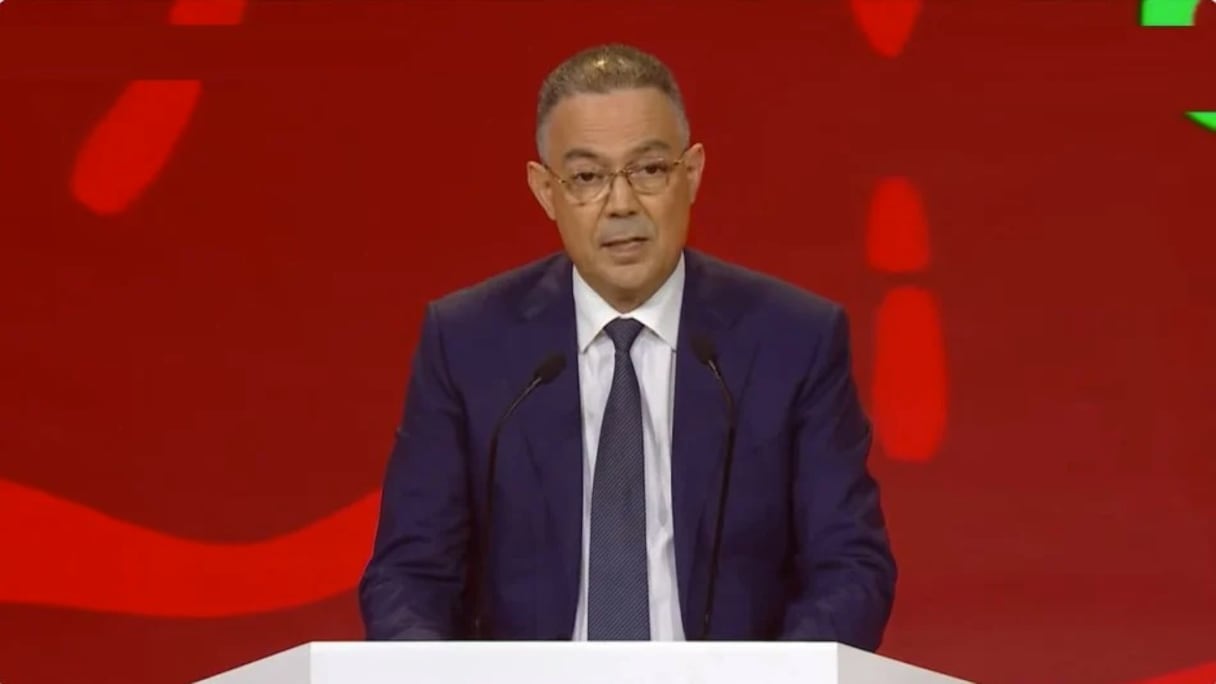
Fouzi Lekjaa appeared on 2M’s Saât Assaraha program on Wednesday, October 28, to discuss Morocco’s 2027 draft budget. Asked about the Grand Stade Hassan II in Benslimane, the president of the Royal Moroccan Football Federation (FRMF) and the Morocco 2030 Foundation provided an update on construction of the stadium, which is expected to play a major role in the 2030 World Cup.
For Lekjaa, building the 115,000-seat stadium is about more than a sporting project. It forms part of a much broader transformation of the Casablanca metropolitan area.
“Hassan II Stadium will help reshape Greater Casablanca’s urban landscape,” he said, explaining that the project will be accompanied by major transport improvements, including a regional express rail network (RER) and high-speed rail services (LGV). “In the coming years, we will see a very different Greater Casablanca,” he added.
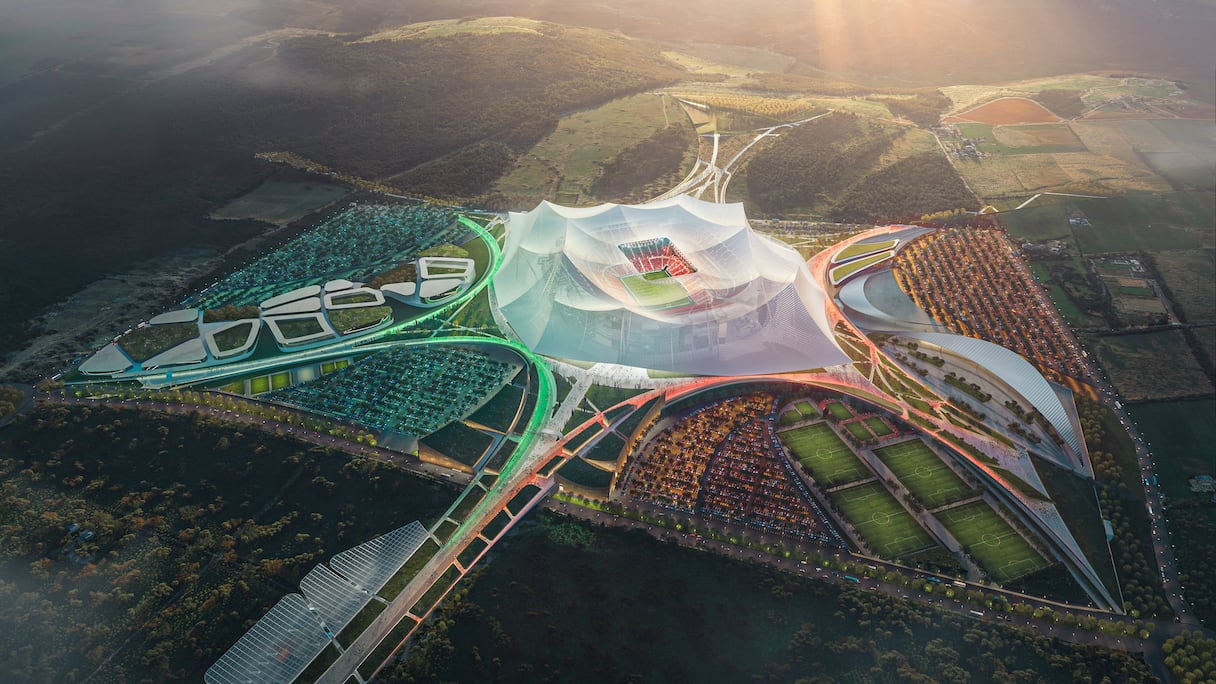
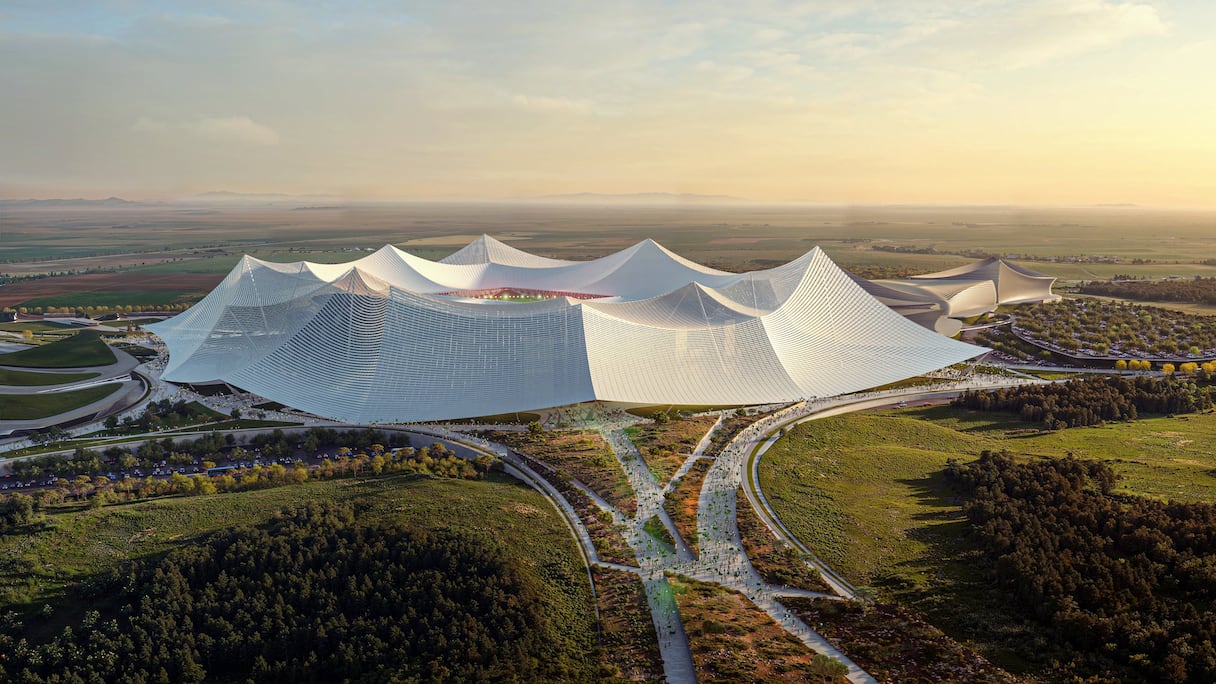
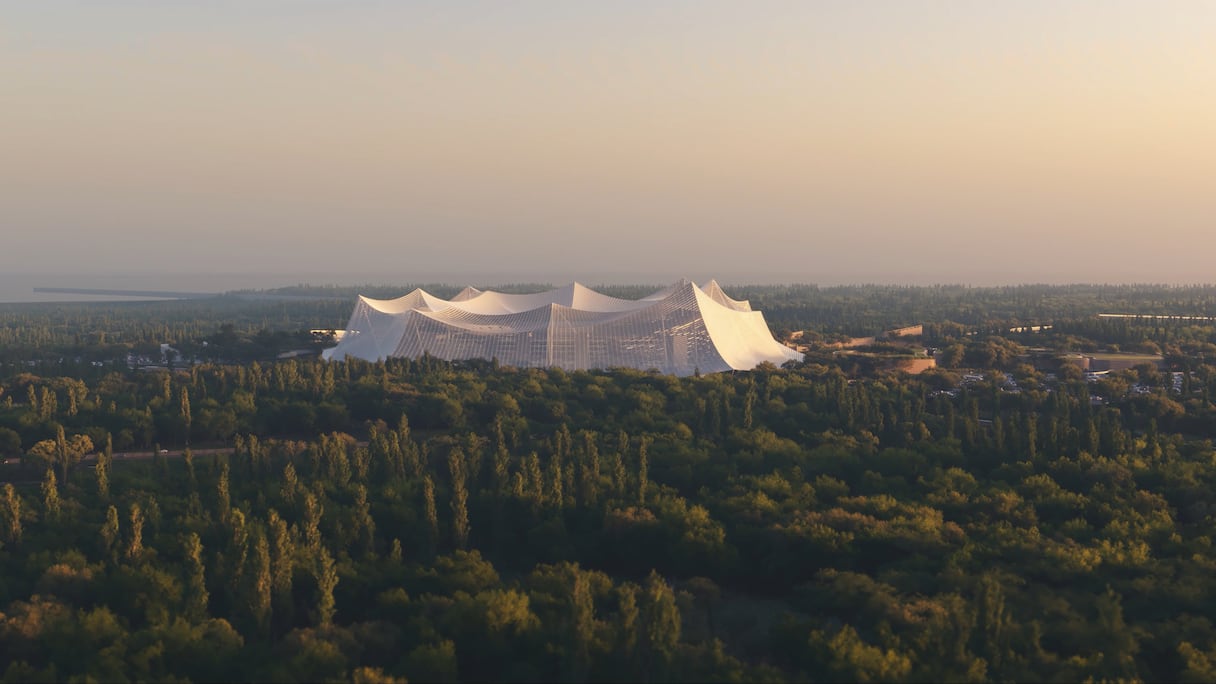
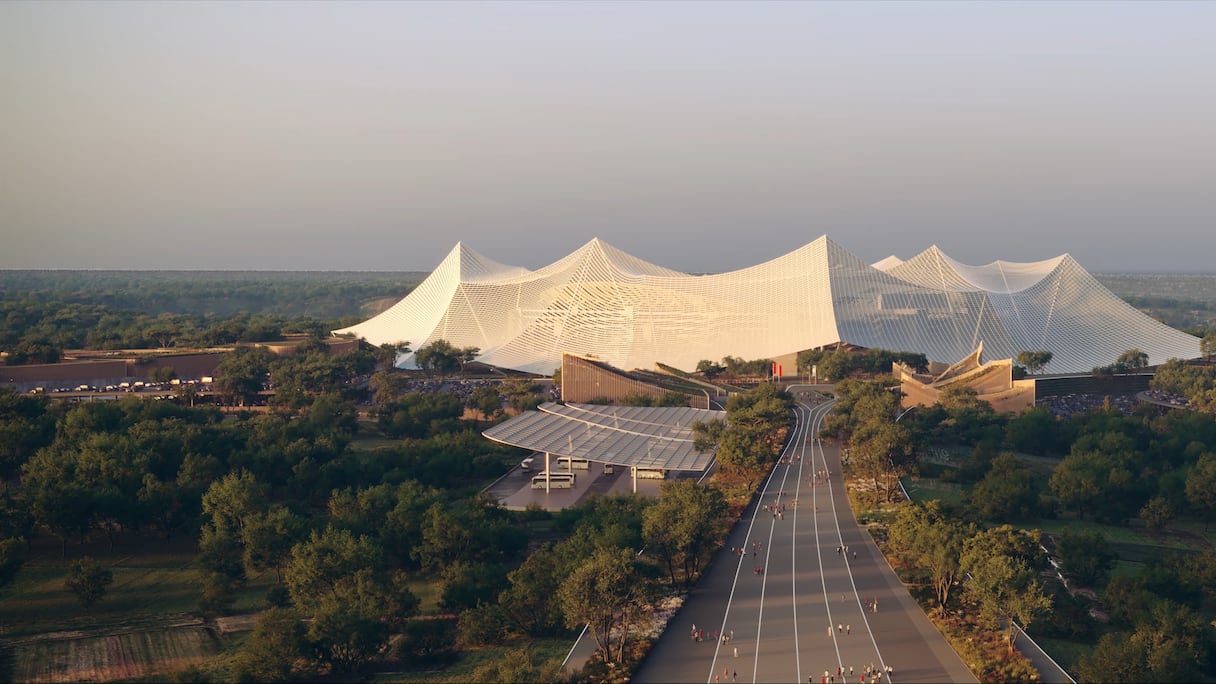
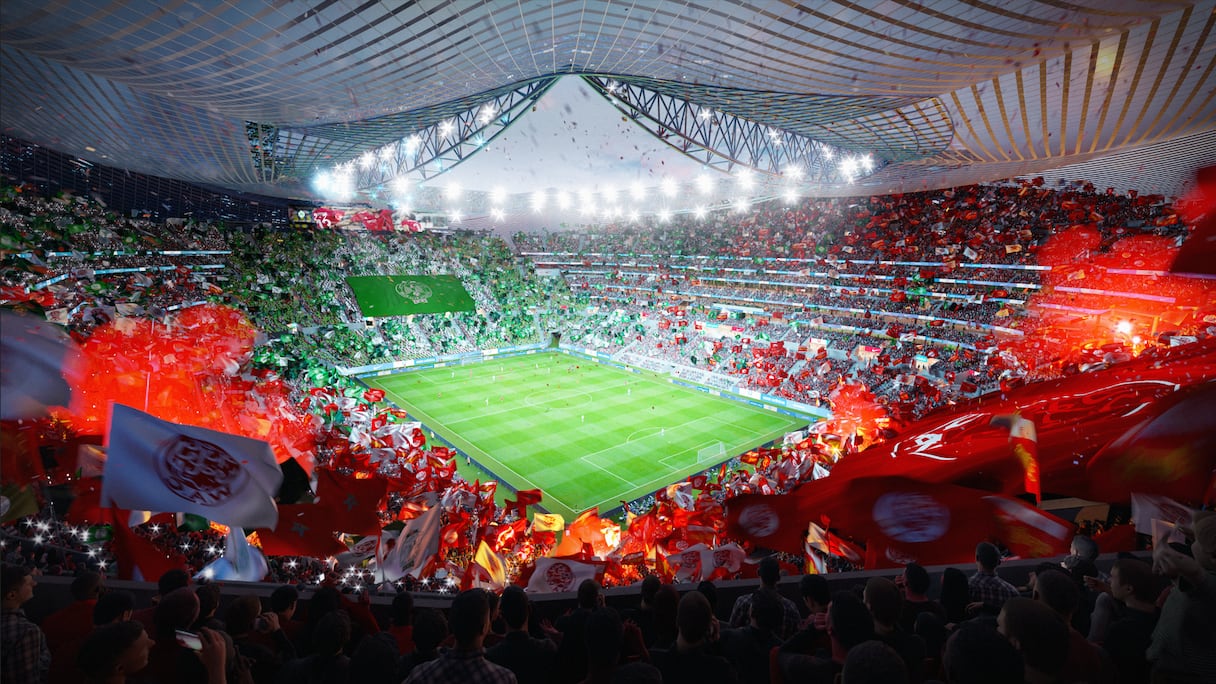
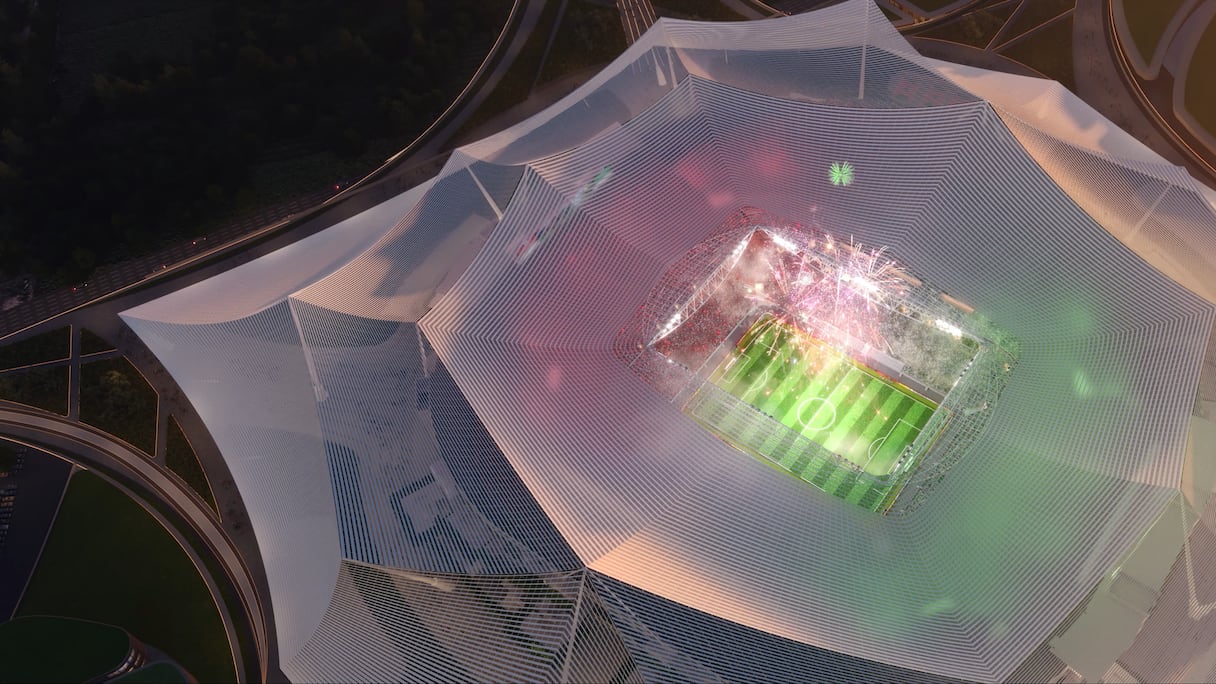
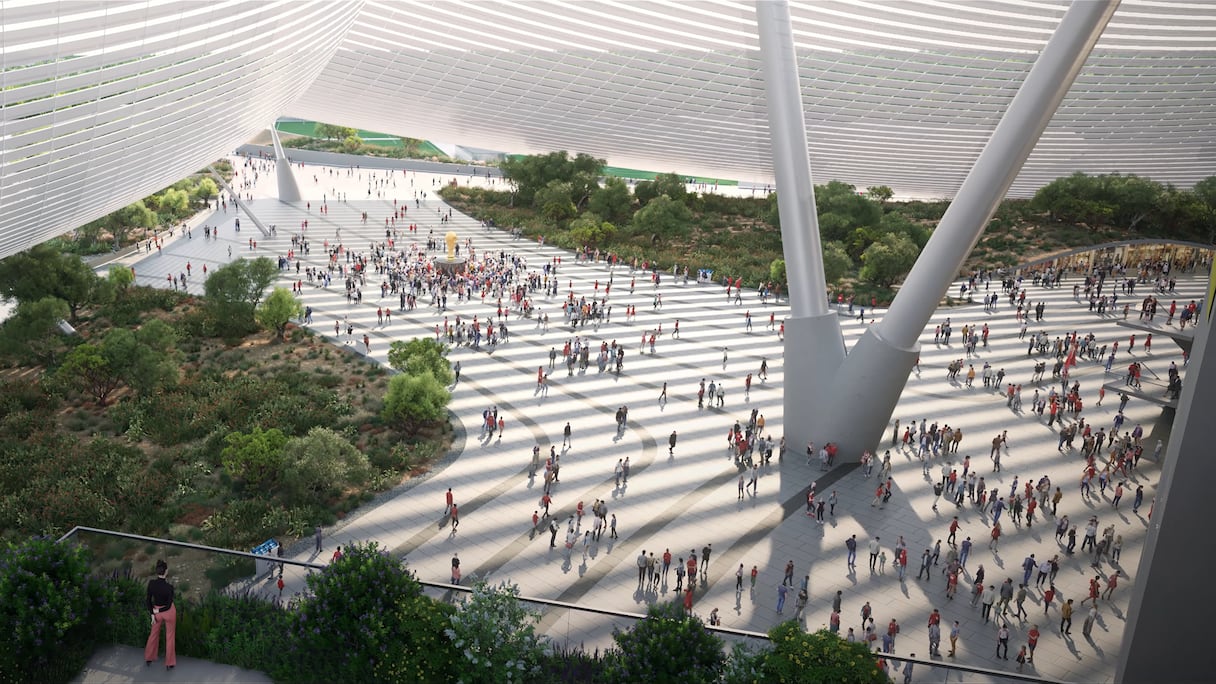
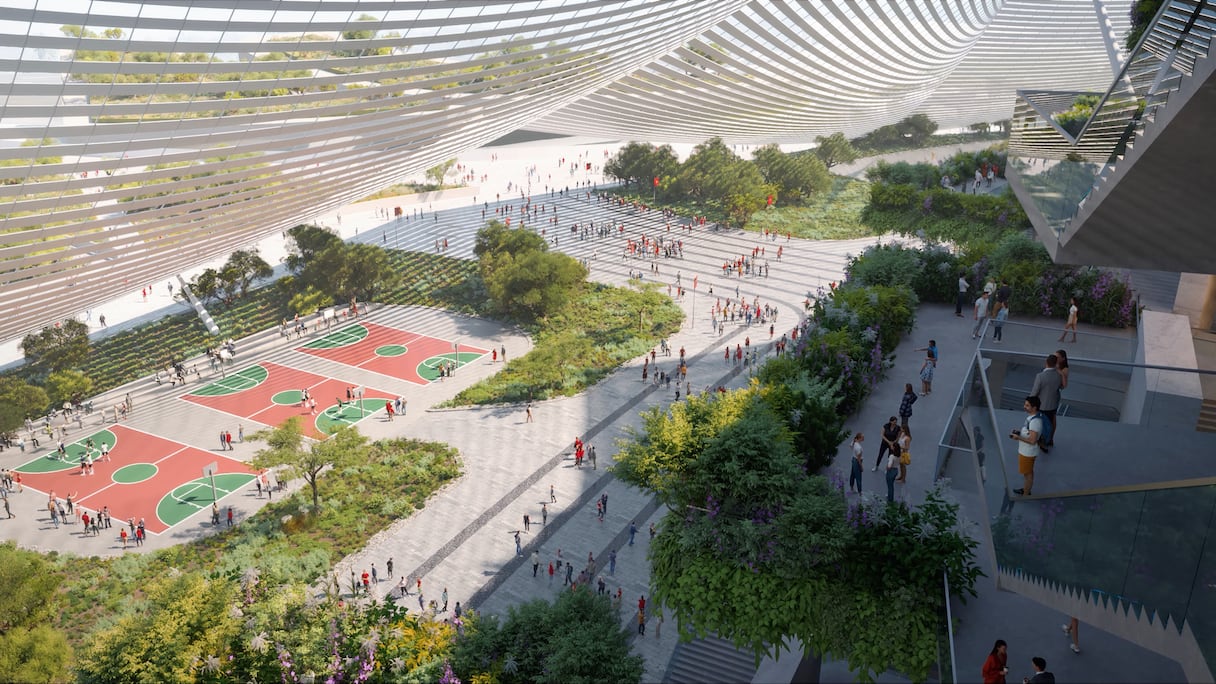
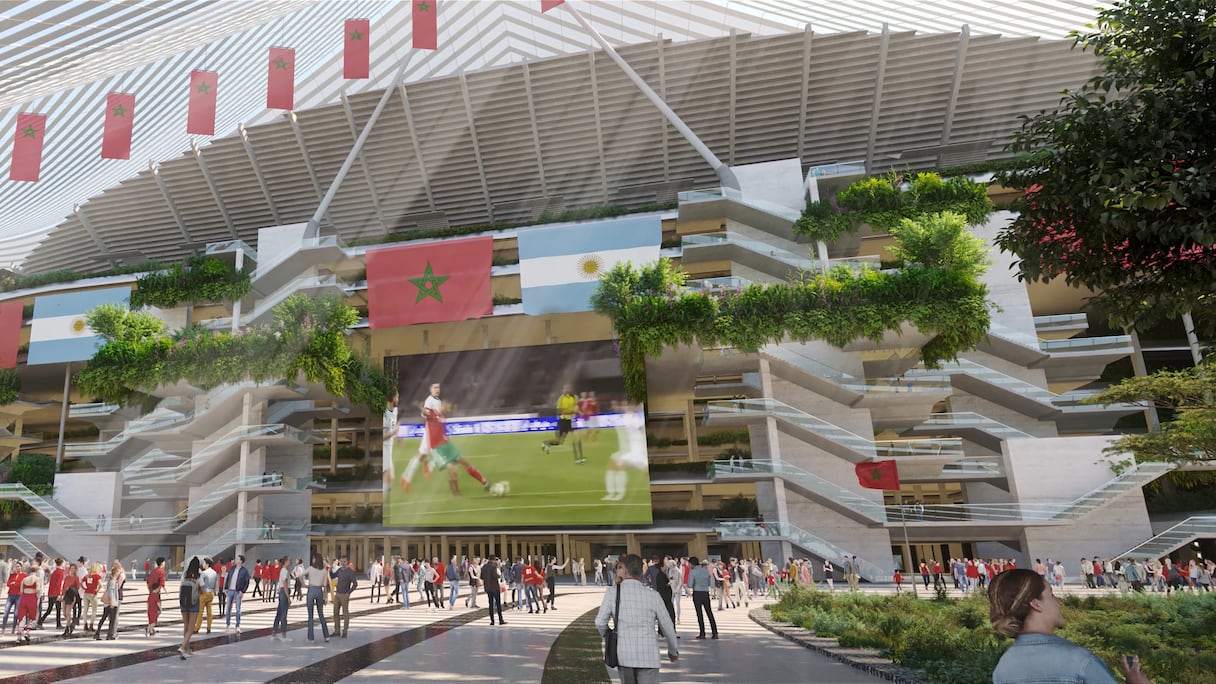
Model of the Grand Hassan II Stadium in Benslimane.
Lekjaa was upbeat about construction progress. He said work was advancing at a satisfactory pace and could be completed in early 2028, almost two years before the World Cup kicks off.
An early opening would allow Morocco’s national team, the Atlas Lions, as well as Casablanca clubs Wydad and Raja, to play matches at the stadium ahead of the tournament.
“It would be a good thing for the national team to play there before the World Cup,” he said, adding that the venue could also host other major events before 2030.
Hosting the 2030 World Cup final: A question of capacity
Asked about Hassan II Stadium’s bid to stage the 2030 World Cup final, Lekjaa sought to put the issue in a broader context.
The FRMF president stressed that the ambition behind the centenary tournament, which Morocco will co-host with Spain and Portugal, goes well beyond the allocation of matches among the three countries.
He referred in particular to the royal message announcing the joint hosting arrangement in Kigali, in which King Mohammed VI highlighted the project’s civilizational significance, the rediscovery of a shared collective memory across the Mediterranean basin and the importance of bringing people on its two shores closer together.
Read also : 2030 World Cup: FIFA announces inspection visits to Morocco, Spain and Portugal
For Lekjaa, those values — particularly coexistence and exchanges between younger generations — should underpin the three countries’ joint preparations.
That does not mean Morocco is giving up its ambition to host the final. On that question, the FRMF president pointed to what he considers a decisive criterion: stadium capacity.
“The final should go to the stadium with the largest capacity. And, for now, that is Hassan II Stadium,” he concluded.
