Morocco is pushing ahead with two major port projects designed to strengthen its position in global maritime trade. Tanger Med is embarking on another round of expansion, with the construction of Tanger Med 3 expected to bring the complex’s total annual capacity to nearly 20 million containers. Further east along the Mediterranean coast, Nador West Med is preparing to receive its first commercial vessels, marking the start of operations at a new port, industrial, logistics and energy hub.
King Mohammed VI reviewed progress on both projects at a meeting at the Royal Palace in Rabat on Wednesday, October 28. According to a statement from the Royal Office, the discussions covered the work completed so far and the next stages of development.
Both projects are intended to give Morocco a more competitive port network as global value chains are reshaped, attract fresh investment and strengthen the wider economy. But the ambition goes beyond handling more cargo or expanding transshipment capacity. It also involves developing new industrial clusters, securing energy supplies and ensuring that surrounding regions share in the economic benefits.
Tanger Med 3: The next step towards 20 million containers
More than two decades after its launch, Tanger Med is preparing for another major expansion. The latest development program is designed to strengthen its position in the Mediterranean and lift annual capacity to nearly 20 million twenty-foot equivalent units (TEUs) over the next decade, potentially putting it among the world’s ten largest container ports.
The centerpiece is Tanger Med 3, where construction is due to begin in late October 2026. Located west of the existing port complex, the project includes 3,000 meters of breakwaters and a new container terminal, known as TC5, with 1,200 meters of quays.
Tanger Med is investing MAD 8 billion in the project. The new terminal will be able to handle 4.5 million TEUs a year, with scope to increase capacity to 5 million. It is scheduled to open in mid-2031.
Maersk–APM, one of the world’s leading shipping and port operators, has been awarded the concession to develop and operate the terminal. The agreement reflects Tanger Med’s strategy of working with major international operators to expand capacity and attract more shipping business.
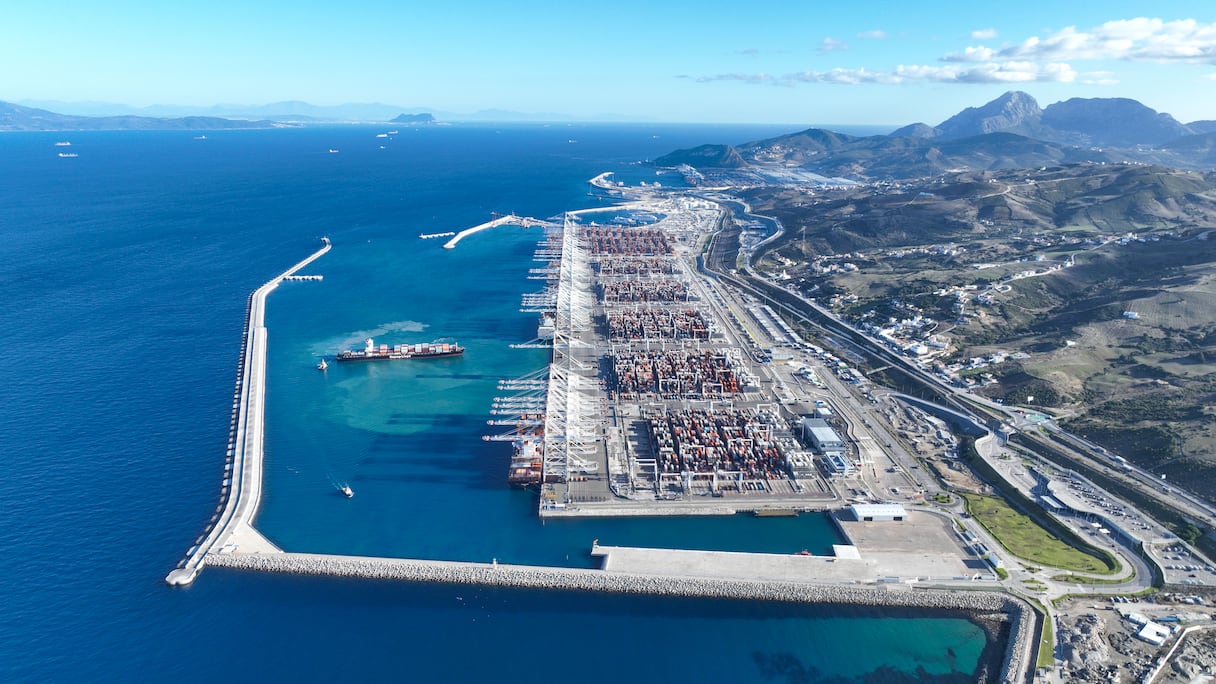
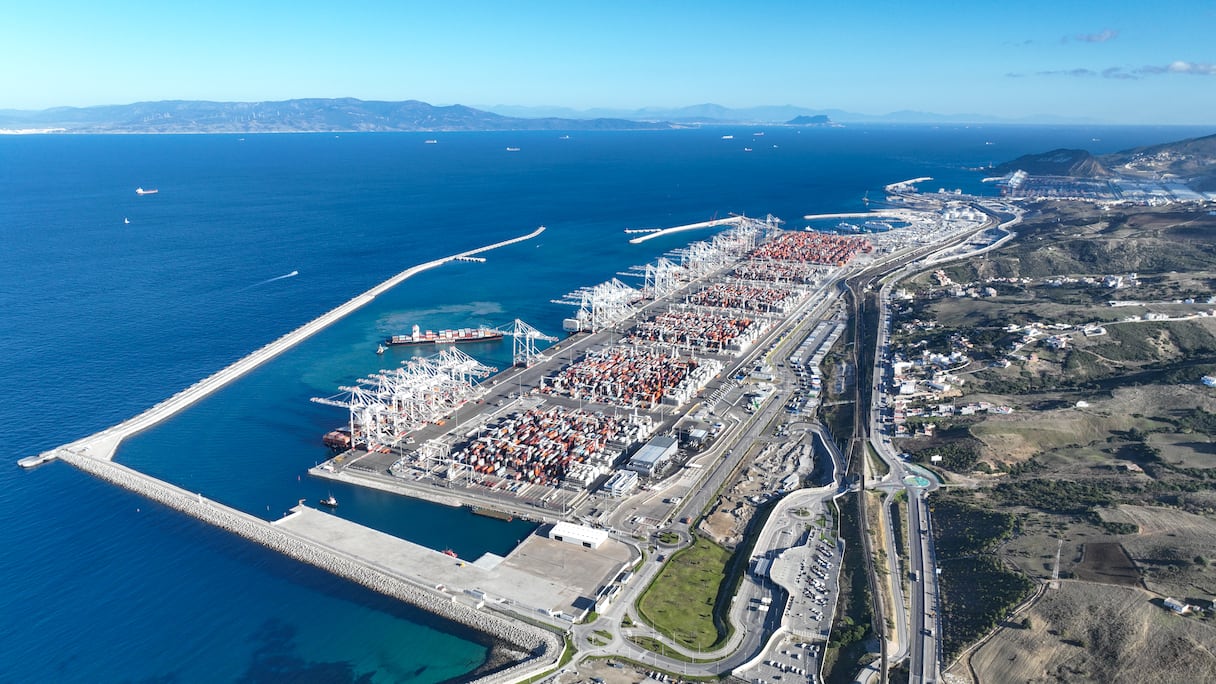
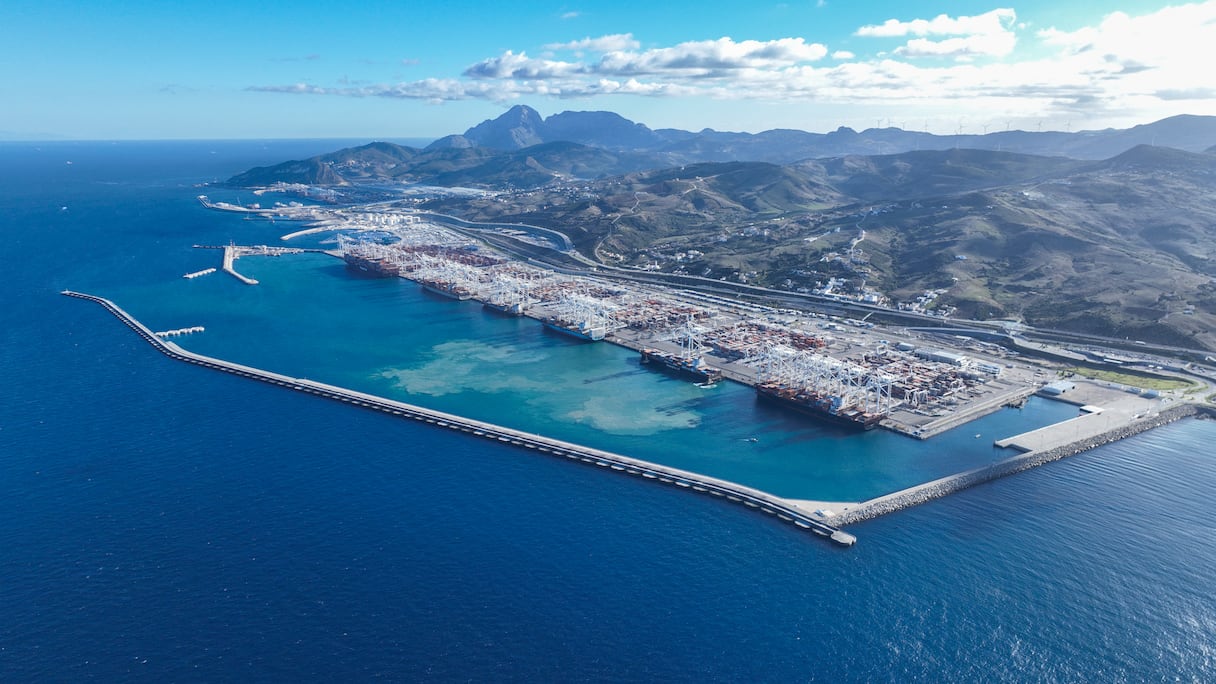
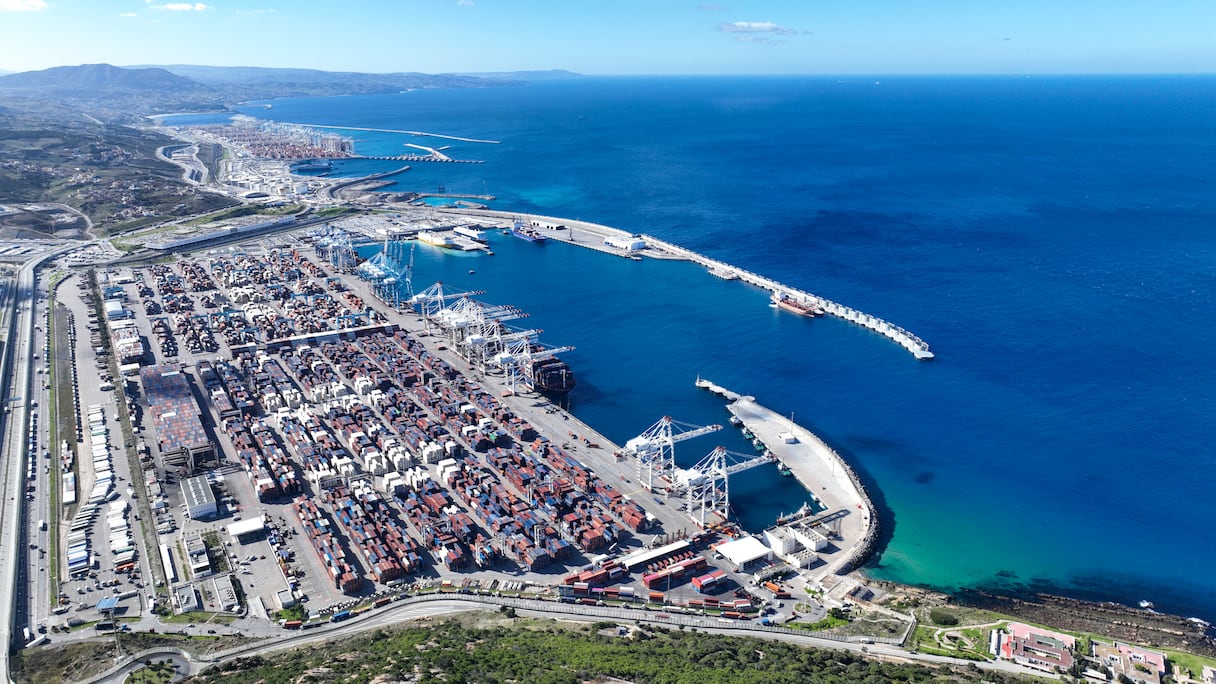
Le port de Tanger Med.
The expansion goes beyond TC5. A second terminal, TC6, at Tanger Med 2 is expected to add another 1.6 million TEUs of annual capacity. Work is also under way to expand the passenger and roll-on/roll-off port, following the start of construction in December 2024. That project is designed to gradually raise annual capacity to 1 million international freight trucks and 7 million passengers, with the expanded facilities due to open in 2029.
Together, these projects form part of a broader MAD 36 billion development program, comprising MAD 20 billion in public investment and MAD 16 billion in private funding. The total covers several elements of Tanger Med’s expansion, rather than just the new port.
Read also : Port infrastructure: King reviews Nador West Med opening and launch of Tanger Med 3
The additional port capacity is expected to support a new wave of industrial investment. Morocco wants to capitalize on Tanger Med’s location near the Strait of Gibraltar, at the crossroads of major shipping routes linking Europe, Africa and other leading global markets.
Projections for the expansion suggest it could attract nearly MAD 100 billion in additional private investment and help create 80,000 jobs. Turnover generated by the industrial platform could rise from MAD 188 billion to almost MAD 350 billion by 2035.
Those forecasts depend on the investment commitments being delivered, new companies setting up operations and industrial and logistics businesses expanding. Even so, they show the direction of the strategy: to build on Tanger Med’s role as a transshipment hub by developing a larger manufacturing base serving international markets.
With companies rethinking their supply chains, seeking more resilient logistics networks and bringing production closer to their customers, Tanger Med offers Morocco a competitive advantage. Its shipping connections, proximity to Europe and established industrial base could help draw further investment, particularly in export-oriented manufacturing.
The expansion is therefore also about deepening Morocco’s economic links with Europe, rather than simply competing with other ports. The Kingdom wants to attract more manufacturing activity and secure a greater role in international supply chains.
Nador West Med: MAD 54 billion invested in a new economic hub
Further east on Morocco’s Mediterranean coast, Nador West Med is set to become the second major pillar of the country’s port strategy. The port and industrial complex has so far attracted MAD 54 billion in public and private investment, according to the Royal Cabinet.
According to information obtained by Le360, the total includes MAD 31 billion in public funding and MAD 23 billion in private investment. Of that, MAD 17 billion in public funds and MAD 23 billion in private capital are allocated to port infrastructure, while a further MAD 14 billion will finance transport connections.
Designed to complement Tanger Med, Nador West Med brings together a deepwater port, specialized cargo terminals, industrial and logistics facilities, and energy infrastructure. Its harbor basin covers 260 hectares. The port will handle containers, hydrocarbons, liquefied natural gas, dry bulk, general cargo and roll-on/roll-off traffic.
The project is expected to strengthen Morocco’s role in maritime trade while giving the Oriental region a new source of economic growth. How quickly it develops will depend on attracting operators, bringing the various terminals into service and establishing the industrial and logistics businesses needed to support them.
First container shipments expected by late October 2026
The first facility to open will be the eastern container terminal. Once fully developed, it will have annual capacity of 3.5 million TEUs, with 1,520 meters of quays, an 18-meter draught, and 70 hectares of container yards. The initial phase will bring 720 meters of quays into operation.
The terminal will be operated by a consortium of Marsa Maroc and MSC, the world’s largest container shipping company, which is investing more than MAD 5 billion. Shipping lines have already included the port in their schedules, with the first commercial vessel calls expected by late October 2026.
The opening will mark Nador West Med’s transition from a construction project to a working commercial port. As traffic builds, it will become clearer how successfully the terminal can attract shipping lines and capture new cargo flows.
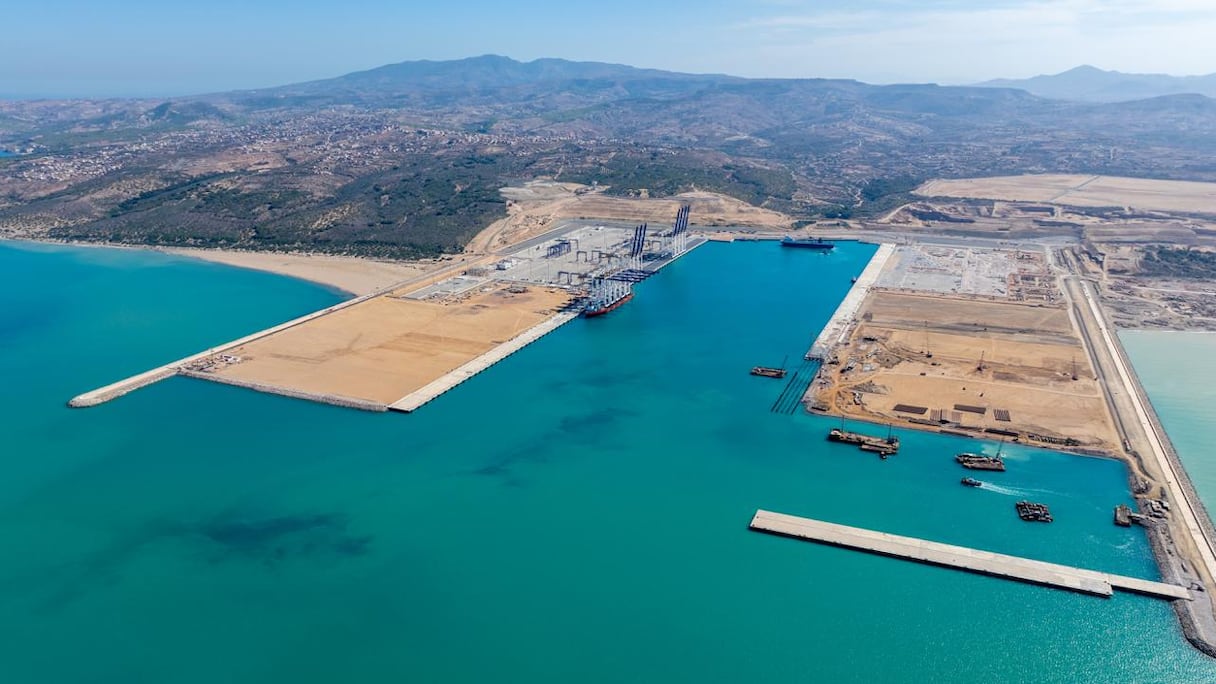
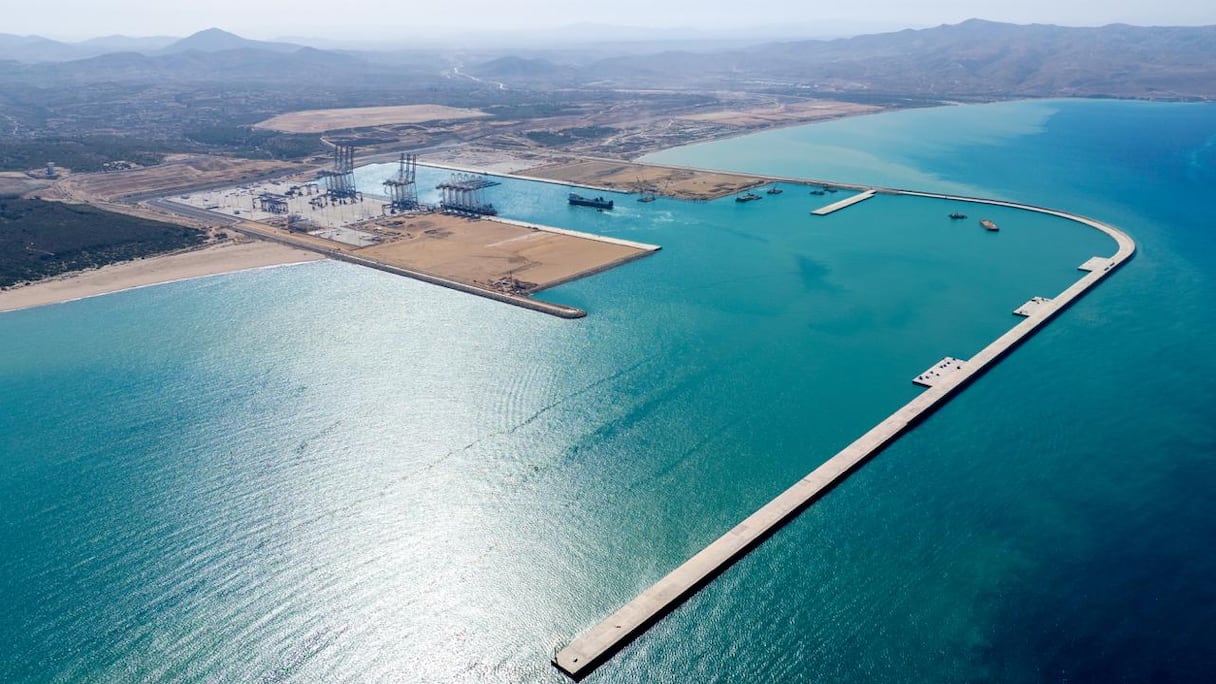
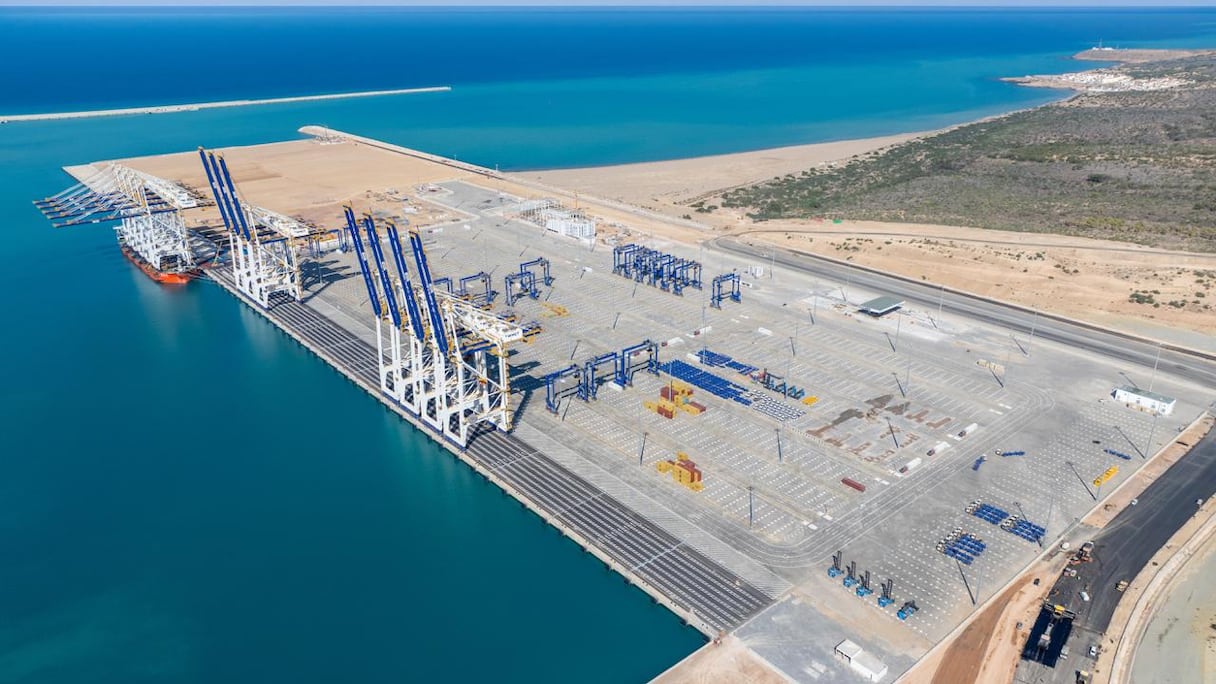
Le port de Nador West Med.
The western container terminal will follow. Awarded to a consortium of Marsa Maroc and CMA CGM, the world’s third-largest container shipping company, it will have 900 meters of quays, 40 hectares of container yards and an 18-meter draught. The terminal will handle up to 1.8 million TEUs annually, supported by more than MAD 3 billion in private investment.
Work to complete the quays is continuing as equipment is delivered and installed. The terminal is scheduled to open in the second quarter of 2027, with shipping services expected to begin at the same time.
Once both terminals are fully operational, Nador West Med will have combined annual container capacity of 5.3 million TEUs. Private investment in the two facilities exceeds MAD 8 billion, consistent with the overall figure announced by the Royal Office.
Energy infrastructure is another defining feature of Nador West Med. The complex will include facilities for handling and storing hydrocarbons, petroleum products and liquefied natural gas, with the first energy operations expected to begin from mid-2027.
The hydrocarbon berths will be able to handle up to 25 million tonnes a year. They will serve a 170-hectare storage zone, where the first 82 hectares have already been completed. Several operators have expressed interest in establishing facilities there, covering a combined area of nearly 50 hectares.
The storage zone could eventually hold up to 4 million cubic meters. The land already developed will allow the first operators to move in and begin building up storage and cargo-handling operations.
The liquefied natural gas terminal will have 360 meters of quays and capacity to handle up to 5 billion cubic meters annually. It is intended to expand Morocco’s energy logistics infrastructure and diversify its supply options.
A broader range of cargo facilities
Nador West Med will handle much more than containers and energy products. Several additional terminals are planned to accommodate different types of cargo and attract a wider range of shipping business.
The dry bulk terminal will have 360 meters of quays and capacity to handle 7 million tonnes annually. It is due to be handed over to its concessionaire in June 2027.
The general cargo terminal, awarded to Marsa Maroc, will have 540 meters of quays, 22 hectares of storage yards and an 18-meter draught. Backed by MAD 2 billion in private investment, it will be able to handle 3 million tonnes a year and is scheduled to open in December 2028.
The complex also includes a roll-on/roll-off terminal with a planned capacity of 400,000 units and 380 meters of quays. Its opening had been scheduled for September 2026.
These facilities will allow Nador West Med to serve a broader range of shipping and logistics markets. They could also help attract manufacturers and trading businesses that require specialized port infrastructure.
Much of Nador West Med’s success will depend on its connections to the rest of Morocco’s economy. Expanding the port will only deliver its full benefits if cargo can move efficiently between the terminals, industrial areas and inland markets.
The transport program includes a 49-kilometer railway linking Selouane to Nador West Med, scheduled to open in 2028. A 105-kilometer motorway connecting Guercif to the port is expected to enter service in June 2029.
Meanwhile, work is under way to upgrade 280 kilometres of roads, of which 210 kilometres have already been completed.
The new links should make freight transport easier, improve access to nearby industrial areas and extend the port’s reach into inland markets. They are also expected to open up less accessible areas and strengthen connections between the Oriental region and Morocco’s main trade and industrial routes.
The aim is to ensure that Nador West Med does not become a port operating in isolation. Instead, it is intended to serve as a regional economic hub, attracting investment, supporting new industries and creating opportunities for local suppliers and service companies.
The Oriental region’s jobs challenge
Industrial activity at Nador West Med is already under way. The industrial zone is operational, with one factory running and three more under construction. According to information obtained by Le360, the three projects represent nearly MAD 12 billion in investment.
As more investors establish operations and port-related businesses expand, that activity is expected to gather pace. Opportunities range from logistics, manufacturing, storage, cargo handling and energy services to the companies supplying goods and services to businesses based at the complex.
In the near term, Nador West Med is expected to create 14,000 direct jobs and 20,000 indirect jobs. By 2035–2036, forecasts put the number of direct jobs at nearly 50,000, with 90,000 jobs in total when indirect employment is included.
These are employment targets, not jobs already created. Meeting them will depend on how quickly businesses establish operations, how far industrial and logistics activities expand and whether the workforce has the skills employers need.
King Mohammed VI made that issue a priority at the October 28 meeting. He stressed that the economic and social gains from the investments must reach all the provinces concerned and bring tangible improvements to local communities. He also called for faster implementation of training programmes geared towards emerging industries to help young people find work.
The test will be whether these investments translate into jobs and business opportunities, particularly for young people and companies in the Oriental region. Training workers, bringing small, medium-sized and micro-enterprises into supply chains, and improving local infrastructure will be essential if Nador West Med is to become part of the regional economy rather than an isolated industrial enclave.
