With diplomatic attention focused on the UN Security Council meeting scheduled for October 31, 2026, mounting indications suggest that the draft resolution will mark a decisive break with the outdated approaches of the past. By closing the door on a referendum and establishing Morocco’s autonomy initiative as the sole basis for a settlement, the text promises to usher in a new political and civic dynamic.
At the center of this shift is the Sahrawi Movement for Peace (MSP), which is increasingly establishing itself as a major political player. By challenging the established model of Sahrawi representation, the movement is offering a democratic alternative to the monopoly of political thought long maintained by the Polisario Front.
The voice of reason against the illusion of armed struggle
Speaking to Le360, MSP spokesman Rahal Essalek said the draft UN resolution does more than reflect a more mature international approach to the Sahara dispute. It also represents the culmination of sustained efforts on the ground to ensure that what he calls the “voice of reason” is heard.
“As an independent political movement, we have been working with the international community for some time to ensure that reason prevails and that political pluralism is established in the Sahara dispute. We strongly welcome the inclusion of these principles in the draft resolution, along with the clear signals sent by the UN Secretary-General and his Personal Envoy earlier this month,” Essalek said, describing the developments as “international recognition that the era of hegemony is over.”
Read also : Sahara: UN draft resolution spells the end for Polisario, clears the way for Sahrawi Movement for Peace
Essalek draws a sharp distinction between two fundamentally opposed approaches. While the Polisario remains wedded to the illusion of armed struggle, genuine Sahrawi voices are choosing peace as the only pragmatic path towards a lasting end to the conflict. Rejecting the Polisario’s claim to be the “sole representative” of the Sahrawi people, he argues that Sahrawis cannot be reduced to a single faction whose monopoly runs counter to the most basic principles of democracy. He dismisses the Polisario’s claims as “sheer absurdities and empty fantasies,” comparing its rhetoric to that of dictatorial regimes.
A movement born out of suffering
The Sahrawi Movement for Peace was founded on April 22, 2020, at a congress initiated by former Polisario officials, academics, human rights activists and dissident diplomats. They chose Hach Ahmed Bericalla, a former senior Polisario official, as the movement’s First Secretary. In September 2020, the MSP formally adopted its statutes and organizational structure at a congress in Madrid, establishing the Spanish capital as its international base while building an active network across Morocco’s southern provinces, Mauritania and the Sahrawi diaspora in Europe.
That momentum has since translated into significant diplomatic gains. In 2026, an MSP delegation addressed the Fourth Committee of the UN General Assembly in New York, making the case for political pluralism.
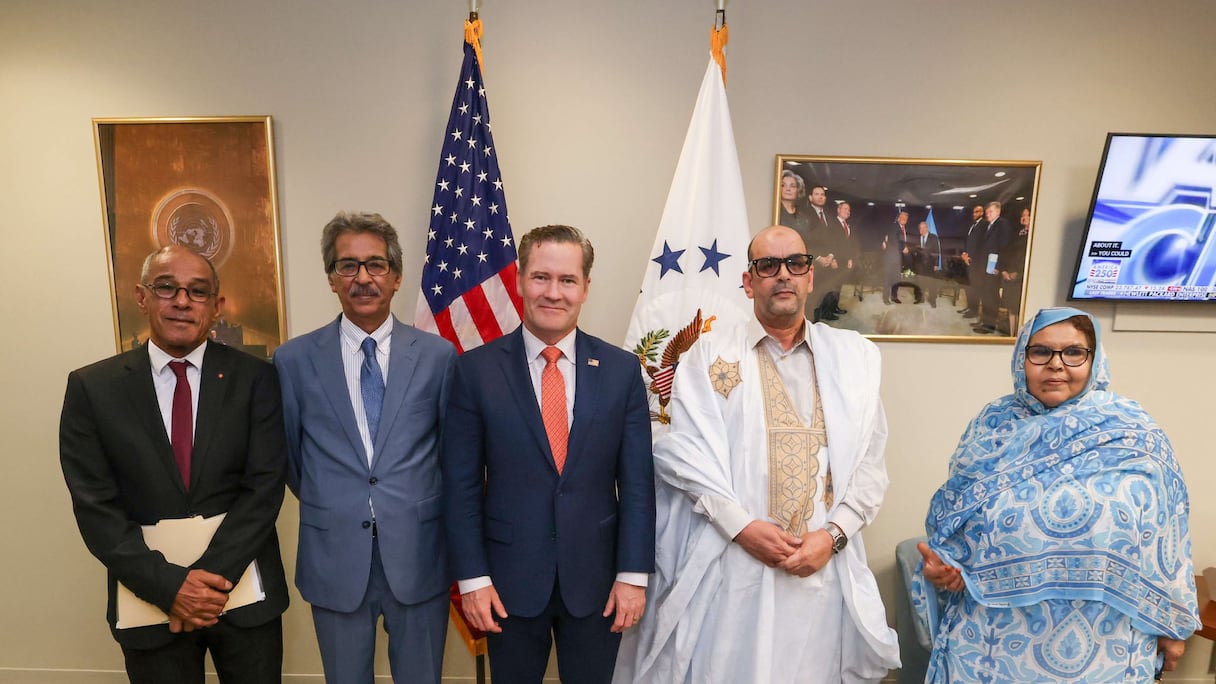
A particularly significant meeting took place on June 30 at the US mission in New York, where the movement’s leadership met US Ambassador Mike Waltz.
The movement’s moderate message has also gained traction in Europe. Former Spanish Prime Minister José Luis Rodríguez Zapatero, notably, has praised the MSP’s boldness and political maturity.
For Abdelkader Brihouma, a researcher specializing in Sahara affairs, the MSP has broken the inertia created by years of deadlock at the United Nations. It has attracted dozens of experienced figures who believe the dignity and future of Sahrawi communities must take precedence over confrontation.
The MSP’s position rests on a pragmatic reading of regional geopolitics. In its view, broad autonomy under Moroccan sovereignty offers the most realistic and viable solution to the dispute.
According to Essalek, that commitment addresses two pressing humanitarian and political priorities: alleviating the suffering of people confined to the Tindouf camps and bringing together the Sahrawi diaspora scattered across Algeria, Mauritania and several European countries.
Brihouma shares this assessment, arguing that the position reflects the profound shift represented by the movement. Having built a solid grassroots network of experienced officials and community leaders, the MSP says it is ready to play an active role in implementing the autonomy plan, bringing to a close an armed conflict that has taken its toll on Sahrawis for five decades.
The movement has accordingly described the direction set by UN Security Council Resolution 2797 and subsequent resolutions as a “historic opportunity,” reaffirming its readiness to mobilize its organizational resources and expertise on the ground.
A diplomatic breakthrough that unsettles the Polisario and Algiers
The MSP’s shift from political advocacy to concrete diplomatic gains is disrupting the separatists’ agenda. By making the case for pluralist Sahrawi representation before international institutions, the movement has dealt a blow to the Polisario’s longstanding claim to be the sole legitimate interlocutor.
Faced with these advances, the Polisario leadership in Tindouf and its sponsors in Algiers have resorted to familiar tactics: accusations of treason, smear campaigns and attempts to silence dissenting voices.
In response, the Sahrawi Movement for Peace maintains that it emerged from a determination to change course, born out of the daily suffering of people living in the Tindouf camps. Its stated aim remains to dismantle a totalitarian monopoly that has exploited the plight of refugees for far too long, drawing them into military adventures destined to fail.
By putting people before ideology, this approach marks a decisive break with decades of illusions. It offers the prospect of a realistic political settlement that could lift the wider Maghreb out of its prolonged deadlock and open the way to stability, development and peaceful coexistence.
