With completion rates ranging from around 30% to 70%, major companies, most of them Moroccan, are working on dozens of large-scale projects, including ports, highways and football stadiums, as well as infrastructure for one of the country’s most important projects: the high-speed rail line that will connect Tangier to Marrakech and then to Agadir, giving Morocco one of the world’s most prominent high-speed rail networks.
Hassan II Stadium: The Largest in the World
The Hassan II Stadium in Benslimane province, on the outskirts of Casablanca, is expected to have a seating capacity of more than 115,000 spectators. It entered a decisive phase at the beginning of September after Morocco announced a contract for external development work at the stadium, with an estimated cost of nearly 27 billion centimes.
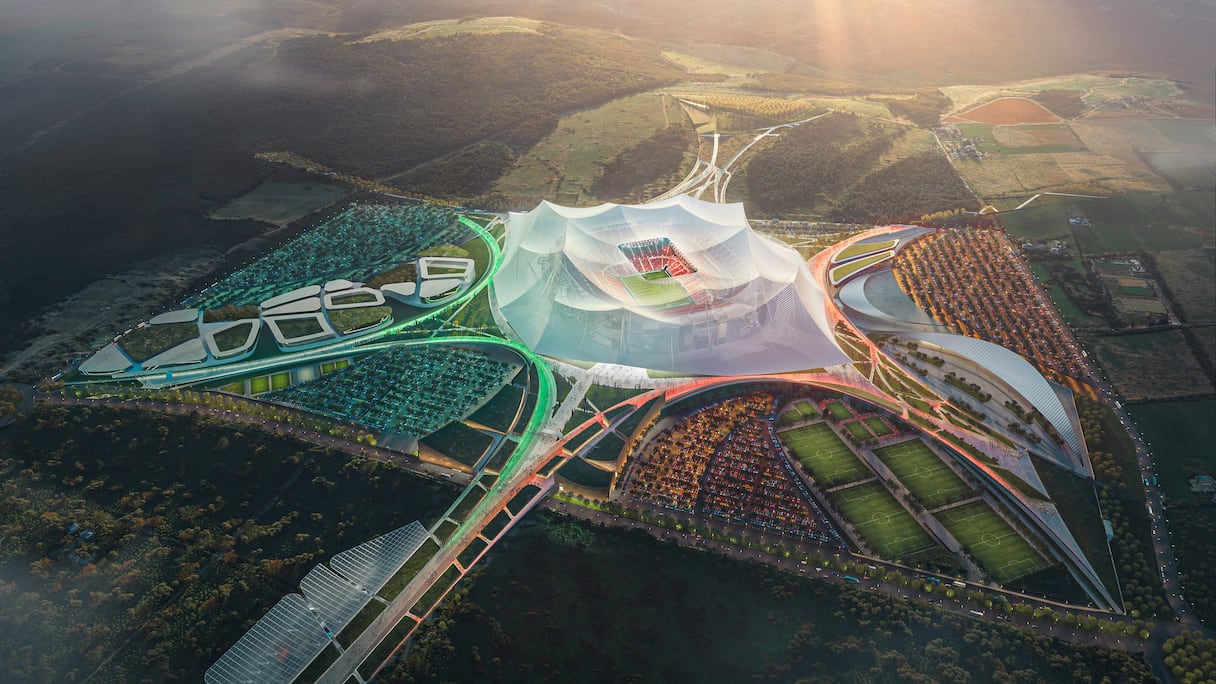
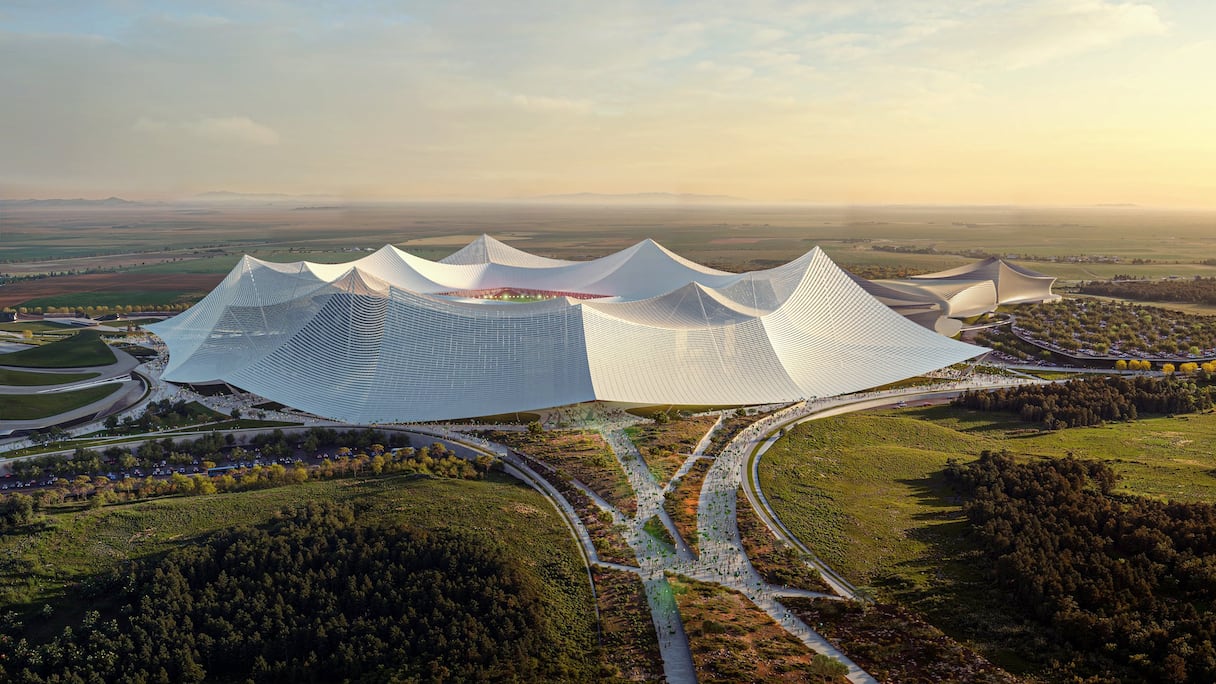
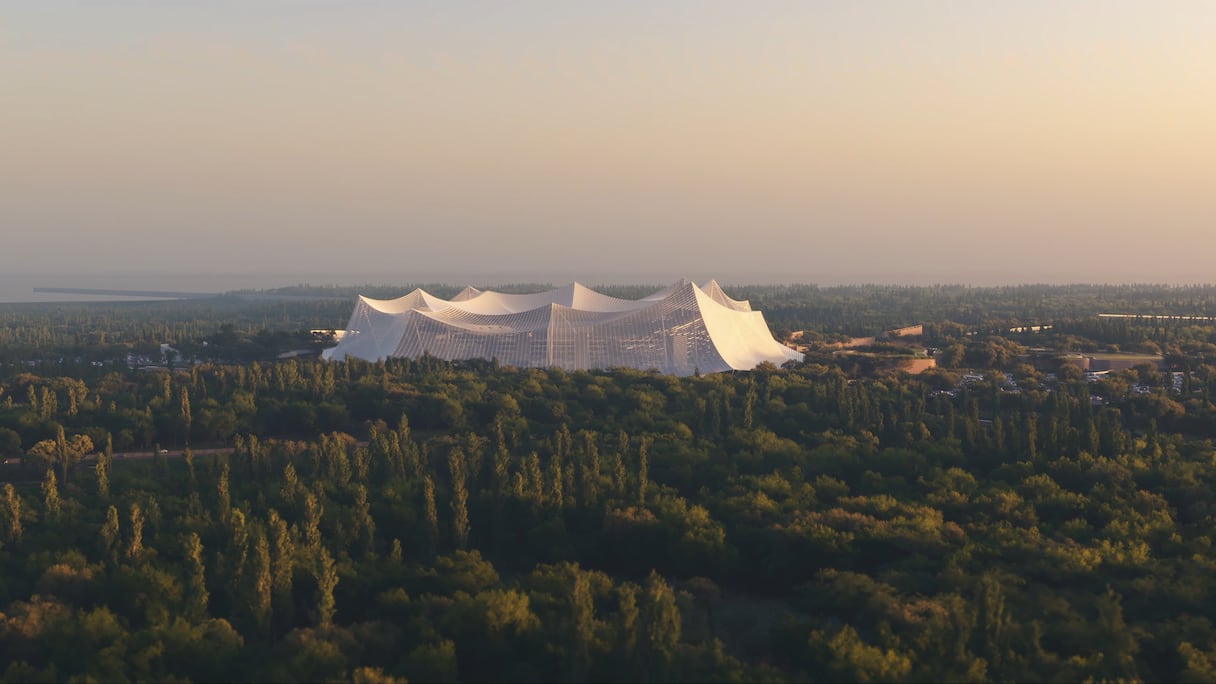
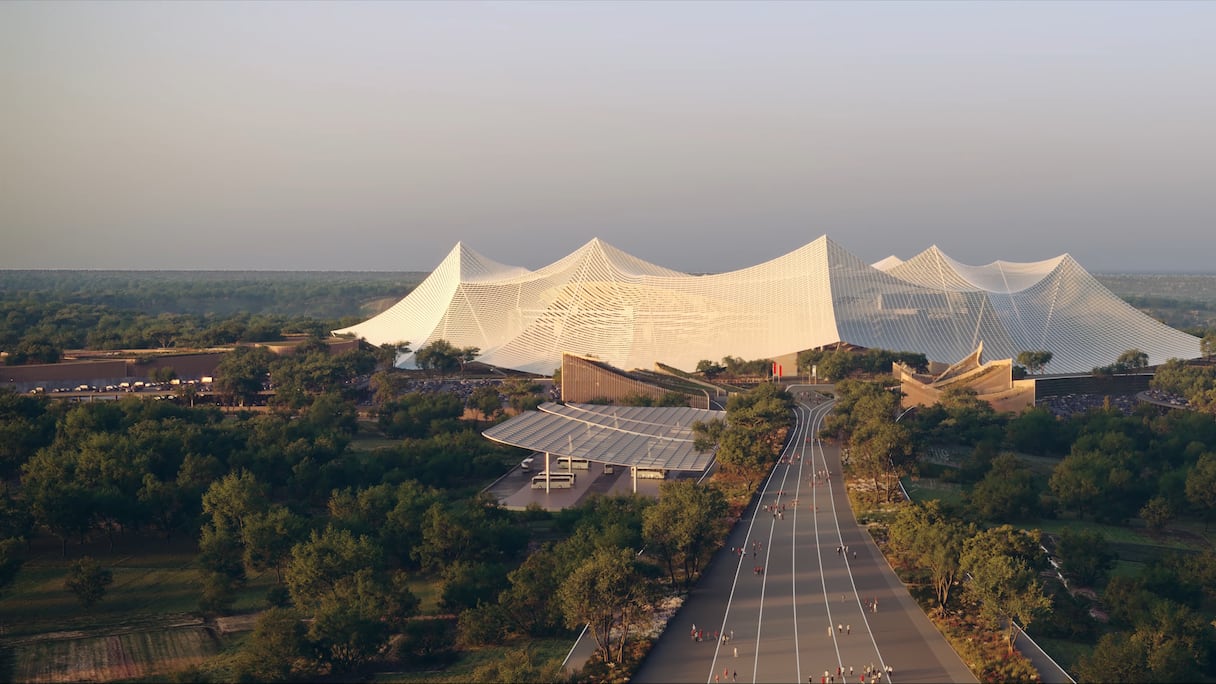

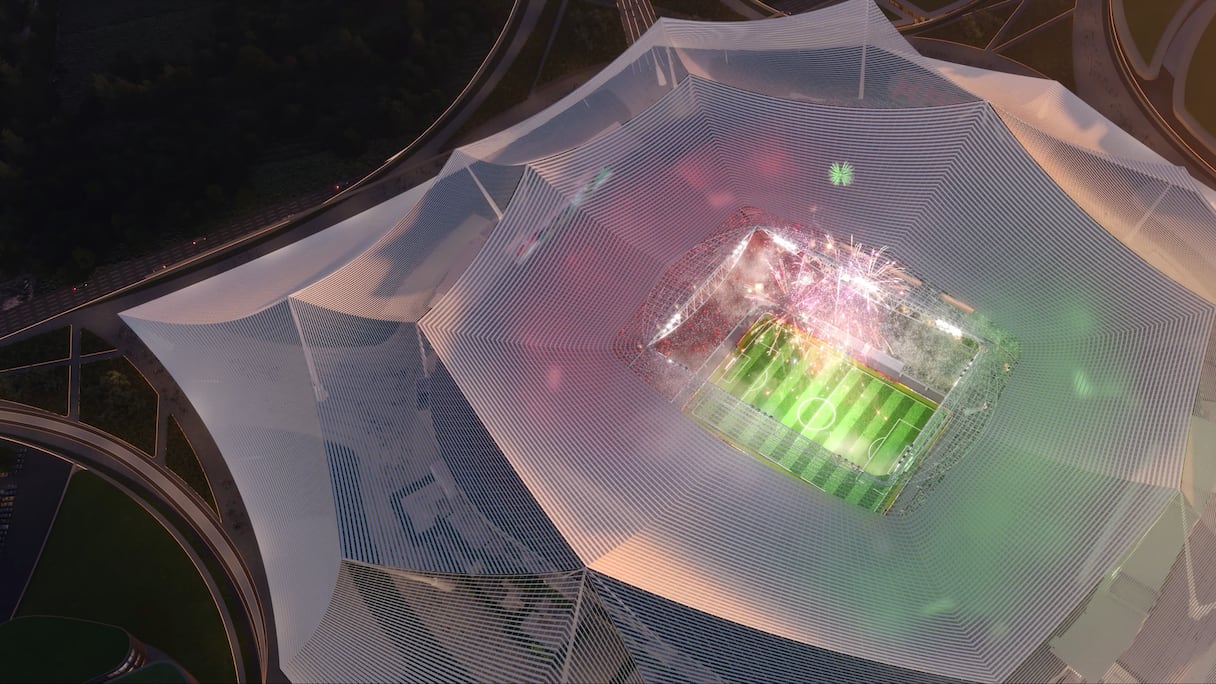



Model of the Grand Hassan II Stadium in Benslimane.
The new contract reveals the scale of work underway around and inside the stadium, which will be the largest stadium in the world. It is expected to host the 2030 World Cup final, potentially putting it in the global spotlight just months from now.
According to exclusive information, construction work at the sports complex is progressing rapidly, particularly in recent days, from after August until now. New companies have joined the work inside the stadium, focusing, according to our sources, on the stands and changing rooms, as well as key infrastructure around the stadium. This infrastructure is overseen by the National Agency for Public Facilities (ANEP), which launched a tender in recent days to select the companies that will handle the Hassan II Stadium’s external development, with a budget of approximately 2,681,583,684 dirhams.
Meanwhile, work at the Hassan II Stadium is progressing faster than expected. According to exclusive information, new cranes are expected to be installed to begin fitting the stands on the stadium’s upper levels, with this work expected to be completed before the start of 2027.
Read also : Nador Gas Terminal: Questions over delay as project is deferred to next government
Additional work will also begin at the stadium, mainly involving the installation of all electrical equipment for high- and low-voltage systems. Other work will cover wastewater and solid waste management, as well as the construction of electrical substations to power the stadium’s floodlights, along with drinking water stations.
This work will pave the way for the stadium to gradually move into new phases next year. Work will begin on the stadium pitch, along with the construction of the other stadiums around the complex and the connection of the sports facility to various road networks, whether toward Benslimane or Casablanca.
Nador Port: A Strategic Hub on the Mediterranean
Near the city of occupied Melilla, on the Mediterranean coast, the Nador West Med project entered a new phase this September after receiving its first giant cranes a few days ago. Their arrival marks a promising start to container unloading and handling operations at the massive port.
Work is progressing rapidly across the other parts of Nador West Med, according to a comprehensive schedule aimed at bringing the port into commercial operation during the final months of 2026. A gradual start-up phase will begin, with full commissioning expected by mid-2027.
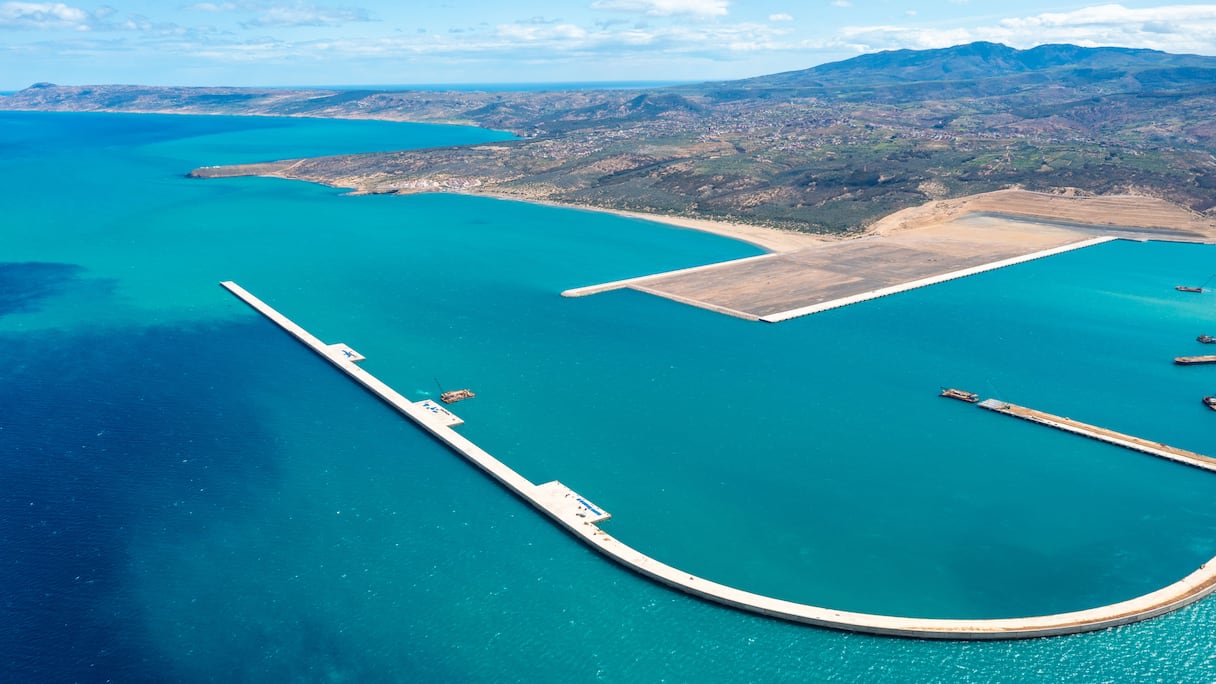
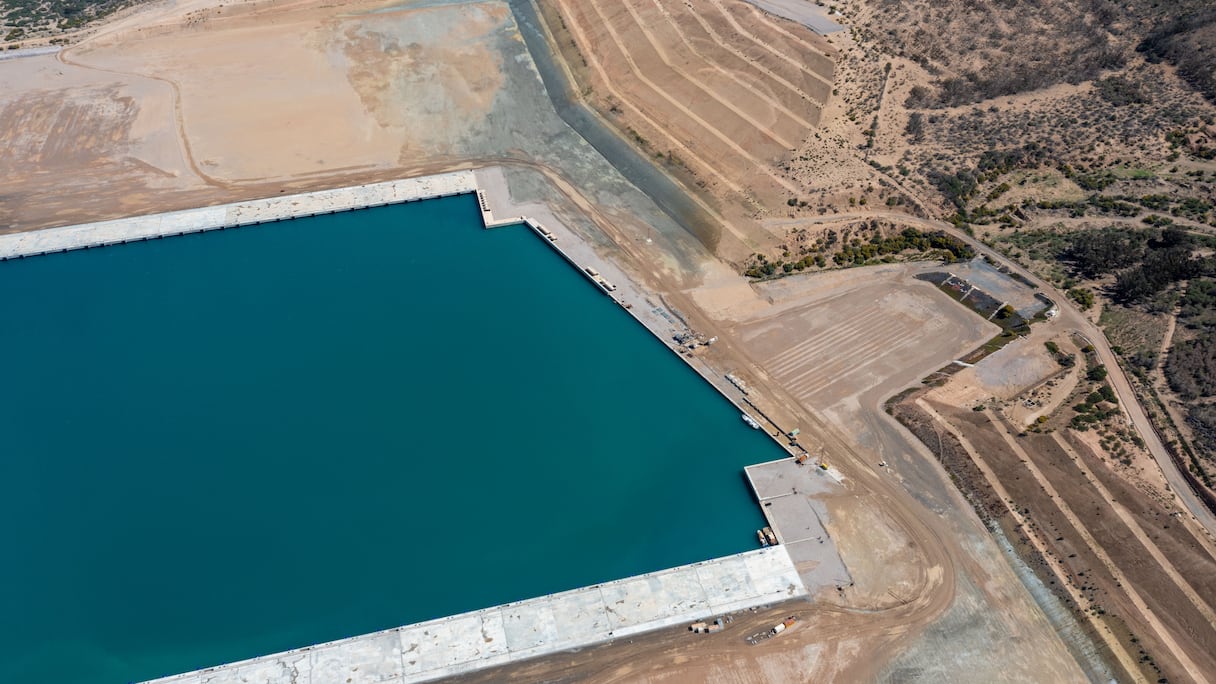
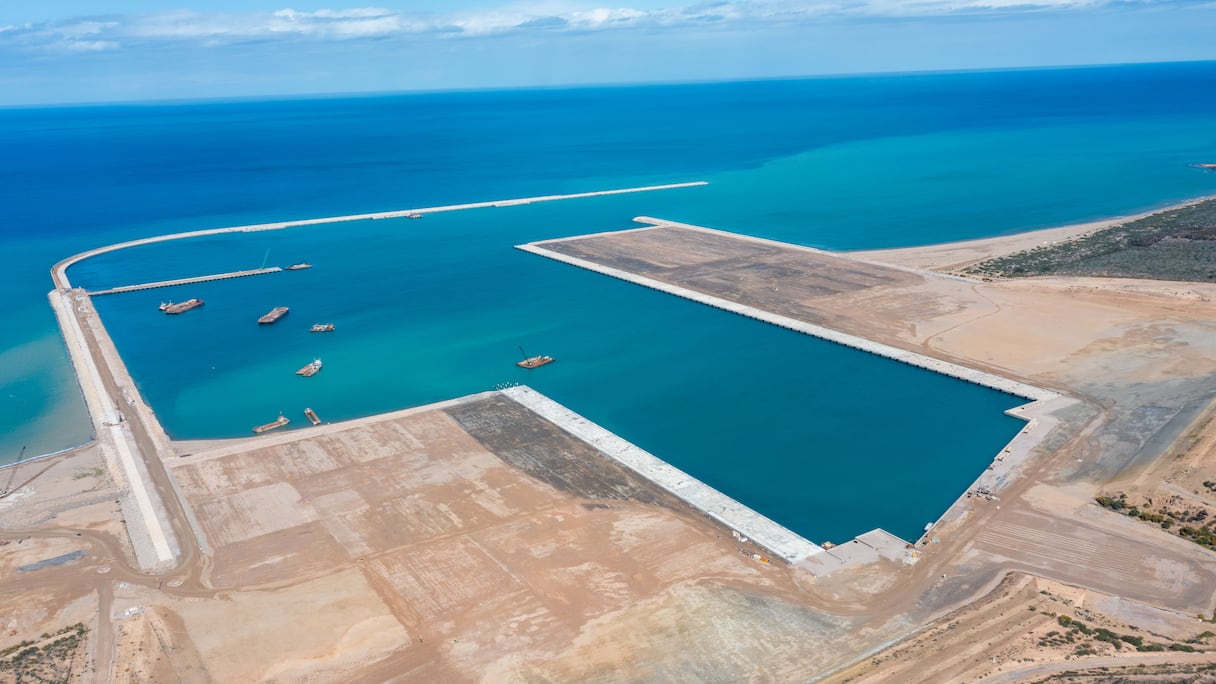
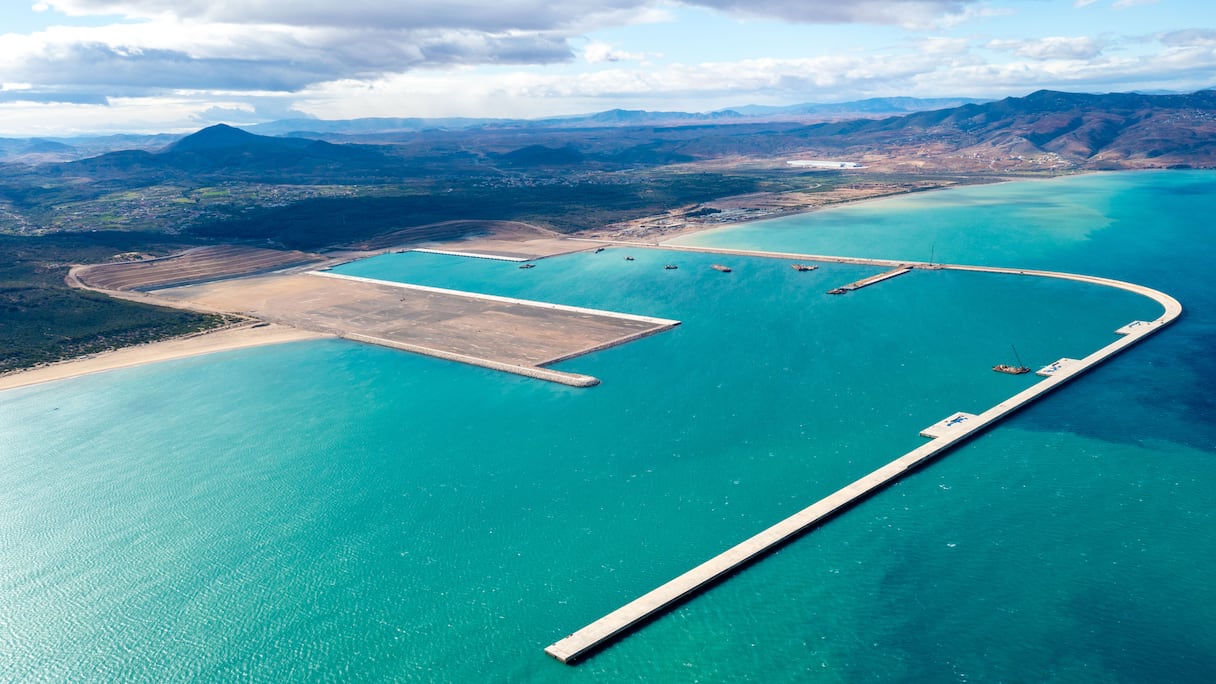
Nador West Med port. DR
According to new data, total investment in Nador Port exceeds approximately €4.7 billion. Construction has reached advanced stages, strengthening Morocco’s position, particularly on the Mediterranean, alongside Tanger Med, within the global trade network.
The port will become part of the maritime routes linking Europe mainly with Africa and other global markets after 2027. To this end, the port’s container terminal has received a large amount of essential equipment related to the installation of the first giant cranes designed to handle large container ships.
Once crane installation is completed, the port will move in the coming weeks to new phases focused on early preparations to receive both small and giant vessels, as well as the development of dedicated terminals for various loading, unloading and transshipment operations. This final stage will be followed by the port’s inauguration, making it ready to handle global and, in particular, African commercial traffic.
Around Nador West Med Port, located about 26 kilometers from the city center, a large number of road links are currently being built, including the Nador West Med highway. Comprehensive development work is also underway around the port and its entrances, along with the construction of about five kilometers of breakwaters extending into the sea.
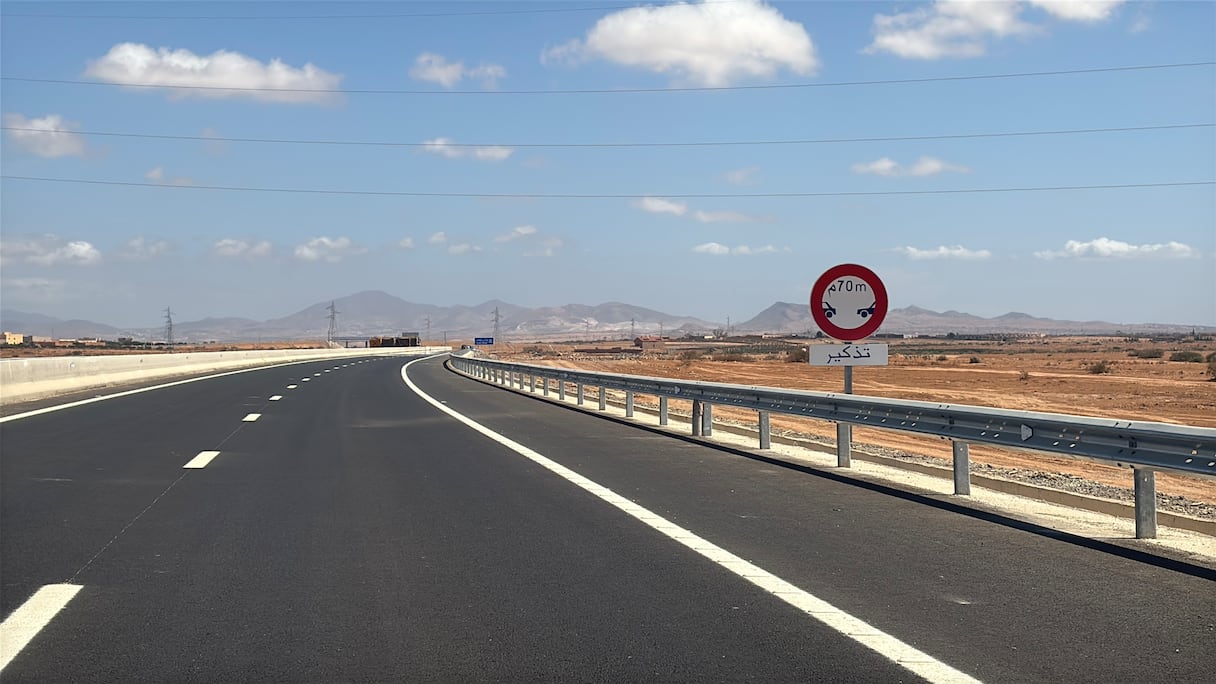

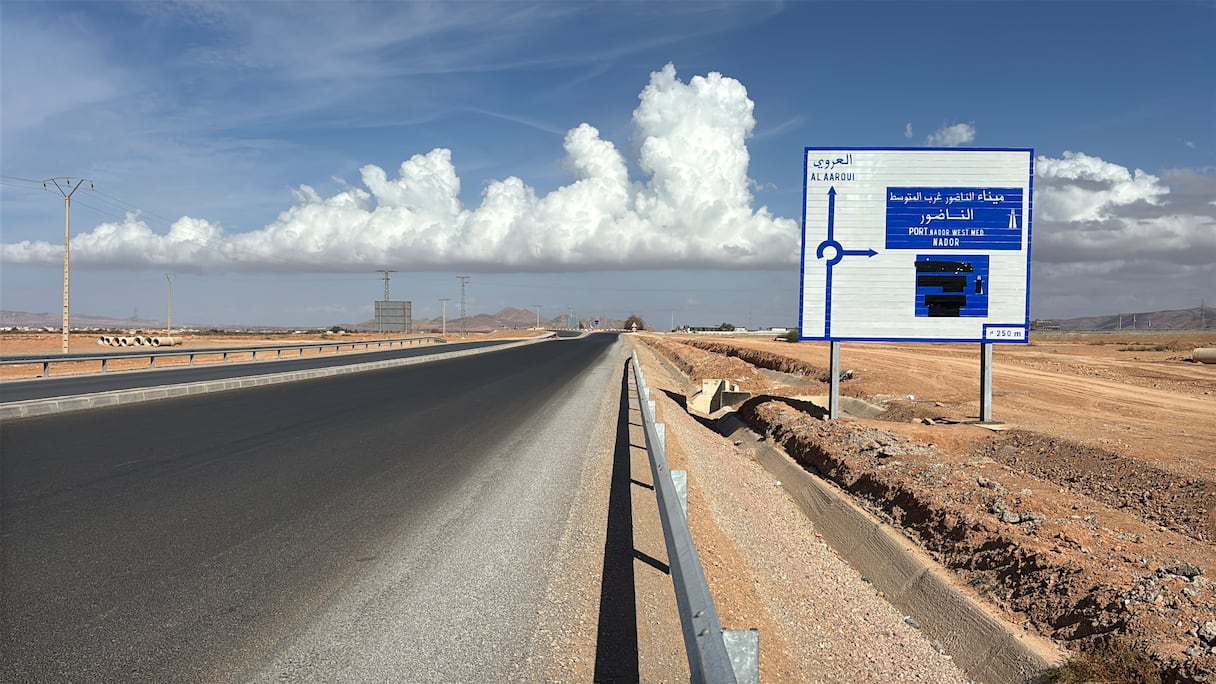
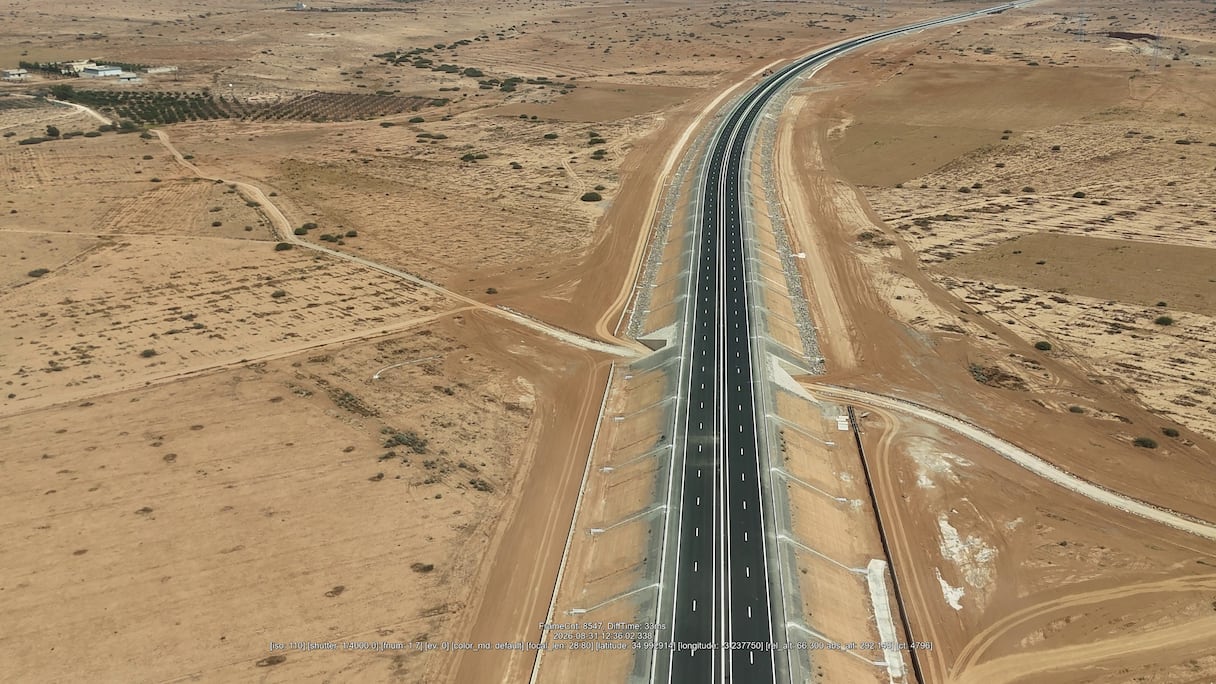


Driouch-Guercif highway nears completion with more than 95% of key section finished
The free zone at Nador Port, covering more than 650 hectares, is one of Morocco’s most strategically important free zones, as it is expected to host numerous companies and major industrial activities aimed at exports to Mediterranean countries and markets around the world once the port becomes operational.
Dakhla Atlantic Port: Directing the Global Economy Toward Africa
On Morocco’s Atlantic coast, in the Moroccan Sahara, Morocco is building a major port hub with the capacity to channel global economies toward Africa. Dakhla Atlantic Port is therefore set to become one of the world’s most important and largest ports in the coming period, with its annual capacity expected to exceed 8 million containers.
Work is progressing rapidly at Dakhla Atlantic Port, reaching advanced stages that have exceeded expectations thanks to the extensive work carried out by Moroccan companies on the quays, core facilities, basins and breakwater structures. This means work at the port will attract attention in the next phase, which is set to begin in the coming weeks of 2026.
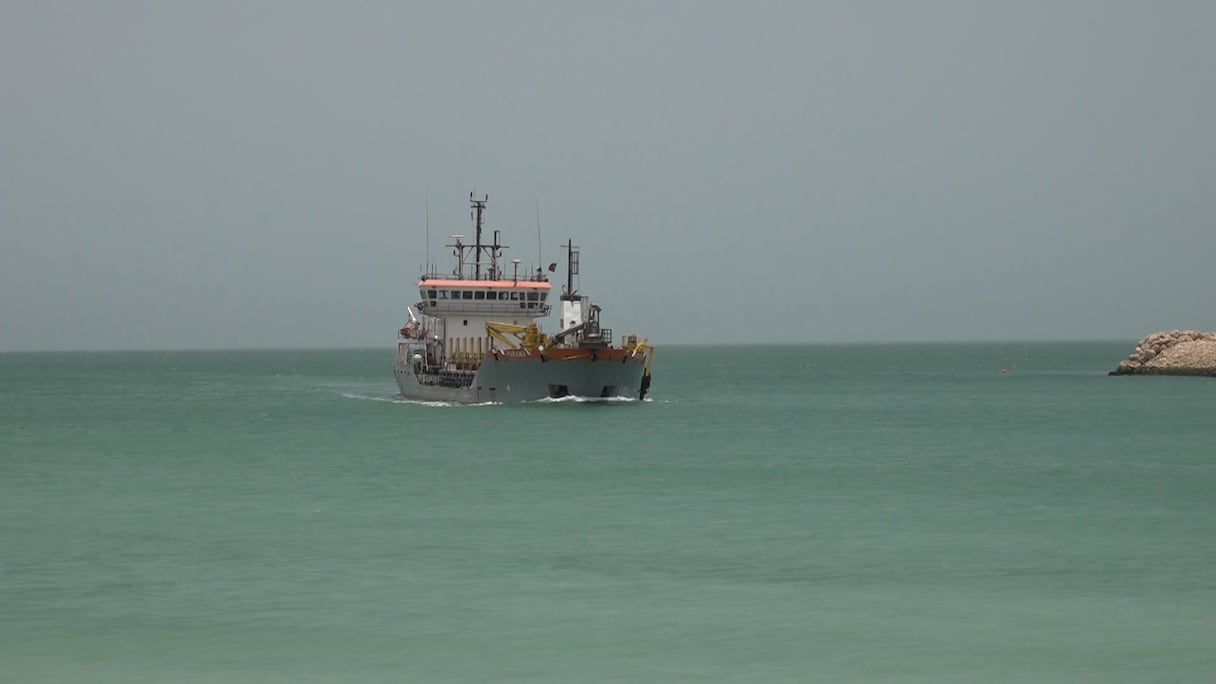
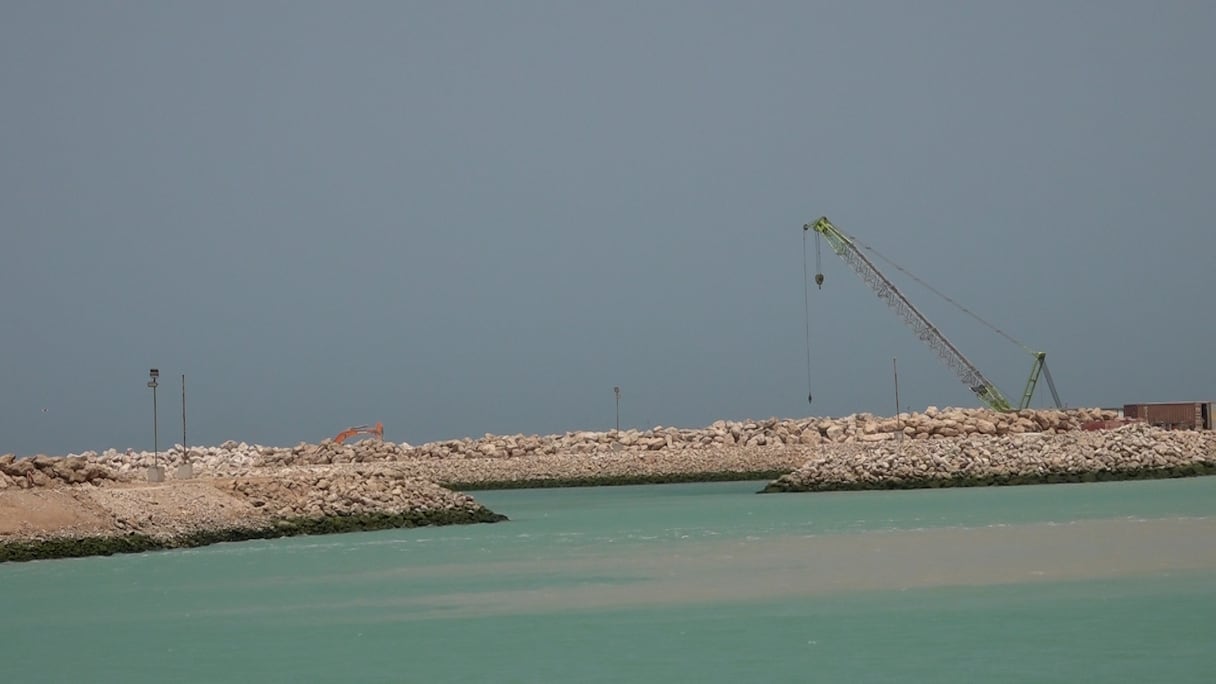
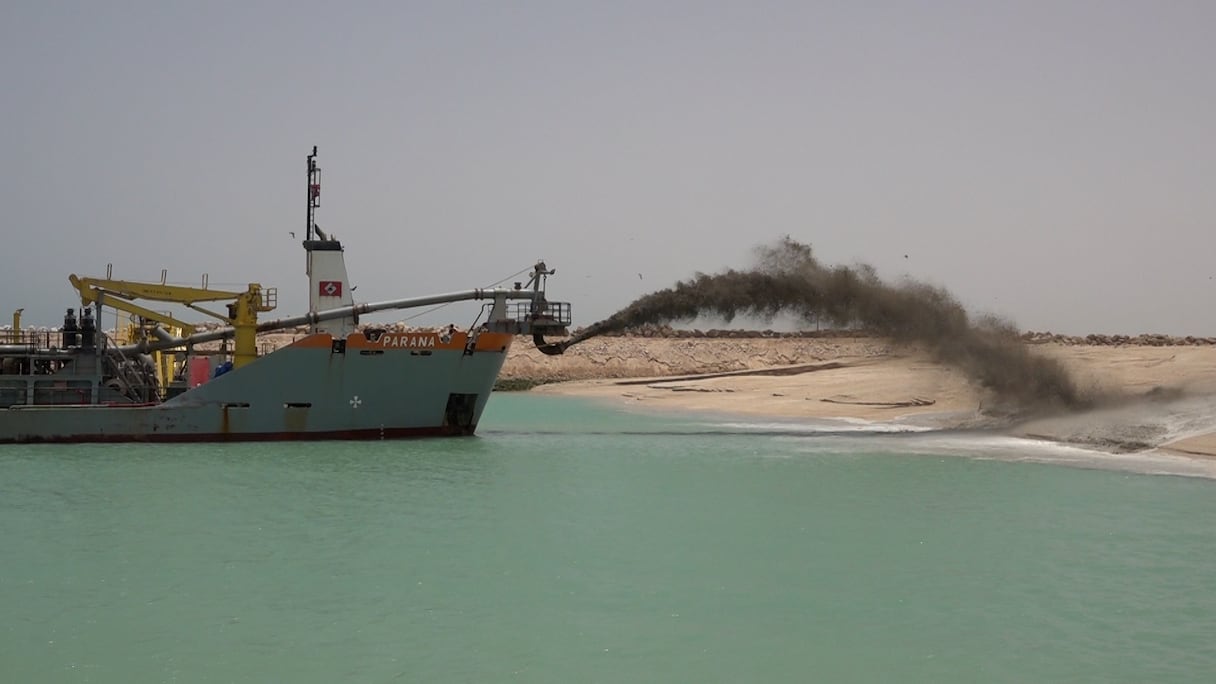
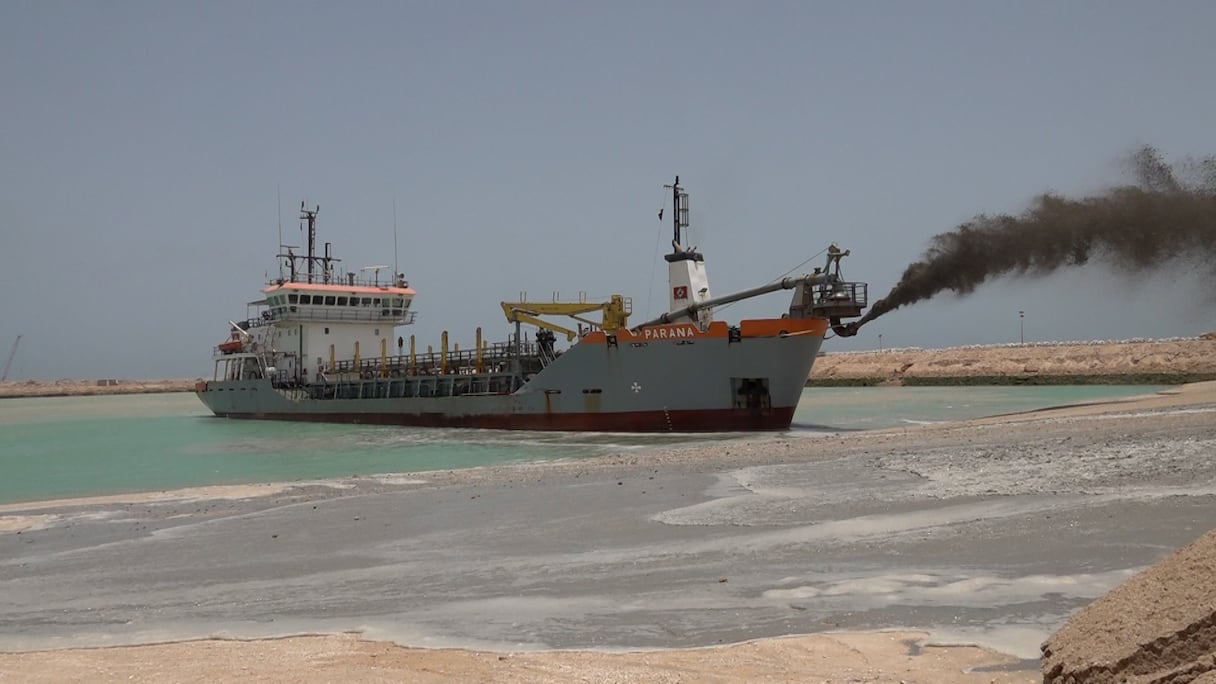
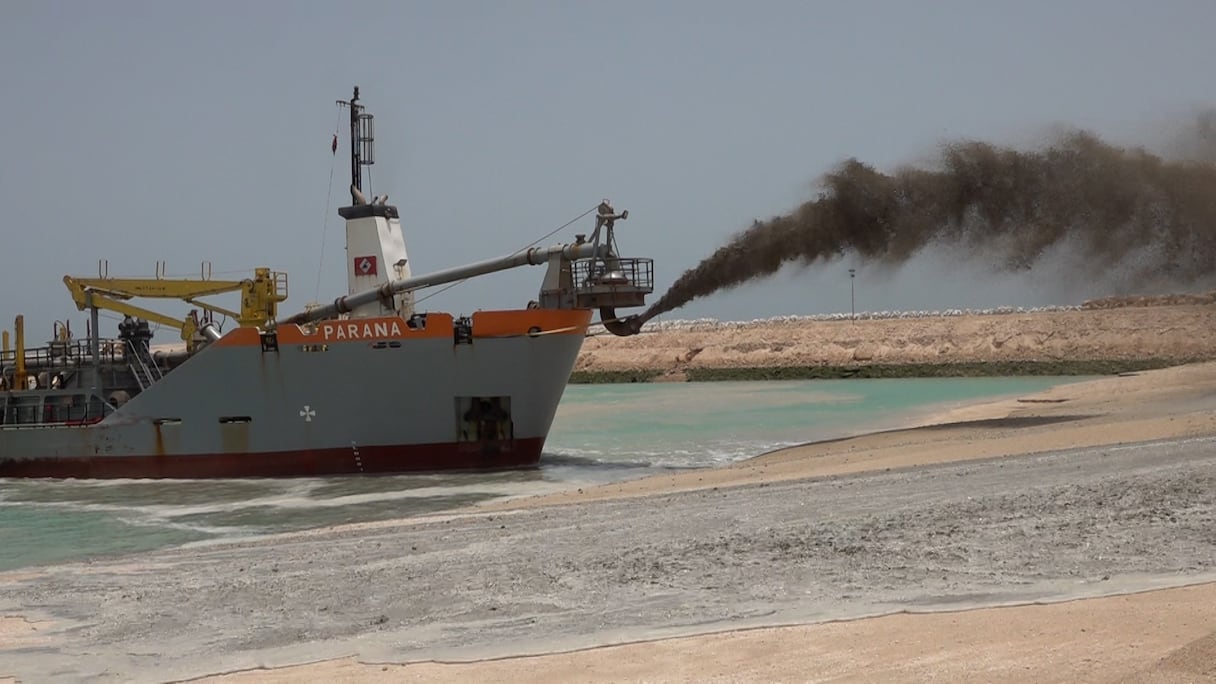
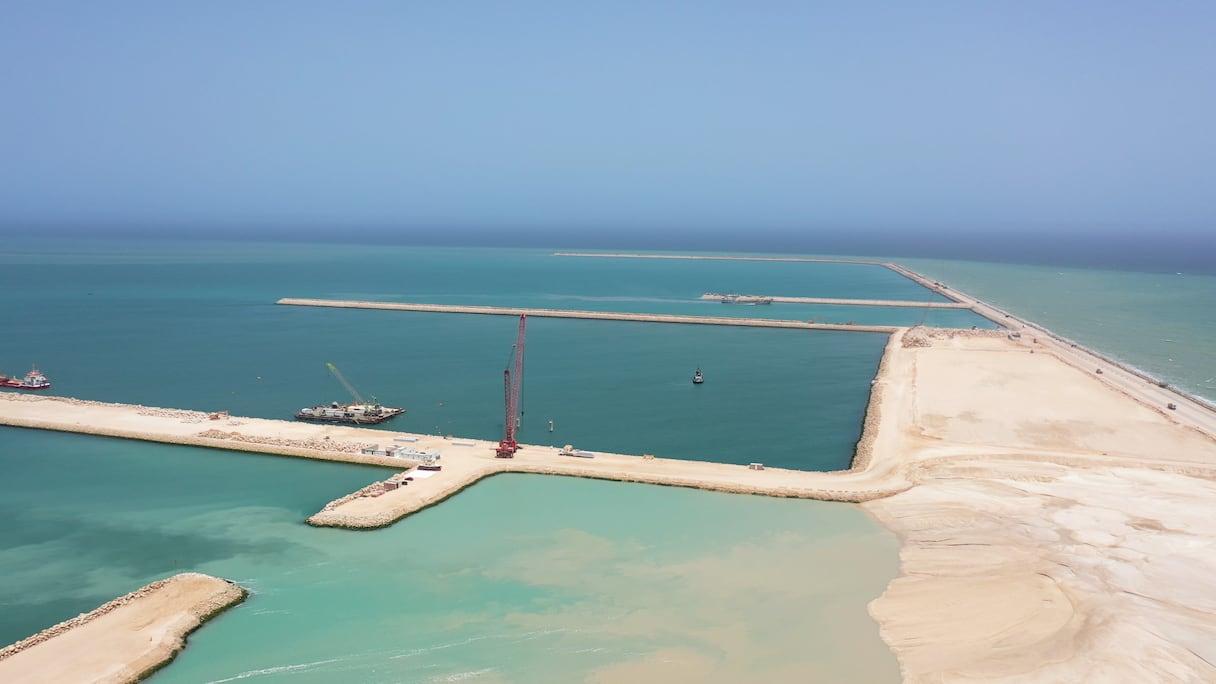
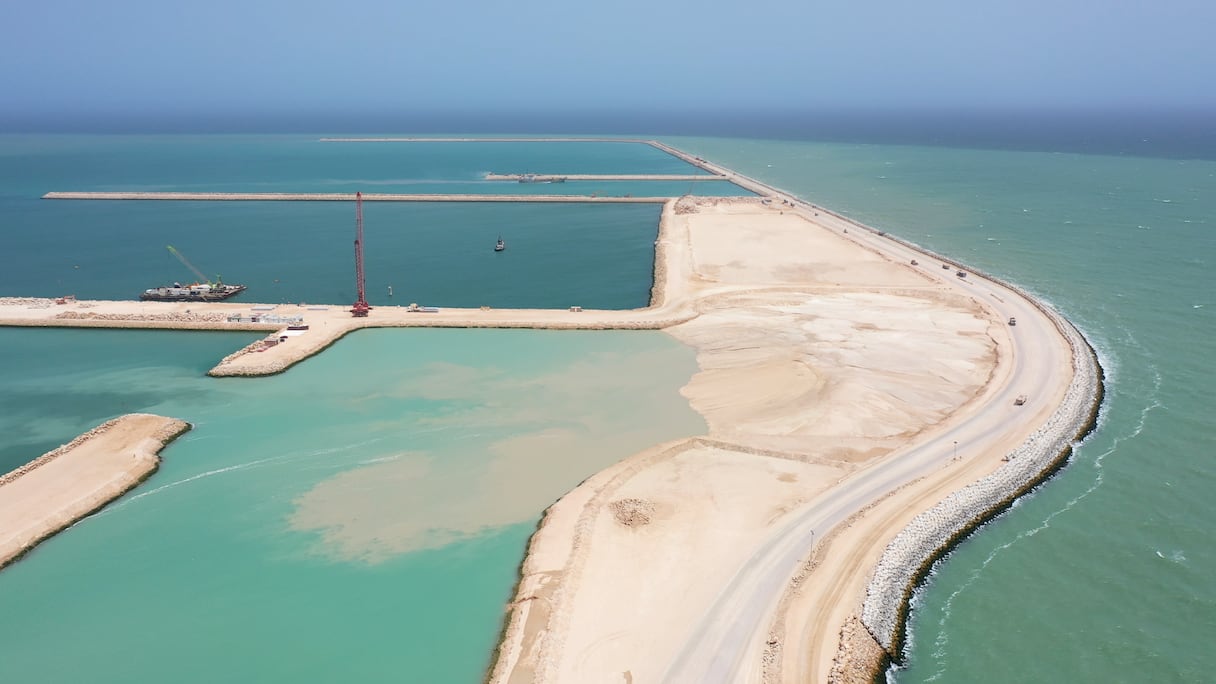
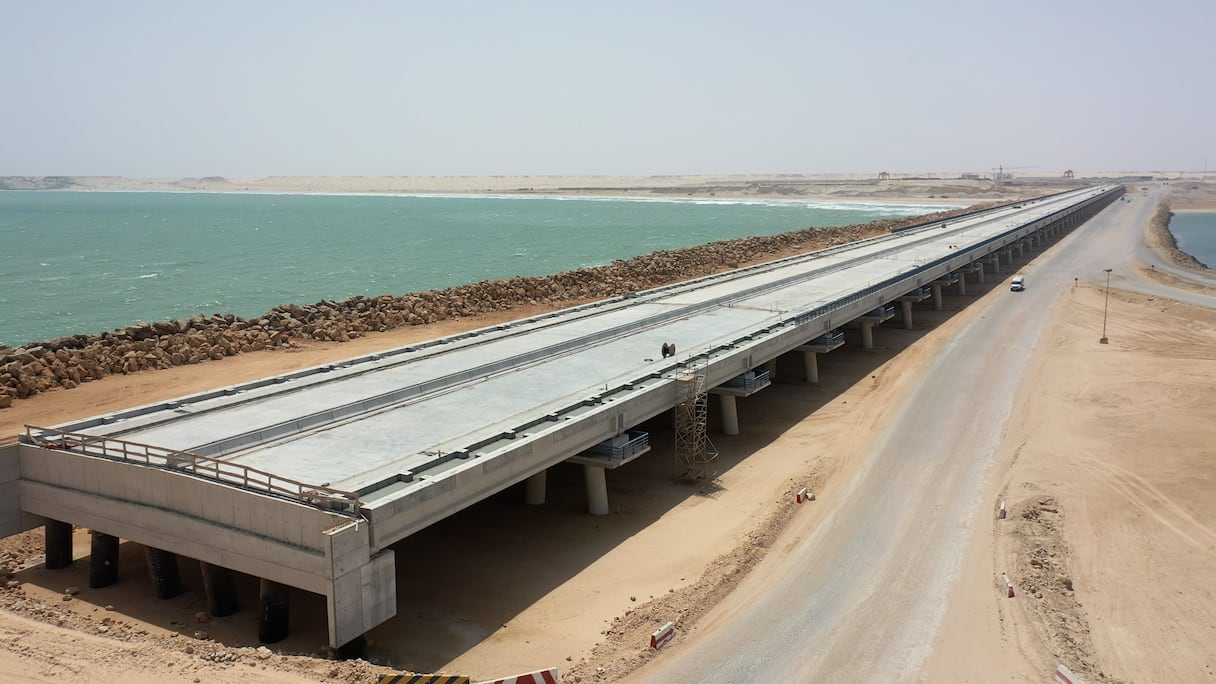
Dakhla Atlantic Port nears completion
According to the latest available data, overall progress on the port project recently exceeded 66%. Work is now moving into new phases involving the opening of additional construction sites that could be completed next year, in 2027. This follows the installation of around 10,000 concrete blocks forming the basic infrastructure of berthing facilities within the port complex. The current phase also includes continued construction of maritime protection structures extending for about eight kilometers.
Around 60 hectares of flat land are currently being developed, while the basins at the two main quays are being equipped. The first has a depth of 12 meters and a length of 600 meters, while the second has a depth of 14 meters and a length of 500 meters. This will enable the Atlantic port to receive giant vessels operated by global companies, particularly as the project has been allocated more than 12.6 billion dirhams. The investment covers a commercial port, a fishing port, as well as industrial, logistics and service zones.
From Tangier to Agadir: Morocco to Have One of the World’s Longest High-Speed Rail Networks
Over a distance of more than 630 kilometers, Morocco is entering a new phase by extending its high-speed rail network from Tangier to Agadir. King Mohammed VI inaugurated the project at Rabat Agdal station several months ago. The project involves extending the high-speed rail line to Marrakech.
By the end of 2030, Morocco will be among the countries with the longest high-speed rail networks in the world, particularly after the high-speed line linking Marrakech to Agadir entered a new phase. Morocco recently declared the project to be in the public interest, along with the rail link connecting Chichaoua and Essaouira.
Once all land acquisition procedures are completed, actual construction work will begin in the coming months. The project falls within the framework of the Marrakech-Agadir high-speed rail line, which has been allocated around 55 billion dirhams.
Moroccan companies in particular, alongside other major international firms, will face significant challenges in bringing high-speed rail to the city of Agadir by 2029. The companies will also face major geographical challenges, as around 70% of the planned structures consist of bridges and tunnels due to the mountainous terrain between Marrakech and Agadir.
The National Railway Office (ONCF) will undertake major infrastructure works in the Casablanca-Settat region as part of the Kenitra-Marrakech high-speed rail project, with the aim of providing infrastructure suited to current and future needs, particularly along the Mohammedia-Nouaceur corridor. The project also involves securing funding and preparing for the launch of construction work. ONCF said the work aims to add new tracks, bringing the total to six: two dedicated to high-speed trains, two for commuter trains and two for other trains. The increase in the number of tracks will require the expansion of at least 40 engineering structures in the Casablanca prefecture.
The work currently underway in several areas is expected to continue through the end of 2027, according to available data. It will be carried out in several phases, each requiring specific train operating schedules that take into account work planned at night and, in some cases, during the day. ONCF said it has taken all necessary measures to ensure the continuity of its services under the best possible conditions of comfort and safety. Since September 8, a comprehensive system has been put in place to guide and assist passengers at major stations.
The project is a strategic driver of transformation, extending the Tangier-Kenitra high-speed line by an additional 430 kilometers and strengthening connectivity between the major corridors linking northern and southern Morocco. This major infrastructure project represents a qualitative leap in mobility, allowing Tangier and Marrakech to be connected in just two hours and 40 minutes while providing fast, smooth and sustainable travel.
Read also : Inside Morocco’s biggest waste-to-energy project: cost, timeline and key players
Through the extension of the high-speed line currently linking Tangier and Kenitra to Marrakech and then Agadir, Morocco aims to build one of the longest high-speed rail networks in the world. The project includes construction of the high-speed rail infrastructure and the acquisition of 168 new trains, as part of a total investment of nearly 96 billion dirhams (about $10 billion). Of this amount, 53 billion dirhams ($5.3 billion) will go toward building the new line, 29 billion dirhams (about $3 billion) toward upgrading and renewing the rail fleet, and 14 billion dirhams toward developing urban transport networks in Casablanca, Rabat and Marrakech.
The project to build a new rail line linking Rabat, Casablanca and Marrakech, with direct connections to Rabat Airport and Mohammed V Airport in Casablanca, as well as a link to the Hassan II Stadium station in Benslimane, one of the stadiums that will host 2030 World Cup matches, is among the projects Morocco is currently working on. Once completed, it could reduce travel times to one hour between Tangier and Rabat, one hour and 40 minutes between Tangier and Casablanca, and two hours and 40 minutes between Tangier and Marrakech.