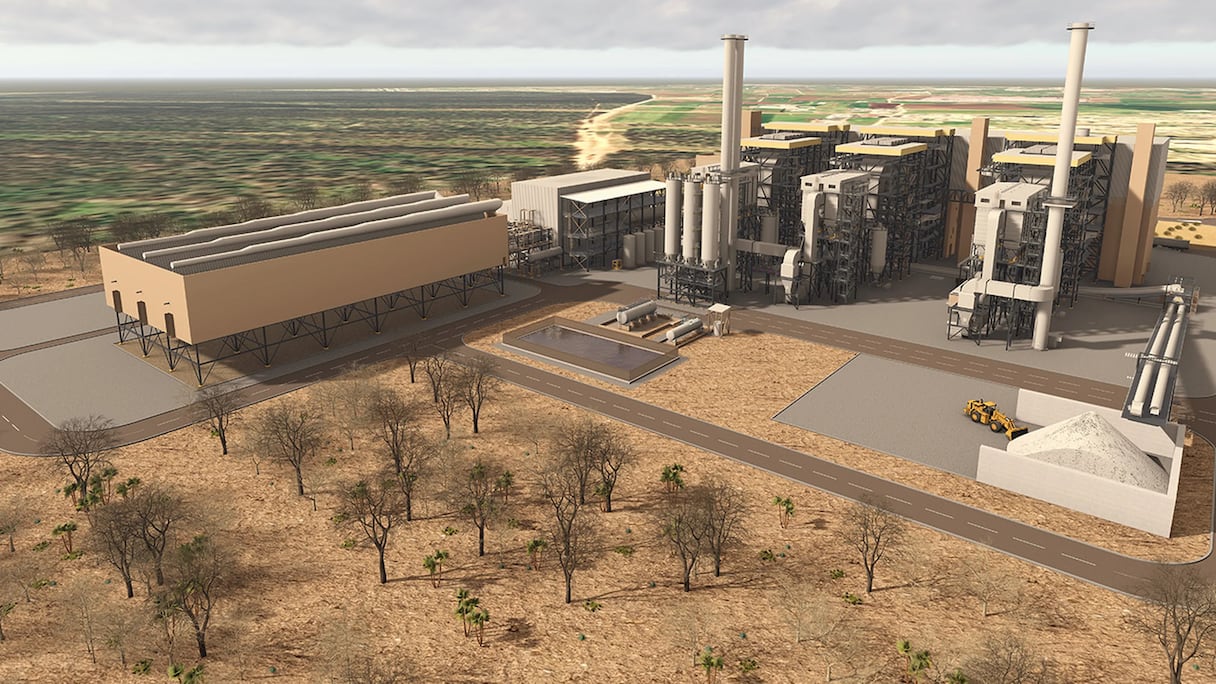
As Le360 first reported in February 2025, the project is being developed by an international consortium comprising Moroccan company Nareva, Japan’s Itochu Corporation, and Swiss-Japanese group Kanadevia Inova, which is leading the consortium. The concession will run for 33.5 years, including the construction phase. Under the agreement, Itochu will acquire a stake in the project company, Al Beida Clean Power, through its UK subsidiary, I-Environment Investments Ltd.
Alongside the concession agreement, power purchase agreements were signed with the National Office of Electricity and Drinking Water (ONEE) and the Casablanca-Settat Regional Multi-Service Company (SRM), securing off-take for the electricity that will be generated by the future facility.
Described as Morocco’s first large-scale integrated waste-to-energy project, the initiative is designed to address several challenges simultaneously, including sustainable waste management, reducing the volume of waste sent to landfill, generating electricity, and supporting the transition away from fossil fuels.
Read also : Morocco to build first waste-to-energy plant in Casablanca
Each year, approximately 1.5 million tonnes of municipal solid waste generated in Casablanca will be incinerated. The heat produced will generate electricity with an estimated capacity of 115 MW. According to a statement from Itochu, the project will also include a 4 MW biogas power plant that will capture methane from landfills, as well as a 50 MW solar power plant to be built on reclaimed landfill sites.
Overall, the facility is expected to generate enough electricity to meet the needs of around one million people—roughly a quarter of Casablanca’s population. Itochu also estimates that the project will prevent up to 128 million tonnes of CO₂ emissions over the life of the concession, contributing to Morocco’s transition toward a low-carbon economy while strengthening the country’s energy security.
The project also includes the comprehensive management of Mediouna’s environmental legacy through the operation, closure, and rehabilitation of existing landfill sites, along with the development of new engineered landfills.
Commissioning expected by mid-2030
Kanadevia Inova, the consortium’s lead partner, confirmed that the project is expected to enter its operational phase soon. According to comments by the company’s CEO, Bruno-Frédéric Baudouin, to Reuters, construction is expected to begin before the end of the year once financing has been fully secured, with funding to come exclusively from domestic sources.
Construction, which has been awarded to Moroccan contractor Somagec, is expected to take around three and a half years. However, waste treatment and electricity generation could begin between six and ten months before the project is fully completed. Full commissioning is scheduled for mid-2030.
The facility will be the second of its kind in Africa and is expected to significantly reduce methane emissions from the Mediouna landfill, the largest in Morocco. According to the consortium’s chief executive, its environmental impact would be equivalent to reducing emissions by roughly 20% of Switzerland’s annual total, or removing around 300,000 cars from the road.
A flagship project championed by Casablanca’s city hall
The project forms part of Casablanca Mayor Nabila Rmili’s broader strategy to fundamentally transform waste management across the metropolis. Speaking in May on Le360’s Grand Format program, she highlighted both the scale and complexity of the undertaking, describing it as one of the most expensive projects ever launched by the city, second only to the T1 and T2 tramway lines, which cost MAD 13 billion.
She also pointed to the land acquisition challenges that marked the project’s launch, including the purchase of a 265-hectare site for approximately MAD 500 million. The mayor further emphasized the environmental urgency posed by the former landfill, describing it as a mountain of waste nearly 70 meters high that represented a major environmental hazard.
Read also : EBRD, ONEE sign €250 million loan agreement to Boost Morocco’s water security
Pending the commissioning of the new Waste Disposal and Recovery Center, an interim solution has been put in place through a controlled landfill site whose initial three-year lifespan has been extended with the addition of a fourth disposal cell.
The project marks a shift away from a landfill-based model toward an integrated approach combining recycling, energy recovery, and reduced environmental impact. During the construction phase, Al Beida Clean Power will ensure continuity of waste management services before gradually transitioning to the new system from the fourth year onward.
Meanwhile, rehabilitation of the former Mediouna landfill has already begun, with part of the site being transformed into a 40-hectare green space that will eventually become a public park, underscoring both the environmental and social dimensions of the project.


