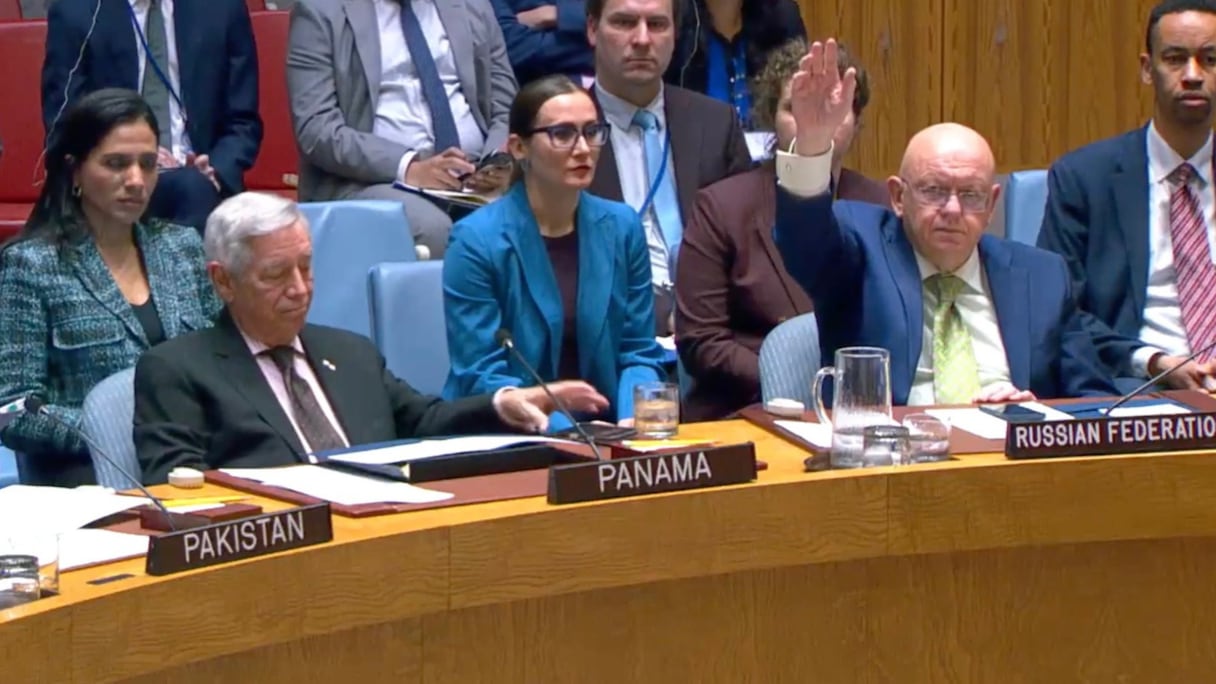
The summons is official. In a letter dated November 2 and addressed to all permanent missions, General Assembly President Khalilur Rahman announced a plenary meeting for November 10 in the General Assembly Hall in New York. The session will be held under agenda item 62, “Use of the veto,” following the veto cast by “a permanent member” at the Security Council’s 10,260th meeting on October 30, concerning “the situation in Western Sahara.”
The mechanism is relatively new. Adopted in April 2022 in the wake of Russia’s veto over Ukraine, Resolution 76/262 requires the General Assembly to convene within 10 working days of any Security Council veto. The veto still stands, but it no longer comes without a price: the country that cast it is given the first opportunity to explain itself before nations that enjoy no such privilege. The Assembly has already invoked the procedure this year, on October 1, following a Russian and Chinese veto on an Iran-related resolution, as UN News recalls.
Read also : After bringing down MINURSO, Moscow looks for a scapegoat
Moscow will therefore have to account for a vote that is difficult to defend. On October 30, the US-sponsored draft secured 11 of the Security Council’s 15 votes. Only one country voted against it: Russia. Moscow’s rival draft, meanwhile, attracted just three votes. The outcome is now familiar: without a resolution, MINURSO’s mandate expired on October 31, and the UN began winding down the mission the following day.
Russia has already rehearsed its defense. On the evening of the vote, Ambassador Vassily Nebenzia accused Washington of committing the “political murder of the mission.” On November 1, Russian Foreign Ministry spokesperson Maria Zakharova likewise blamed the United States for bringing the mission “to the brink of liquidation,” without mentioning the veto. Before the General Assembly, Russia will have to sustain that account in front of delegations perfectly capable of counting to eleven.
For Algiers, the predicament is even more awkward. In a statement issued on October 31, its Foreign Ministry expressed “deep regret” over MINURSO’s demise, blaming only the American draft and saying nothing about the Russian veto that Algerian diplomacy had moved heaven and earth to secure, as Le360 reported. On November 10, that silence will become harder to maintain. If Algeria speaks in defense of the veto, it will acknowledge having supported the very act that ended the mission whose demise it professes to regret. If it remains silent, it will leave Moscow alone to answer for a decision taken in response to its pleas.
Read also : Sahara: Algeria laments MINURSO’s end after helping bring it about
Above all, the debate is likely to lay bare the balance of power. The Security Council’s other 14 members either voted for the American draft or abstained. Not one voted against it. Before an Assembly of 193 countries, a large majority of which support Morocco’s autonomy plan, defending the veto will look less like an opportunity to command the stage than an exercise in explaining an isolated vote.
The session will have no legal effect. MINURSO will not be brought back to life, and its liquidation will continue. But the very decision to convene the Assembly amounts to a rebuke. If all 193 member states are being called together, it is because a single permanent member blocked a resolution supported by 11 of the Security Council’s 15 members. The mechanism was created for precisely this purpose: to make clear that a veto is not the international community’s final word, but an exception for which it demands an explanation. On November 10, those who sought this veto will have to say publicly where they stand, before an international community that has already made its position clear.
On November 10, Moscow will have to defend its veto. Algiers will have to decide whether to own it.
