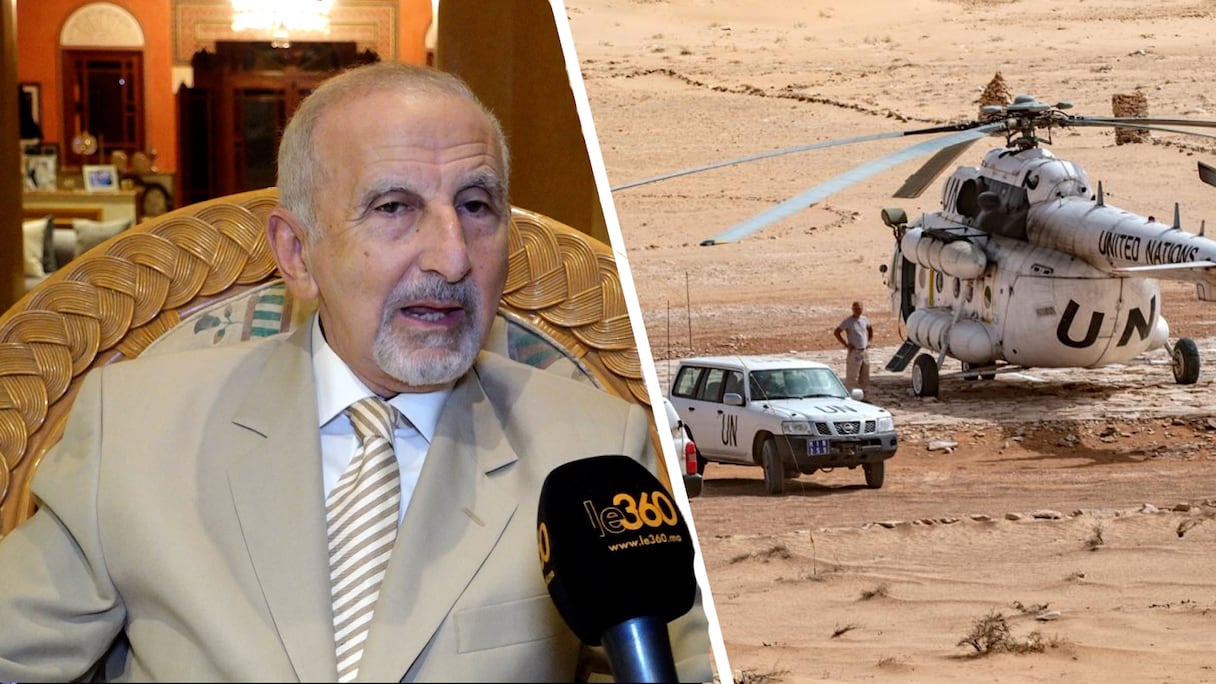
The latest developments at the UN Security Council over the Moroccan Sahara, which resulted in the non-renewal of MINURSO’s mandate, hastened the end of the mission’s presence on Moroccan territory, political scientist Tajeddine Hosseini said on Saturday, October 31.
According to him, the initial scenario was based on the adoption of the U.S. draft resolution, which gave greater weight to Morocco’s autonomy initiative under the Kingdom’s sovereignty while also providing for a major overhaul of the UN mission.
Russia’s veto of the text, however, prevented its adoption and, consequently, the renewal of MINURSO’s mandate.
For Hosseini, this situation paved the way for the mission’s departure from Morocco. He believes Rabat’s response, set out in a statement from the Royal Cabinet, reflected the legal and political consequences of this new situation, since the mission’s mandate had not been renewed.
The political scientist recalled that the U.S. draft also provided for a major review of MINURSO’s role, including a significant reduction in its military component and a redefinition of its tasks under the authority of the UN secretary-general.
In his analysis, the mission’s historic referendum-related role was also due to be significantly challenged, while Morocco’s autonomy plan was set to take center stage in the future political process.
Read also : Sahara: Algeria laments MINURSO’s end after helping bring it about
The U.S. draft resolution received 11 votes in favor at the Security Council. Russia, a permanent member, nevertheless exercised its veto power, preventing its adoption.
A counter-draft presented by Moscow also failed to secure the votes needed for adoption. Since neither text was adopted, MINURSO’s mandate expired on October 31, 2026.
Hosseini believes this diplomatic sequence produced the opposite of what Moscow had sought to achieve by preventing the regular renewal of the UN mission.
According to the political scientist, Morocco emerged as “the real strategic winner of this situation.”
Rabat therefore considered that MINURSO “no longer had a reason to exist and had to withdraw,” as the mandate providing the legal basis for its presence expired at midnight on October 31.
For Hosseini, this development marks a major break with a UN framework established in 1991 and fundamentally changes the parameters that have shaped the handling of the Sahara issue for more than three decades.
On the ceasefire, the political scientist stressed that Morocco has reaffirmed its commitment to respecting it.
He added, however, that the Kingdom firmly maintains “its legitimate right to self-defense,” in accordance with Article 51 of the UN Charter, in the event of a ceasefire violation or an attack on its territory.
For Hosseini, Russia’s veto has therefore had a major political effect. By preventing the adoption of the U.S. draft, Moscow also prevented the renewal of MINURSO’s mandate. A new phase is now beginning in the Sahara issue, without the UN mission that has been one of its main instruments on the ground since 1991.
