The statement was issued by Maria Zakharova, spokeswoman for Russia’s Foreign Ministry, and published on the ministry’s official website. It runs to just two paragraphs and points the finger at one country alone. The United States, it claims, sought to “artificially accelerate” a settlement, demanded a “drastic reduction” in the mission’s powers on the eve of the deadline, “including abandoning the organization of the referendum,” and then opposed an extension of the existing mandate, “bringing the Mission to the brink of liquidation.”
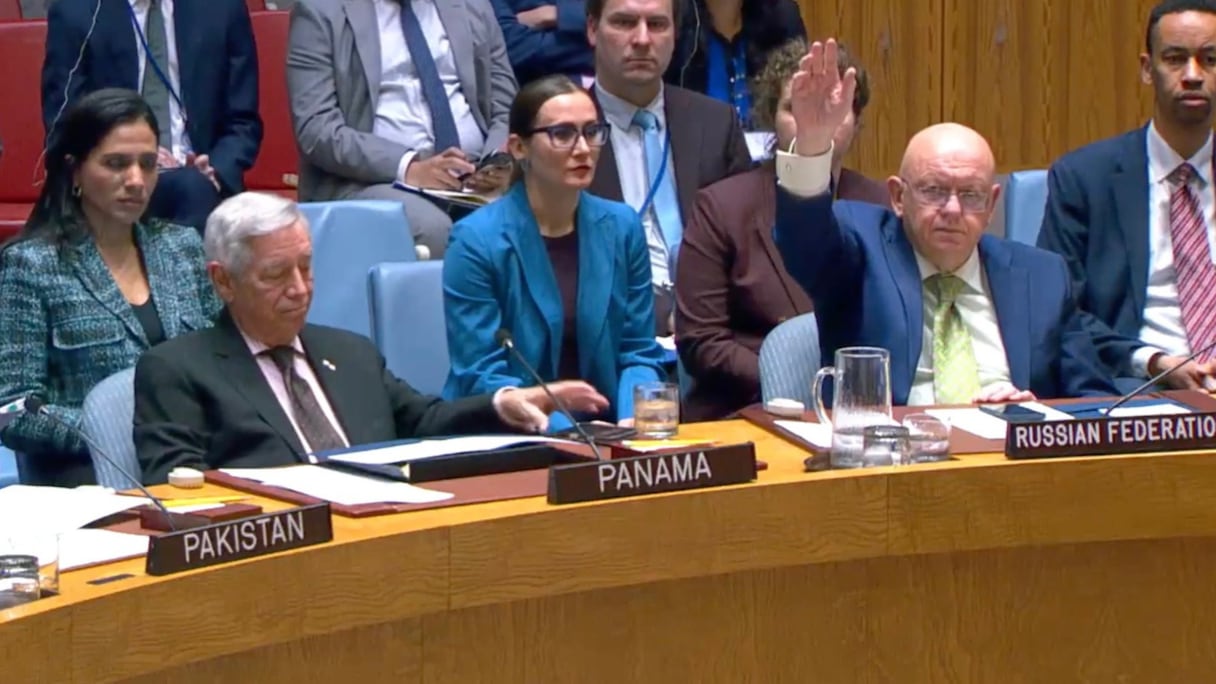
There is a glaring hole in that account. On October 30, the American draft secured 11 of the Security Council’s 15 votes. Only one member voted against it: Russia. And because Moscow holds a permanent seat, that single vote amounted to a veto, as the UN’s official record confirms.
Russia’s rival draft, meanwhile, secured just three votes, with 11 abstentions and one vote against from the United States. With only three votes, it fell well short of the nine required for adoption. Washington’s opposition made no difference to its fate. The only vote that prevented the adoption of a resolution extending the mission’s mandate by another year was Moscow’s. Zakharova’s statement says nothing about it.
The choice of words betrays the embarrassment. According to Moscow, the mission was “on the brink of liquidation.” Yet that very day, the UN Secretary-General announced that November 1 “marks the beginning of the liquidation period” for MINURSO. The mission was not teetering on the edge: it had already gone over. By presenting its fate as still hanging in the balance, Russian diplomacy avoids having to explain how it came about.
The scapegoat had already been chosen on the night of the vote. Russia’s UN ambassador, Vassily Nebenzia, accused Washington of committing the mission’s “political murder.” It was a peculiar murder, given that the man denouncing the crime was the one who raised the weapon at the Security Council table. The Polisario, for its part, knew exactly whom to thank: its representative, Sidi Omar, expressed his gratitude to Russia.
The Russian statement also takes liberties with diplomatic reality. It claims that “the directly concerned parties, including Morocco and Algeria,” agreed on the importance of allowing the territory’s population to “determine its own destiny,” and reproaches Washington for seeking to abandon the referendum. But the referendum did not disappear on October 30. It had long since vanished from the UN debate.
Since 2007, Security Council resolutions have called for a negotiated political solution without presenting a referendum as an option. Resolution 2797 of October 31, 2025, completed that shift: it calls on the parties to negotiate “taking as a basis” Morocco’s autonomy proposal and considers that genuine autonomy could constitute “the most feasible outcome,” according to the UN’s official account. Russia did not oppose that resolution. It abstained, choosing not to exercise its veto.
The Secretary-General’s Personal Envoy, Staffan de Mistura, went further still. During his latest briefing to the Security Council on October 8, he urged the parties to make autonomy under Moroccan sovereignty the basis for negotiations. The Polisario promptly accused him of a “lack of neutrality” and threatened to “reconsider” its engagement with him. To accuse Washington today of abandoning a referendum that the Council, Russia included, had already set aside two decades ago is to rewrite history.
The penultimate sentence of Moscow’s statement is the most revealing. Russia says it hopes for a political settlement that will identify, “among the various options for territorial organization,” the solution “best suited to the inhabitants.” There is no mention of a referendum, independence or even self-determination. “Territorial organization” is the language of autonomy. Having defended the Sahrawis’ right to vote in its opening paragraph, Russian diplomacy ends with a formulation that could just as easily have come from Morocco’s autonomy plan.
Then comes the final sentence: Moscow remains “in close contact” with its “Algerian, Moroccan and other partners.” The order in which those partners appear is no accident, and neither is the narrative. The previous day, Algeria’s Foreign Ministry had expressed its “deep regret” over MINURSO’s demise in a statement blaming the American draft, without once mentioning the Russian veto that Algiers had so eagerly sought. Moscow’s statement tells the same story, in the same terms, with the same conspicuous omission. The two capitals that wanted the veto are now blaming Washington for its consequences.
Moscow raised its hand, and Washington gets the blame. In the Russian and Algerian statements, MINURSO has died without a culprit. Yet there are two: Moscow and Algiers, which dealt the fatal blow while claiming to be saving it. Morocco, meanwhile, will not be mourning its passing.
