Peacekeeping missions do not last forever, even when they appear to. They are established by a Security Council decision and cease to exist when that decision is no longer renewed. Over the decades, two paths have led to their closure: a host government demanding their withdrawal, or a major power wielding its veto.
The first is the more common. A mission cannot remain indefinitely on a country’s territory against the wishes of its government. In 1967, Egypt secured the withdrawal of the United Nations Emergency Force from Sinai, against the backdrop of an impending war that bears no comparison with the situation in the Sahara. More recently, Chad secured MINURCAT’s departure in 2010. The UN-African Union mission in Darfur, UNAMID, withdrew from Sudan at the end of 2020. In June 2023, Mali demanded MINUSMA’s withdrawal “without delay,” and the Council agreed within two weeks. Ten years of operations involving thousands of peacekeepers were wound down in six months. Iraq, meanwhile, secured the closure of the UN political mission at the end of 2025. In each case, the host country’s sovereignty prevailed.
The second route is much rarer. Before October 30, 2026, only two UN missions had been brought to an end by a veto.
On February 25, 1999, the Security Council voted on a six-month extension of the United Nations Preventive Deployment Force (UNPREDEP), stationed in Macedonia since 1995. The draft secured 13 votes in favor, one against, from China, and one abstention, from Russia, according to the UN’s official record. China’s veto was enough to defeat the resolution. The mandate expired on February 28, and the mission was wound up.
Twenty-seven years later, on October 30, 2026, the Council voted on MINURSO. The US-drafted resolution received 11 votes in favor, one against, from Russia, and three abstentions, including China’s. Russia’s rival draft secured just three votes. MINURSO’s mandate expired on October 31. Beijing and Moscow had swapped roles, but the mechanism was the same: a single permanent member could strip a mission of its legal mandate.
The parallels go further. In 1999, China justified its veto on the grounds that a preventive mission should not continue indefinitely, that the Council’s objectives had been achieved and that member states should not be expected to foot the bill forever, as the UN’s historical account recalls. Those arguments are almost identical to those Washington used in 2026 against renewing MINURSO’s mandate unchanged. The US ambassador refused to extend mandates that “have not worked or cannot work,” according to the UN record. The difference is that, this time, the veto-wielding power was defending the mission’s indefinite continuation, not calling for its closure.
In both cases, bilateral considerations influenced votes presented as matters of principle. In January 1999, Skopje had established diplomatic relations with Taiwan. Beijing never cited that decision as its official reason, but Canada immediately condemned a veto driven by “bilateral concerns” unrelated to the mission. In 2026, Russia’s veto came the day after Moscow hosted Algeria’s prime minister, following two meetings between the countries’ foreign ministers.
The second precedent is less well known. In June 2009, Russia used its veto to end the United Nations Observer Mission in Georgia (UNOMIG), which had operated in Abkhazia since 1993. Moscow, having recently recognized Abkhazia’s independence, rejected a draft that failed to acknowledge the new circumstances. This was therefore not Russia’s first veto against a UN mission. But in 2009, it brought down a mission that stood in the way of its objectives. In 2026, it brought down one it claimed to be trying to save.
Read also : Russia’s veto, or the unintended favor it did Morocco
In both earlier cases, the veto ended a mission that the host country wanted to keep. In 1999, Macedonia had appealed to the Council not to abandon the region. The country faced the threat of conflict spilling over from neighboring Kosovo, and the mission had 1,110 military and police personnel, 35 observers and 16 positions along the borders. Its withdrawal went against Skopje’s wishes, at a time of regional instability. Within weeks, the Kosovo war broke out. In 2009, Georgia likewise wanted UNOMIG to remain.
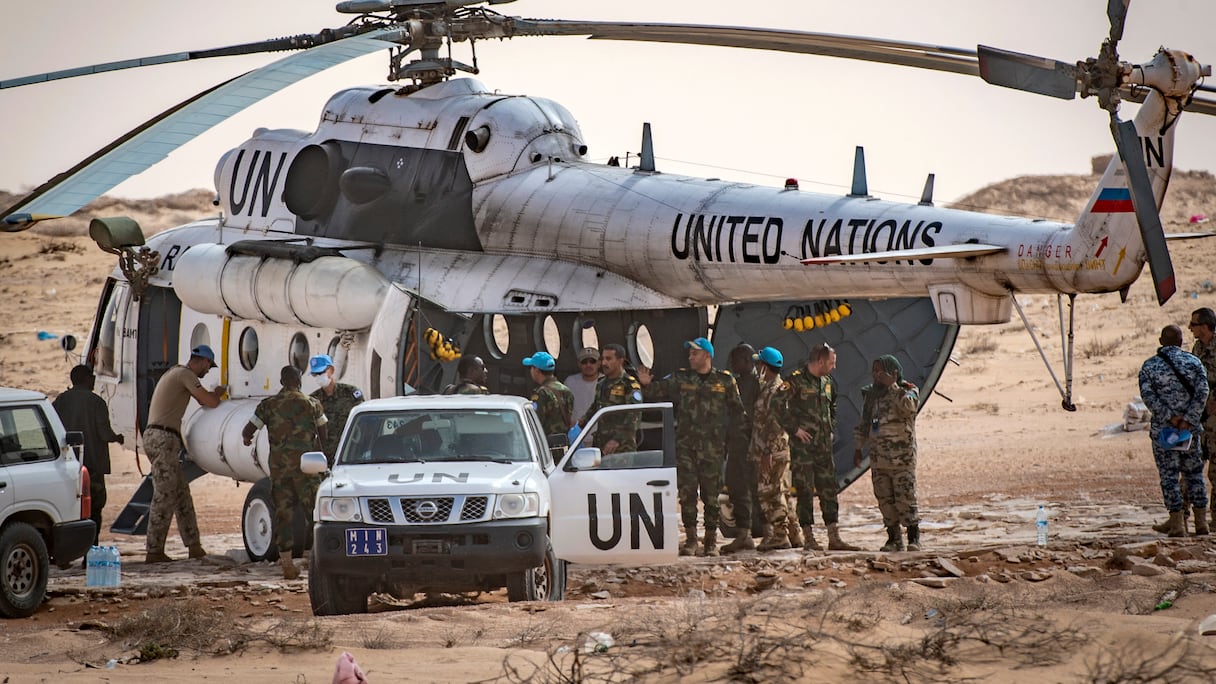
MINURSO presents an unprecedented case: a mission brought down by a veto, to the satisfaction of its host country. Morocco was not seeking to keep it. It called for its withdrawal. The Royal Office statement welcomed the non-renewal as “a major development” and called for the mission’s personnel, vehicles and equipment to leave the southern provinces “in the coming days.” MINURSO was not protecting a fragile state from an external threat. It was monitoring a ceasefire in territory administered by Morocco, a ceasefire the Polisario itself declared broken in November 2020. Its departure does not leave a country defenceless; it restores a sovereign state’s full control over its territory. In short, MINURSO combines both routes to closure: a veto that deprived it of its mandate and a host country that no longer wanted it.
Past cases also offer a lesson in what happens next. None of those missions has returned. UNPREDEP was never redeployed. The Secretary-General had spoken of the need for a “new approach” involving regional organizations, and regional security arrangements were subsequently handled outside the UN framework. UNOMIG was never re-established. Neither were MINUSMA or MINURCAT. Once a mission is dissolved, it does not come back. The expiry of MINURSO’s mandate does not mean an immediate withdrawal, but rather a winding-down process overseen by the UN Secretariat. As in previous cases, the operation must be dismantled, and the process is irreversible.
There is, however, an irony absent from the events of 1999. In Macedonia, Russia abstained on the resolution that would have saved the mission. In the Sahara, it vetoed the resolution that would have kept MINURSO alive, while presenting its own draft as “the last chance to extend MINURSO’s life.” Its representative then accused Washington of committing the mission’s “political murder.” The Polisario, meanwhile, thanked Moscow.
Before MINURSO, some missions ended because their host countries demanded it. Others fell to a permanent member’s veto. MINURSO is the first to combine both circumstances. None has ever returned.
