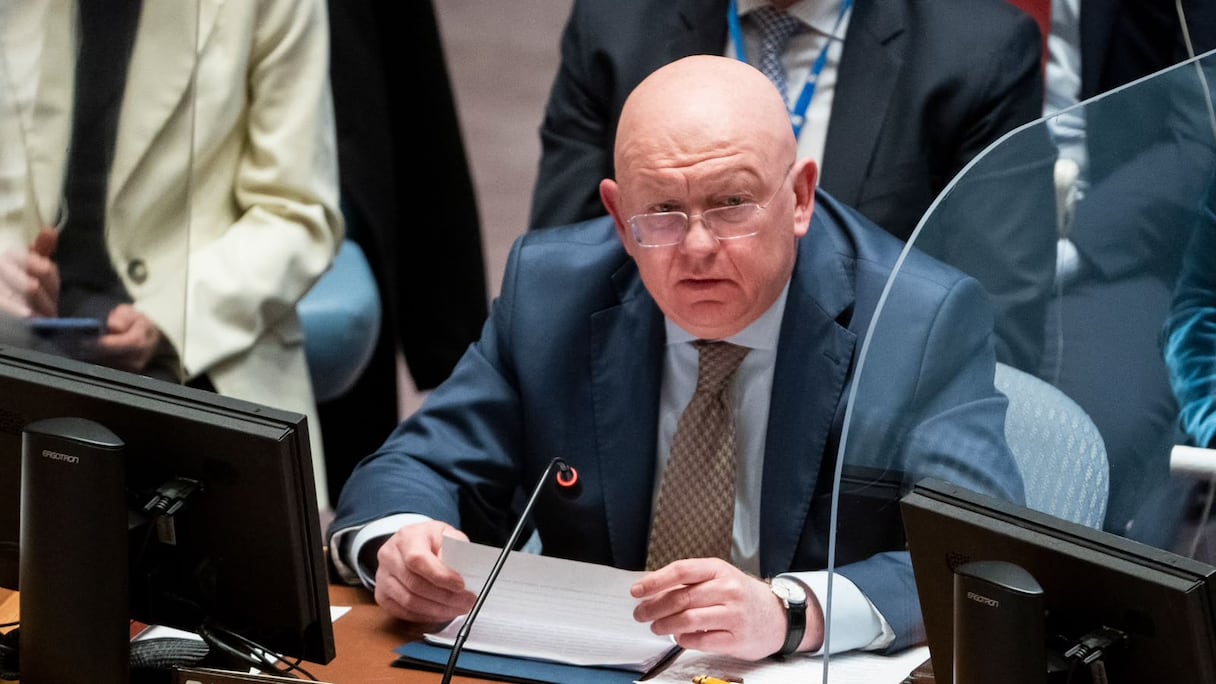
For half a century, every Security Council resolution on the Sahara had been adopted, often unanimously, sometimes with a handful of abstentions or votes against from non-permanent members. Not one had been blocked. Yet on October 30, a US-drafted resolution establishing autonomy under Moroccan sovereignty as the sole basis for negotiations secured 11 of the Council’s 15 votes, only to be defeated by Russia’s veto.
The precedent most often cited only reinforces the point. In April 2013, the Obama administration drafted a resolution that would have given MINURSO a mandate to monitor human rights. Faced with Rabat’s reaction, Washington withdrew the proposal before it could be put to a vote. Drafts considered unfavorable to Morocco never reached the voting stage. No veto was ever needed to stop them.
Read also : Sahara: Russian veto delays 2026 resolution but cannot halt momentum behind Morocco’s autonomy plan
Russia itself had never gone this far. For several years, Moscow had simply abstained on resolutions renewing the mission’s mandate, including Resolution 2797 in October 2025. Its representative, Vassily Nebenzia, had described that text as “unbalanced” but explained that Moscow would not block it in order to “give the peace process another chance.” A year later, just three days after another meeting between Ahmed Attaf and Sergei Lavrov in Moscow, Russia changed course.
The unprecedented veto was followed by another first: the immediate defeat of Russia’s own proposal. Put to a vote shortly afterwards, Moscow’s counterproposal, which sought to extend the mission’s mandate without changing anything, secured just three votes—from Russia, China and Somalia. Eleven members abstained, while the United States voted against. On the same day, the Council thus rejected the return to the status quo sought by Algiers.
A veto is usually the weapon of a country defending a position shared by others. This one was wielded in support of a cause that now commands just three of the Security Council’s 15 votes.
