The statement issued by the Royal Office on October 30 sets out a handful of conclusions. The Security Council has not renewed MINURSO’s mandate. The mission had become “a tool for internationalizing the regional dispute.” Its personnel, vehicles and equipment must leave the southern provinces. The Sahara issue is to be removed from the Security Council’s agenda, with similar steps to follow “within other UN bodies.” The statement declares that “a 35-year chapter has now come to a close” and describes the development as “a significant step toward the definitive closure of the Moroccan Sahara issue at the United Nations.” The timing adds to the symbolism: the decision came on the eve of October 31, Unity Day, established last year by King Mohammed VI following the adoption of Resolution 2797. A holiday celebrating the opening of the path towards a settlement now coincides with the closure of the issue at the UN.
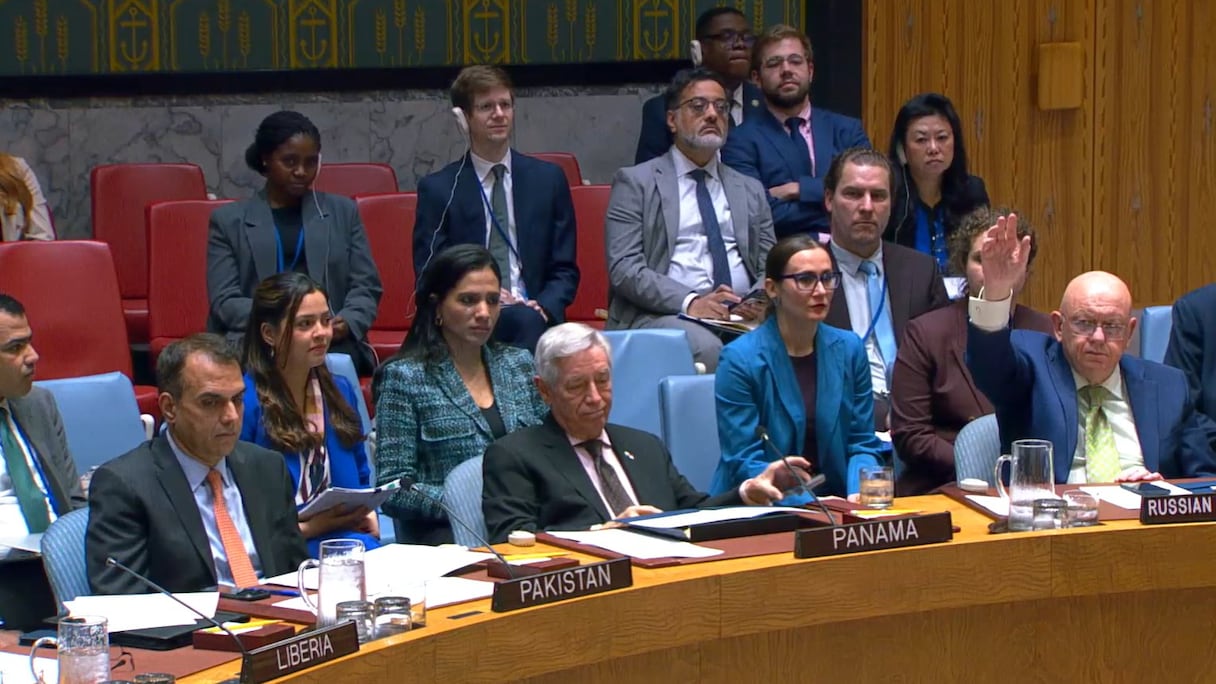
The irony could hardly be greater. On October 30, the American draft, which made autonomy under Moroccan sovereignty the sole basis for negotiations, secured 11 votes out of 15. Russia vetoed it. Its ambassador, Vassily Nebenzia, then put forward a rival text billed as a simple “technical extension,” which would have renewed MINURSO’s mandate without changing a thing. That proposal won just three votes." Moscow wanted to preserve MINURSO exactly as Algiers liked it. By blocking the only resolution that would have kept the mission alive, it sealed its fate. Rabat, for its part, made no attempt to avert that outcome. Rather than accept a watered-down text to avoid a veto, it confronted Moscow with a stark choice: accept the resolution in full or lose the entire arrangement, MINURSO included. Russia chose the latter. Those who assumed Morocco would cling to MINURSO at any cost had fundamentally misread the situation.
Read also : Sahara: Russia casts first veto in 50 years of UN Security Council resolutions
After all, what purpose did the mission still serve? Established in 1991 to organize a referendum that everyone has known for more than two decades to be unworkable, it had effectively been reduced to monitoring the ceasefire. Yet monitoring a ceasefire means measuring the parties’ conduct against their commitments. In November 2020, the Polisario itself declared the 1991 ceasefire over and has since repeatedly told the UN Secretary-General that it was continuing its “armed struggle.” MINURSO was therefore monitoring a ceasefire that one of the parties had declared null and void. It had neither the means nor the mandate to act on that reality.
On the ground, however, its presence came at a price. UN-marked vehicles, installations, restrictions on movement and a foreign presence that perpetuated the impression of a territory whose status remained unresolved. For Morocco, which administers its southern provinces, invests in them, holds elections there and hosts foreign consulates, the mission had become the last symbol of sovereignty under international scrutiny.
One example captures the practical cost of that presence. At El Guerguerat, on the road linking Morocco to Mauritania and West Africa, a single kilometre of road remained to be paved. Just one. For years, that stretch was left untouched: undertaking construction meant risking scrutiny from MINURSO, reports by the UN Secretary-General and complaints brought before the Security Council. From November 1, those constraints will no longer apply. That final kilometer can be completed in record time, without having to answer to anyone. It is perhaps the most tangible symbol of the chapter now closing.
More importantly, MINURSO embodied the internationalization of the dispute and sustained the machinery that kept it alive. A mission requires a mandate. A mandate brings reports from the Secretary-General, regular Security Council meetings, briefings by the Personal Envoy, consultations and annual resolutions. That machinery ensured the dispute returned to the international agenda year after year. The equation has now been turned on its head: no mission, no Security Council, no UN. The Sahara ceases to be a standing appointment on the diplomatic calendar.
Far from contradicting Resolution 2797 of October 2025, this outcome builds on it. The logic of 2025 finds its counterpart in 2026. Last year, the Council established the parameters of any settlement by making autonomy its basis. That resolution remains in force; Russia’s veto has not erased it. In 2026, it is the mission itself that disappears, taking with it the recurring UN proceedings surrounding the dispute. The first step defined the framework; the second removes the mechanism that allowed the debate to be reopened indefinitely. An era is ending: Morocco is moving from managing the conflict to resolving it.
There is little point, then, in reproaching Russia. Its veto, cast at Algeria’s request, has done Morocco an enormous favor, one that no Security Council resolution could have delivered, not even the one Moscow blocked. A resolution, however favorable, changes the wording of documents. This veto changes the reality on the ground. Ending a peacekeeping operation normally takes years of negotiations, assessment reports and gradual troop reductions. Here, a single vote was enough to bring the MINURSO chapter to a close, at minimal cost. Algeria wanted to preserve the mission as the last international foothold for its position, complete with the “R” for referendum in its name. By rejecting a resolution that would have transformed it, the defenders of the status quo brought about its disappearance. And Russia, believing it was keeping the dispute at the UN, has instead taken it off the organization’s agenda. US Ambassador Mike Waltz had said before the vote that maintaining the status quo was “no longer acceptable.” Russia’s veto proved his point sooner than expected.
In practical terms, MINURSO will pack up and leave. Its withdrawal from the southern provinces, announced in the Royal Office statement as taking place “in the coming days,” is expected to be completed within a month at most. Morocco, meanwhile, is giving nothing up. As the royal statement makes clear, the Kingdom remains “firmly committed to the ceasefire,” with full respect for its territorial integrity and the security of its citizens. The diplomatic momentum will continue “at the bilateral and regional levels,” backed by support for the autonomy plan from “more than two-thirds of UN members.” The UN process is suspended because the other parties refused to pursue a constructive way out of the impasse.
In 35 years, not a single resolution had changed the reality on the ground in the Sahara. One veto just did. In seeking to serve Algeria, Moscow has handed Rabat something decades of UN diplomacy never achieved: the disappearance of the last symbol of sovereignty left in limbo.
