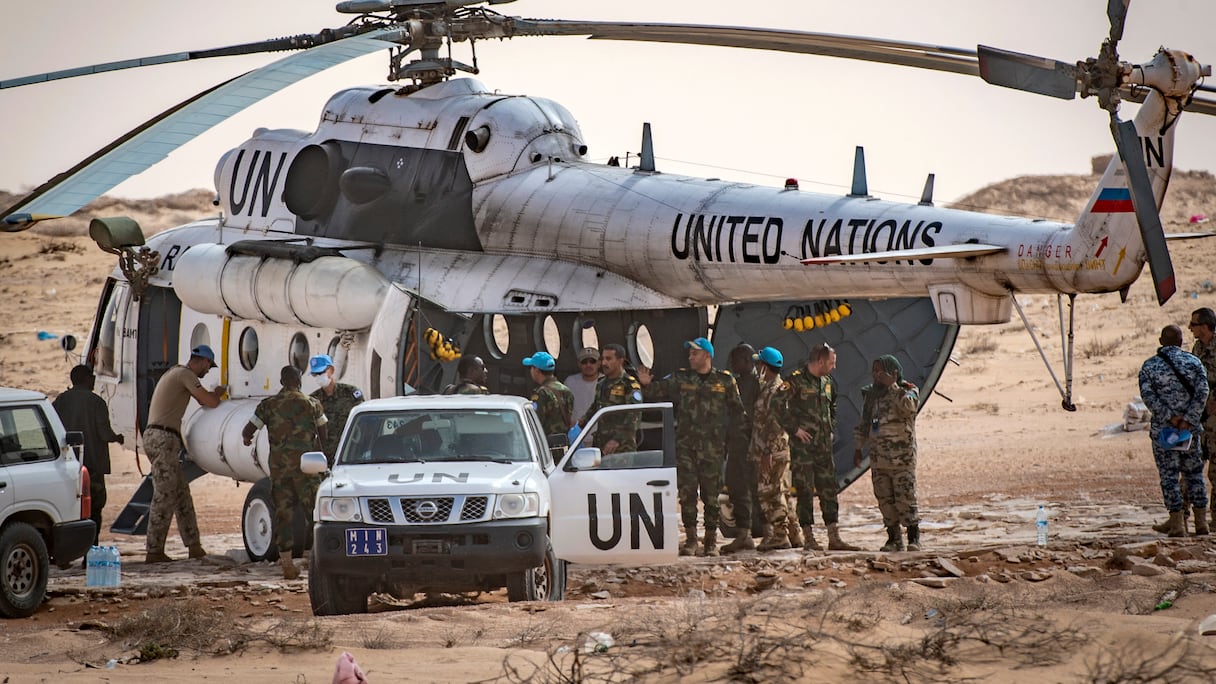
The statement, issued on November 1 by António Guterres’s spokesman, Stéphane Dujarric, runs to just six paragraphs. The opening sets the tone: MINURSO is “ceasing operations” after the Security Council failed to renew its mandate. Its achievements are recounted in the past tense. The Secretary-General pays tribute to the “central role” the mission has played since 1991, thanks its head, Russia’s Alexander Ivanko, and honours the 20 personnel who died “during the 35 years” of its deployment. It reads like a farewell.
The third paragraph is the most concrete. November 1, 2026, “marks the beginning of the liquidation period”. A reduced team, working under the UN Department of Operational Support, will oversee the repatriation of equipment belonging to troop-contributing countries and the disposal of UN-owned assets. The Secretary-General calls on the parties to cooperate fully so that the process can be completed “in an orderly manner” and “as soon as possible.” That is precisely what the Royal Office statement of October 30 called for: the withdrawal of the mission’s personnel and equipment. Rabat and New York are now talking about the same thing: MINURSO’s departure.
The fourth paragraph repeats a familiar UN formulation: the mission was established to “protect and serve” the territory’s population, and its departure “does not extinguish” their rights. There is no reason to read more into those words than they say. The statement does not specify how those rights should be exercised, nor does it mention a referendum at any point. The word appears only in the name of the mission now being wound down. That is hardly surprising. The referendum has been a dead letter for more than two decades, with no agreement on who would be eligible to vote, and the Security Council no longer presents it as an option in its resolutions. For the Council, self-determination now lies in a negotiated political settlement built around autonomy under Moroccan sovereignty. The departure of a monitoring mission does nothing to alter that framework. It merely removes its last vestige.
The closing language is equally familiar. The UN remains committed to helping the parties reach a “just, lasting and mutually acceptable” political solution. That is the formula used in Security Council resolutions since 2007, including Resolution 2797 of October 2025, which places Morocco’s autonomy plan at the heart of negotiations. Guterres settles nothing and breaks no new ground. He leaves the next steps to his Personal Envoy, Staffan de Mistura—in other words, to the political process in which Resolution 2797 also calls on Algeria to participate.
Read also : MINURSO is not the first UN mission to be shown the door
Another passage deserves Algiers’ attention. The Secretary-General expresses concern about “the risk of an escalation of hostilities” and urges all concerned to exercise the utmost restraint, avoiding any action that could heighten tensions or “undermine regional stability.” He recalls that the mission endured “a particularly difficult period” following “the resumption of hostilities in 2020.” He names no one. He does not need to: it was the Polisario that declared the ceasefire over in November 2020, from camps on Algerian soil. The call for restraint is directed first and foremost at those who might be tempted to exploit the observers’ departure.
There remains one irony. Algiers fought to preserve the “R” for referendum in MINURSO’s name. What it has received instead is a statement from the Secretary-General about liquidation, the repatriation of equipment and the disposal of assets. The Algerian government had already expressed its “deep regret” in an October 31 statement from its Foreign Ministry.
Only days ago, the Algerian press refused to believe the mission was coming to an end and continued to speak of a “technical extension.” The Secretary-General has now formally set its winding-down process in motion. Algiers will look to the statement for a defence of a right. New York is arranging the move.
