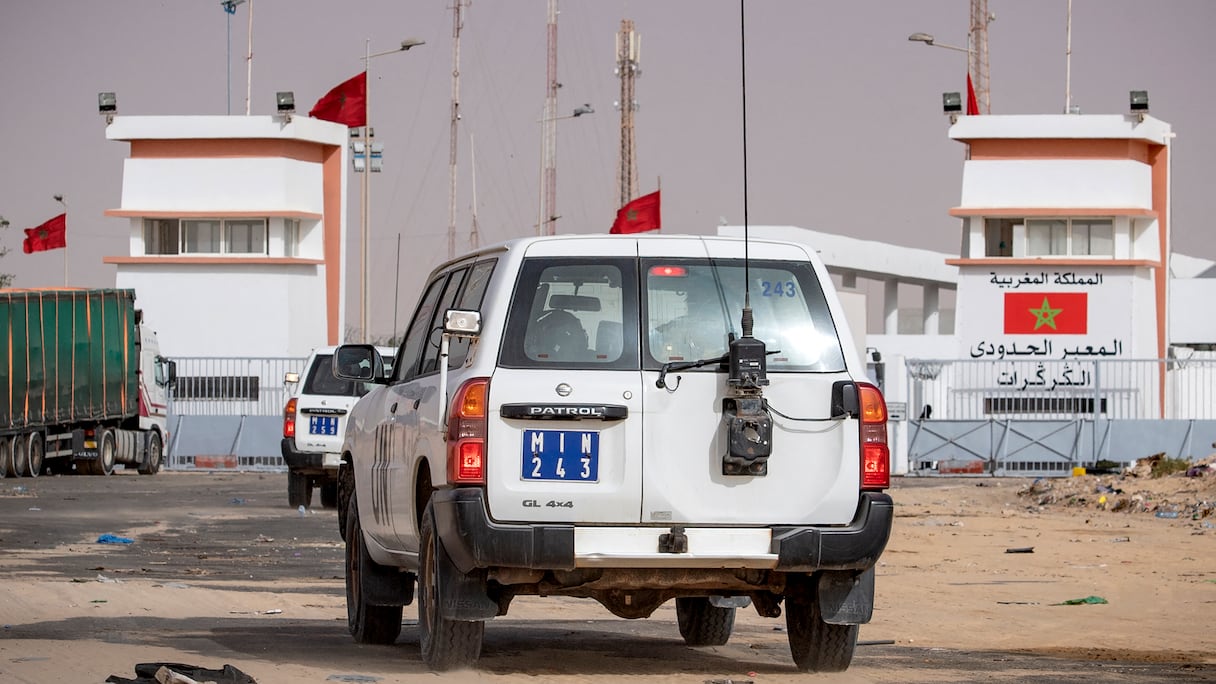
The timetable has just two stages. On Monday, November 2, in Laâyoune, Alexander Ivanko, the UN Secretary-General’s Special Representative for Western Sahara and head of MINURSO, briefed some of the mission’s personnel on the arrangements for their departure. The following day, he was in Rabat for talks with Moroccan officials, including discussions on the withdrawal timetable, according to RFI. The French broadcaster reported that he had met no Polisario representatives before the trip and that no such meeting was planned.
The task ahead is substantial. According to UN News, approximately 160 military observers and 180 civilian personnel must be repatriated, 13 facilities closed, equipment disposed of and contracts terminated. All of this is taking place on territory administered by Morocco, including the mission’s headquarters in Laâyoune, which Rabat has provided free of charge since 1991, and most of its logistical facilities. It is therefore only logical that the practical arrangements for the withdrawal should be settled with Morocco.
The Polisario, meanwhile, has been left out. The irony is bitter for a movement that, as recently as November 1, was demanding that MINURSO remain “as it was established in 1991” and had welcomed Russia’s veto. Its leaders celebrated the very decision that stripped the mission of its mandate. Yet they have no say in how it leaves.
Read also : Sahara veto: Moscow faces 193 UN member states on November 10, leaving Algiers with a choice to make
Alexander Ivanko’s choice is no oversight. The diplomat knows the file better than anyone: he has headed MINURSO since 2021, having previously served as its chief of staff for 12 years. He knows who administers the territory, who provides the premises, who issues the permits and who really calls the shots in Tindouf. He also knows that the Polisario, which is not a state, has no decision-making independence: its positions are determined in Algiers, which hosts, finances and arms it, and speaks on its behalf in international forums. Negotiating with the movement would be like dealing with the mouthpiece rather than the person holding the microphone.
This assessment is not confined to MINURSO’s chief. Moscow takes much the same view. In a statement issued by the Russian Foreign Ministry on November 1, following the veto, spokesperson Maria Zakharova referred to “the directly concerned parties, including Morocco and Algeria,” and said Russia remained “in close contact” with its “Algerian, Moroccan and other partners.” The Polisario was not mentioned once. Even the power that cast its veto in support of the movement’s position does not count it among its interlocutors.
Alexander Ivanko, a career Russian diplomat with a background in journalism and the OSCE, is acting here in his capacity as a UN official. Yet his approach mirrors that of his home country: the real interlocutors are states. Morocco administers the territory; Algeria dictates the Polisario’s course of action. Everyone else is merely playing a part.
Resolution 2797, adopted in October 2025, had already made this explicit by inviting Algeria by name to the negotiating table. MINURSO’s departure now confirms it in practice. Thirty-five years after its establishment, the mission is leaving the Sahara, settling its affairs with Rabat without even stopping in Tindouf.
The Polisario applauded the veto. Now it discovers that nobody is even asking its permission to turn out the lights.
