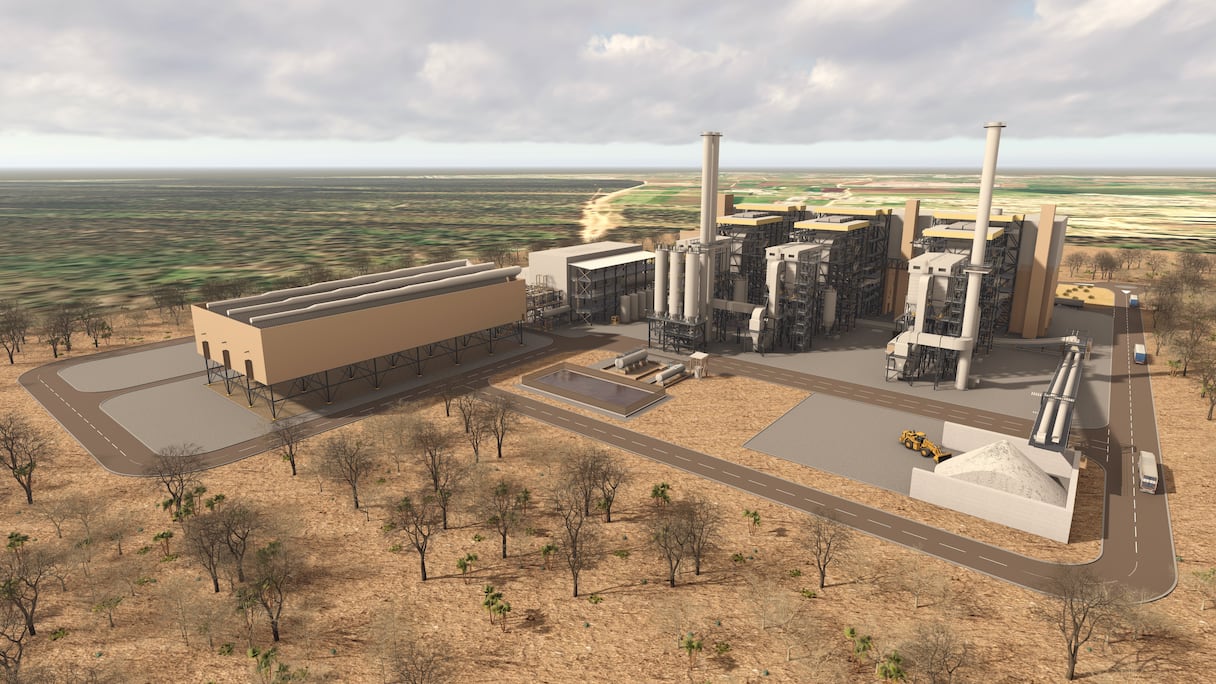
Morocco has reached a major milestone in its energy transition and waste management strategy after the consortium behind the Casablanca Solid Waste Treatment and Valorization Project signed the concession agreement with the Municipality of Casablanca, alongside electricity off-take agreements with the Casablanca-Settat Regional Multi-Services Company (SRM) and the National Office of Electricity and Drinking Water (ONEE).
The agreements pave the way for Morocco’s first integrated waste-to-energy (WtE) facility, a flagship infrastructure project that will transform how municipal waste is managed in the country’s largest metropolitan area while producing renewable electricity.
The project will be developed by a consortium comprising Nareva, the Swiss-Japanese firm Kanadevia Inova, and Japan’s Itochu Corporation.
With the key contractual framework now in place, the partners will proceed with the limited notice to proceed (LNTP) and begin engineering, procurement and construction preparations.
Serving more than 4 million residents
Under the 33.5-year concession, the facility will receive and treat all municipal solid waste generated in Greater Casablanca, serving a population of more than 4.2 million residents.
Once operational, it will process approximately 1.5 million tonnes of waste each year, increasing waste recovery rates to around 80% while substantially reducing the amount of waste sent to landfill.
The plant will also become a significant source of renewable electricity.
Designed with an installed generating capacity of approximately 126 megawatts, complemented by 50 MW of solar photovoltaic capacity and 4 MW of electricity generated from landfill biogas recovery, the project is expected to produce around one terawatt-hour (1 TWh) of electricity annually—enough to supply nearly one million inhabitants.
The additional generation capacity comes as Morocco continues to expand renewable energy production while electricity demand is forecast to grow by around 3% annually through 2030.
Cutting emissions
Beyond energy production, the project is expected to play a major role in reducing greenhouse gas emissions.
The facility will be located adjacent to the Mediouna landfill, one of Africa’s largest methane-emitting sites, allowing waste that would otherwise decompose in landfill to be converted into electricity instead.
According to studies cited by the consortium, diverting waste from landfill to waste-to-energy facilities can prevent between 0.5 and one tonne of carbon dioxide equivalent emissions per tonne of waste, primarily by avoiding methane emissions while simultaneously generating electricity and recovering valuable materials.
The plant has also been designed to accommodate future carbon capture technology, providing a pathway for additional emissions reductions as the technology matures.
Jobs and technology
Construction of the facility is expected to create approximately 1,240 jobs over a three-and-a-half-year period, alongside another 300 positions linked to supporting infrastructure.
Once operational, the project will support around 140 permanent skilled jobs.
The plant will incorporate three large-scale combustion lines, advanced combustion control systems, selective non-catalytic reduction (SNCR) technology to reduce nitrogen oxide emissions, and state-of-the-art flue gas cleaning equipment.
According to the consortium, emissions will comply with the European Union’s Industrial Emissions Directive (IED) and Best Available Techniques (BAT) standards.
A first for Morocco—and Africa
For Swiss-based Kanadevia Inova, the project also marks its entry into Africa’s growing waste-to-energy market.
“This project marks a significant milestone in Kanadevia Inova’s international growth strategy and our commitment to delivering sustainable waste management solutions worldwide,” Chief Executive Officer Bruno-Frédéric Baudouin said.
“Entering the African market with a project of this scale and ambition reflects both the strength of our technology and the trust placed in us by our partners.”
Fabio Dinale, the company’s Executive Vice President for Business Development, described the project as a decisive step away from landfill-based waste management.
“The Casablanca Waste-to-Energy facility will allow Morocco to make a clear commitment to move away from methane-causing landfill practices,” he said.