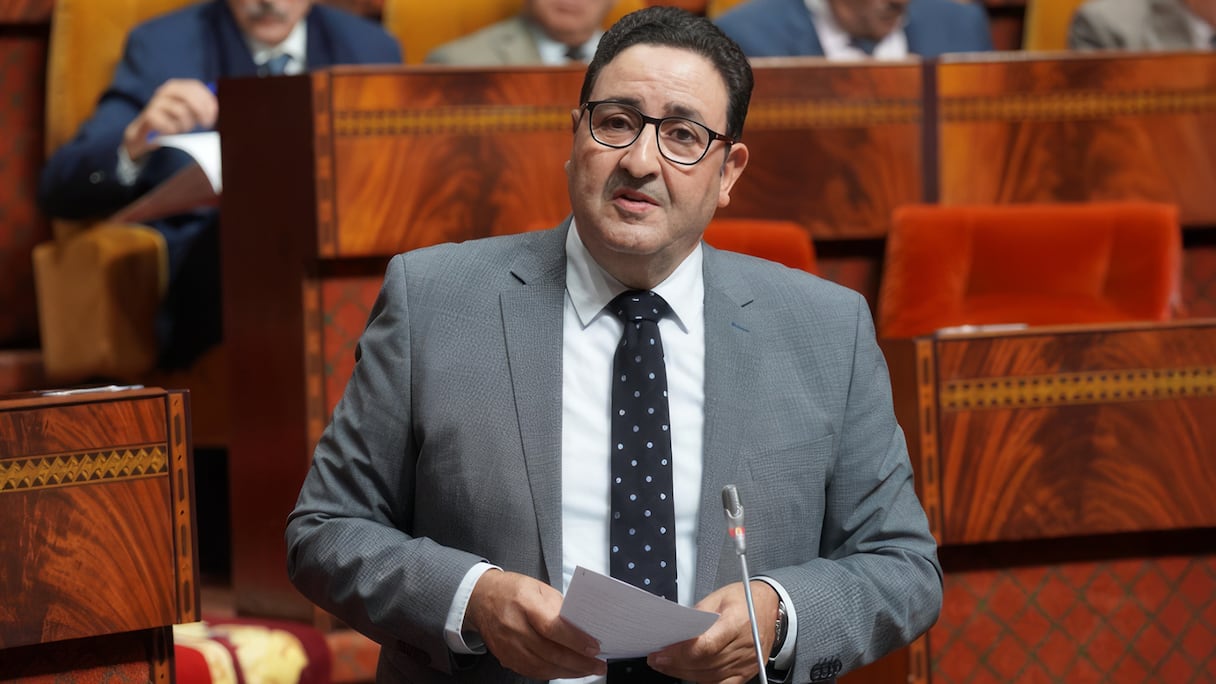
Public support for road transport professionals has exceeded MAD 11 billion since the program’s launch in March 2022, including nearly MAD 2.5 billion in 2026 alone. Transport and Logistics Minister Abdessamad Kayouh announced these figures on Monday, November 9, during the weekly questions session at the House of Representatives.
Presenting program figures as of October 19, 2026, the minister detailed how subsidies were distributed among various transport operators. For-hire road freight transport accounts for the largest share, receiving nearly MAD 6.9 billion, or 62% of the total support.
Petit and Grand taxis received 26% of the distributed subsidies. Urban public transport buses and employee transport each accounted for 3% of the amounts paid.
This breakdown highlights the significant weight of freight transport in the program, as well as the substantial share allocated to taxis—a sector whose operating arrangements and payment mechanisms were central to lawmakers’ questions.
During discussions, several lawmakers argued that financial figures alone were insufficient to assess the program’s effectiveness. They stated that key questions concerned who was actually benefiting from the subsidies and what tangible benefits they were bringing to citizens.
They particularly questioned the minister about changes in transport prices and whether public support had translated into lower fares for passengers. Since one of the program’s initial aims was to limit the impact of rising fuel prices on the cost of goods and transport, its effect on purchasing power remains central to the debate.
MPs also drew attention to the rentier system within the transport sector, especially in the taxi industry. This issue raises questions about how economic benefits are distributed among different stakeholders and whether public subsidies are truly reaching the professionals who operate these services.
Read also : Government details new transport subsidies and social support measures
Adjustments to the support program
In response, Abdessamad Kayouh outlined recent changes to the support mechanism. The government has decided to shift from monthly payments to bi-weekly payments to better account for fluctuations in fuel prices, which are revised twice a month.
On Thursday, November 5, the minister announced a new allocation of approximately MAD 400 million for the period from November 1 to 15, 2026. This installment is expected to benefit nearly 200,000 vehicles. Applications for support during this period have been open since Tuesday, November 10, through the official Mouakaba platform.
As the minister explained in his responses to MPs, the amounts granted vary according to the type of activity and, in the case of freight transport, the capacity of the vehicles. He also detailed the new subsidy amounts.
Intercity coaches receive MAD 5,600 per vehicle, compared with MAD 4,960 for urban public transport buses. Road tractors used for freight transport receive MAD 4,800.
For for-hire freight transport, the subsidy amounts to MAD 2,080 for trucks weighing more than 3.5 tonnes and less than 14 tonnes, MAD 2,720 for the intermediate category, and MAD 3,360 for vehicles weighing more than 19 tonnes.
Small taxis receive MAD 1,280, and large taxis MAD 1,760. Rural mixed-transport vehicles are allocated MAD 1,440. Tourist transport is also covered, with subsidies of MAD 2,240, MAD 1,220, and MAD 800, depending on the vehicle category.
The program also covers employee transport operated on behalf of third parties, breakdown and recovery vehicles, and school transport services provided by third-party operators.
Regarding difficulties faced by some professionals in accessing the program, Abdessamad Kayouh stated that his department had handled nearly 5,500 complaints from transport operators who had been unable to access the government’s support platform.
