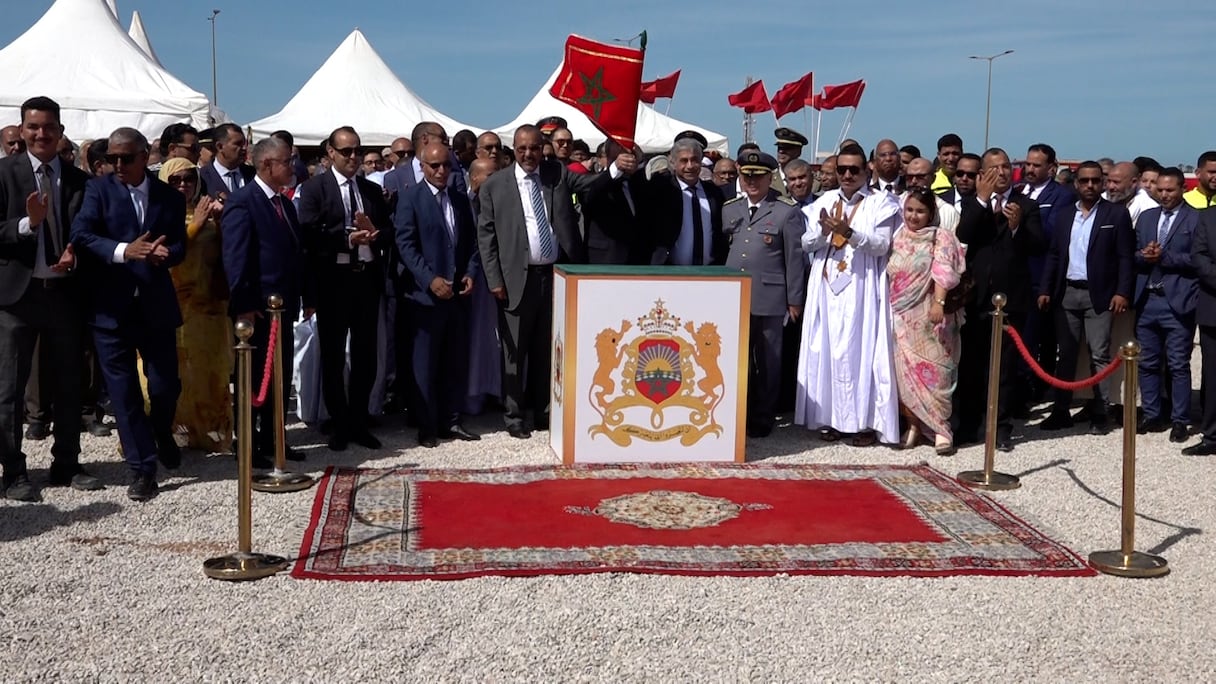
Construction work on the National School of Advanced Technologies (ENTA) was officially launched in Dakhla on Friday, November 6, marking the 51st anniversary of the Green March. The ceremony was attended by the region’s wali, accompanied by Dakhla-Oued Eddahab Regional Council President El Khattat Yanja, as well as representatives of several civilian and military institutions.
The ambitious university project has been allocated a total budget of nearly MAD 150 million. It is being developed through a partnership between the Dakhla-Oued Eddahab Regional Council and the Ministry of Higher Education, Scientific Research and Innovation, with the aim of strengthening the region’s university infrastructure, expanding its academic offering and introducing specialized programs that respond to rapid scientific and technological advances.
The project goes beyond the establishment of a new higher education institution. It is also intended to consolidate Dakhla’s position as an emerging center for higher education and specialized training and strengthen its place on Morocco’s national university map. The school will provide an academic environment designed to train a new generation of professionals and skilled graduates in advanced technologies and applied sciences.
The institution is of strategic importance given the economic and investment potential of the Dakhla-Oued Eddahab region, which is home to major development initiatives and large-scale projects. These developments are creating a growing need for qualified human resources with the scientific knowledge and technical skills required to meet the demands of a modern economy.
The new institution is expected to strengthen the region’s education system by bringing advanced training and technological specializations closer to young people. It will give them new opportunities to pursue university studies in high-value fields without having to move to other cities, while broadening their prospects for entering the labor market and contributing to the region’s economic and productive sectors.
The project also reflects an effort to strengthen ties between the university and its economic environment by aligning academic training with development and investment needs. The institution is intended to serve as a center for knowledge production, innovation and scientific research, while supporting the transformation of the region’s promising economic sectors.
The decision to launch construction on the anniversary of the Green March carries strong symbolic significance. The national commemoration recalls not only the historic event that embodied territorial unity and the bond between the Throne and the people, but also offers an opportunity to draw on its spirit of collective mobilization to continue building and developing the Kingdom’s southern provinces.
The National School of Advanced Technologies in Dakhla therefore represents an investment in knowledge and human capital, and another step toward establishing the region as a promising center for higher education and innovation. The project is aligned with its development ambitions, with the training and empowerment of young people and equipping them with the skills of the future among the foundations of its continued development.
