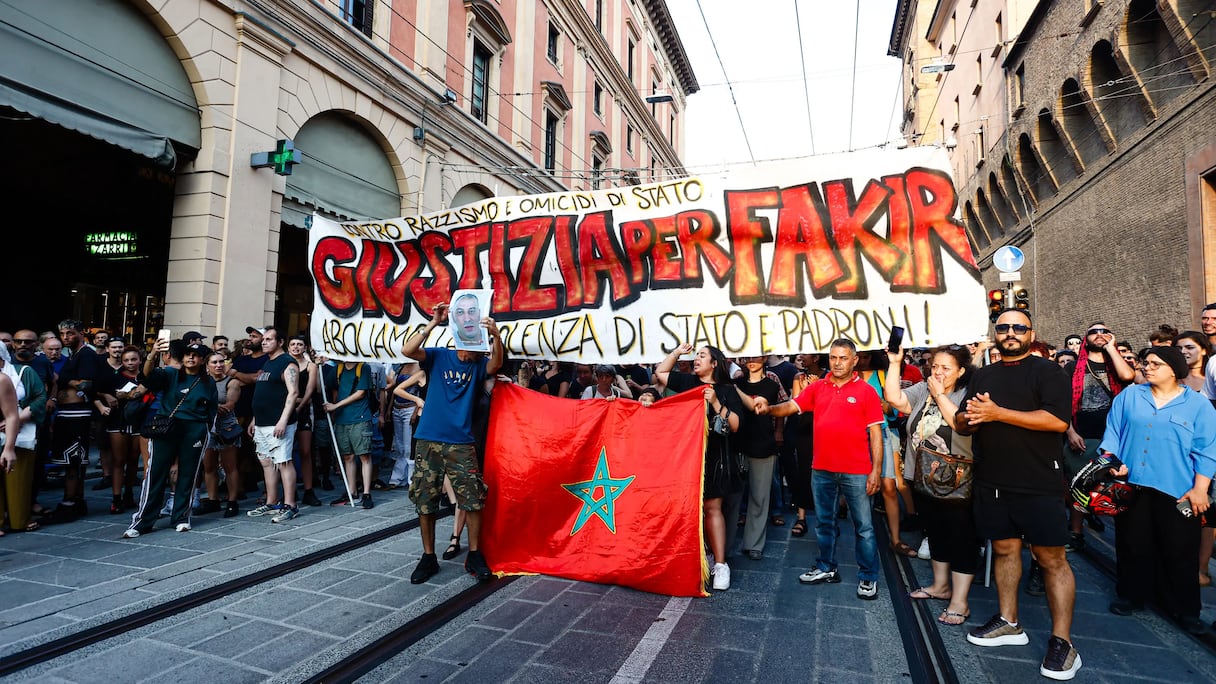
Two months after Abderrahim Fakir’s death, one of the four Red Cross rescuers under investigation for involuntary manslaughter is set to return to work.
He is expected to officially resume shifts in the coming days. His three colleagues have so far preferred to wait before returning to duty, although the Red Cross has never blocked them from doing so. Their return follows that of the two police officers from the Bolognina police station, who have resumed work but are currently limited to desk duties and have not yet been reassigned to patrols.
Read also : Abderrahim Fakir case takes new turn with second police video
The investigation has now reached its halfway point within the 120-day period set under the “45 bis” procedure. At the end of that period, prosecutors will have to decide whether to open a formal investigation against the six people currently under scrutiny.
The findings of the panel of experts responsible for the autopsy and all additional examinations, including toxicological and histological tests carried out on Abderrahim Fakir, are expected to weigh on that decision. A meeting to cross-check all the results obtained and draw preliminary conclusions has been scheduled for October 2 in Padua. A preliminary meeting in the days leading up to it has not been ruled out.
What happened
Abderrahim Fakir, a 42-year-old Moroccan who arrived in Italy at the age of five, died on July 19 after two police officers pinned him to the ground during his arrest in Bologna. The initial autopsy findings showed blood-filled lungs and extensive areas of hemorrhagic infiltration caused by compression to the back, a picture that lawyer Fabio Anselmo described as “violent mechanical asphyxia caused by dorsal compression.”
An analysis of the victim’s phone has since provided the Bologna criminal investigation unit with initial findings, while additional examinations linked to the autopsy are still underway. Sixty-seven days after the incident, the deceased’s remains are still being held in Italy, while his family is demanding that his body be repatriated to Morocco.
