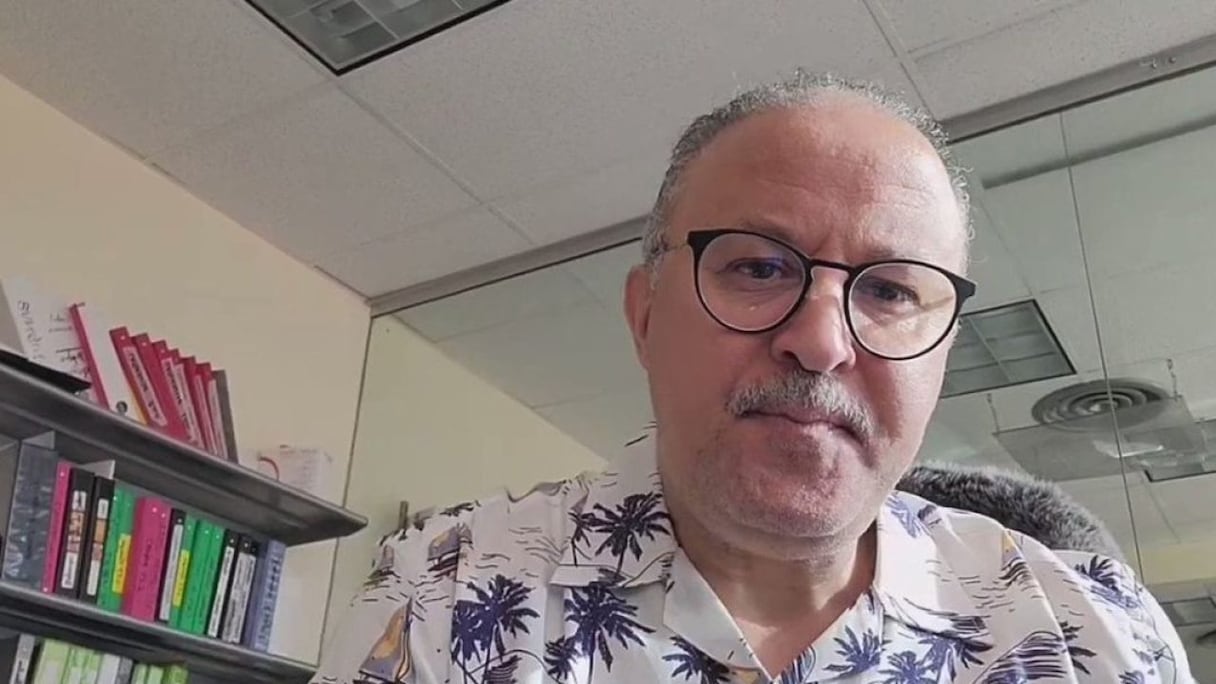
Written by journalist Daniel Robson, the article draws notably on recordings and private exchanges released by the Atlas Hacks group to describe the methods that reportedly enabled Jerando to exert pressure on some of his targets while maintaining relationships with intermediaries linked to criminal networks.
According to the Western Standard, the material released above all sheds light on a method. Intermediaries were reportedly tasked with gathering information on people connected to the drug trade, particularly about their activities and families, before passing it on to Jerando. He then reportedly used this information to fuel his campaigns on social media, under the guise of exposing corruption or crime.
The Canadian outlet says that once pressure had been exerted on a target, direct contacts, or contacts through third parties, could follow in order to negotiate an end to the campaign or the removal of certain content in exchange for payment.
The mechanism reportedly worked in the other direction as well. Individuals presented as belonging to drug-trafficking networks are said to have provided Jerando with names, photographs and information about their own rivals in order to fuel campaigns against them.
The outlet thus believes that Jerando’s platforms were used to fuel rivalries between players in the drug trade.
The use of several intermediaries reportedly made it possible to maintain a degree of distance between Jerando, the people targeted and the financial flows.
The article notably cites the case of Reda Al-Amadi, presented as a drug trafficker who had already served a prison sentence. After Jerando publicly targeted Al-Amadi and members of his family, an intermediary identified as Rachid Al-Radi, nicknamed “Rachid the Sahrawi,” reportedly intervened in contacts with the family.
A conversation released as part of the leaks then shows Jerando addressing Al-Amadi directly and telling him that a financial contribution was expected from him, “like the others.”
Other exchanges show Rachid Al-Radi gathering information on potential targets and discussing the possibility of identifying more prominent figures who could be subjected to similar campaigns.
The Canadian outlet also cites Adel Madhoub, known by the nickname “Amsterdam” and presented in the exchanges as a person involved in international drug trafficking.
According to the material reported, Madhoub is said to have sent Jerando photographs and information concerning other traffickers and asked for campaigns to be conducted against them. Jerando, in return, reportedly requested further information about other major figures in the drug trade.
The exchanges also reportedly concerned Madhoub’s situation in Casablanca, with the latter complaining that he was wanted by the authorities. Jerando is said to have then claimed that he had contacts within Moroccan intelligence circles whom he could call upon.
For the Western Standard, these claims served to foster among some of his interlocutors the image of a man with connections and the ability to intervene with the authorities.
Payments Routed Through Turkey
The article also examines exchanges involving Mustapha El Harouachi, presented as an intermediary operating in circles linked to drug trafficking and smuggling.
The recordings refer to Jerando receiving remuneration calculated on the basis of profits generated by trafficking operations after competitors had been targeted.
Another exchange concerns Amine El Ghazoui, presented as being involved in international drug trafficking. He reportedly negotiated with Jerando over posts concerning his father, Abdelouahed El Ghazoui.
The outlet says that an arrangement involving 200,000 dirhams was discussed in exchange for the removal of content and an end to references to the father and to an area associated with his trafficking activities.
The payment was not to be made directly in Canada, but instead transferred to an intermediary in Turkey.
Another leak reportedly subsequently revealed a direct conversation between Jerando and Abdelouahed El Ghazoui, who was arrested on July 30 as part of an investigation linked to the “Escobar of the Sahara” case.
Turkey also features in another aspect of the revelations reported by the Western Standard: migrant smuggling.
According to the article, some conversations refer to sums reportedly intended to finance arrangements enabling the clandestine passage of migrants from Turkey to Europe, including Moroccans, Syrians and nationals of other countries.
The outlet cites in this connection an intermediary identified as Fouad Birkan Soustam.
According to the journalist, the material reported thus paints a picture of a system in which financial channels linked to individuals involved in drug trafficking and those connected to migrant smuggling could intersect, with intermediaries based in different countries.
The Western Standard also recalls having previously published an article on the relationship between Hicham Jerando and Mehdi Hijaouy, a former Moroccan intelligence officer presented as wanted in connection with a financial crime case.
According to the Canadian outlet, Hijaouy reportedly recruited Jerando to conduct, from Canada, a digital campaign aimed at targeting certain individuals and diverting attention from his own legal troubles.
The new article places these revelations in a broader context and says that the communications attributed to Jerando reveal other relationships with individuals presented as belonging to criminal circles.
The outlet also revisits a reference attributed to Jerando to individuals whom he reportedly described as belonging to the “Canadian mafia.”
A Criminal Record Already Documented in Canada
The Western Standard recalls that Jerando has already faced legal proceedings in Canada.
A Quebec Superior Court ruling notably found that he had presented himself as a whistleblower with investigators at his disposal, when in fact he was relaying allegations from isolated sources without independent verification.
The case resulted in an award of more than 164,000 Canadian dollars in damages to a person targeted by a defamation campaign.
The outlet also recalls that the YouTuber was sanctioned for failing to comply with court orders, including prison sentences, fines and community service.
These previous legal proceedings cast the methods described in the communications now being circulated in a particular light.
The article also examines Jerando’s business activities in Canada. Montreal corporate registries have notably linked him to Jerando Fashion and Services J.T.D.
The Western Standard is careful to specify, however, that the leaks cited in its article do not demonstrate that these businesses received money from the activities described.
The journalist nevertheless believes that the available material could, in his view, warrant scrutiny of Jerando’s business activities, bank accounts, financial transfers, partners and sources of income.
The aim would notably be to determine whether certain business entities may have served as financial conduits for illicit proceeds. Here again, the outlet presents this as a potential line of inquiry rather than an established fact.
The Western Standard questions the absence, at this stage, of any publicly disclosed Canadian investigation following revelations concerning an operator based in Canada whose purported communications appear to show contacts with individuals linked to drug trafficking, foreign intermediaries and international financial channels.
That question is given further weight by public statements from the Royal Canadian Mounted Police (RCMP) regarding its cooperation with Morocco.
In responses provided to Hespress in June, the RCMP stressed the importance of its partnership with Morocco’s DGSN and DGST and confirmed the presence of a liaison officer in Morocco. It also said that cooperation between the two countries covered, among other areas, organized crime, drug trafficking, fraud and economic crime.
The Western Standard therefore points to a paradox. While Canadian authorities present the fight against transnational crime as a priority, some of the material reported in this case concerns precisely an operator based in Canada and networks, which have gone unpunished, spanning several countries.
