The 2030 World Cup final, which will be co-hosted by Morocco, Spain and Portugal, has clearly stirred up everything that could be stirred up on the other side of the Mediterranean. For several weeks, statements have been piling up. Political figures, ministers, whether directly involved in sports or not, federation and league presidents, and even coaches have, for the duration of a statement, put on their political hats to make the case for holding the final in Spain.
In Morocco, silence had prevailed. It eventually gave way to the growing number of statements and pressure coming from the other side of the Mediterranean. Through FRMF President Fouzi Lekjaa, the Kingdom also expressed its desire to host the final.
Read also : Spain rules out 2030 World Cup withdrawal if Benslimane gets the final
But behind the battle over which city will host the final match of the 2030 World Cup lies an issue that goes far beyond a simple duel between stadiums. Morocco is also defending the possibility of seeing a second World Cup final played on African soil, 20 years after the one held in Johannesburg in 2010.
And the argument is far from insignificant. The 2030 World Cup will be held across two continents. Europe, firmly established in the history of world football, has already hosted numerous finals, including the 1982 final in Madrid. Africa, by contrast, has hosted only one, in South Africa. A second final on the continent, this time in its northern part, would therefore carry considerable symbolic weight.
A Final That Goes Beyond a Simple Stadium Duel
There is another argument as well. The Moroccan bid fits fully with the vision FIFA has championed in recent years: a more open football world, where major competitions are no longer the preserve of countries that have historically been accustomed to hosting them. The expansion of the 2026 World Cup and the place given to the different confederations point in this direction.
And Morocco has arguments to make, both in sporting terms and in terms of organization, infrastructure and development.
The opening of FIFA’s African office in Rabat, Fouzi Lekjaa’s involvement in various projects, and infrastructure that has been redesigned, modernized or newly built all reflect an ambition that goes far beyond Morocco’s “surprise” run to the 2022 World Cup semifinals. The Kingdom now wants to establish itself as one of the leading hubs of African and world football, capable of hosting the biggest international competitions on a lasting basis.
Grand Stade Hassan II: A Stadium Built to Think Big
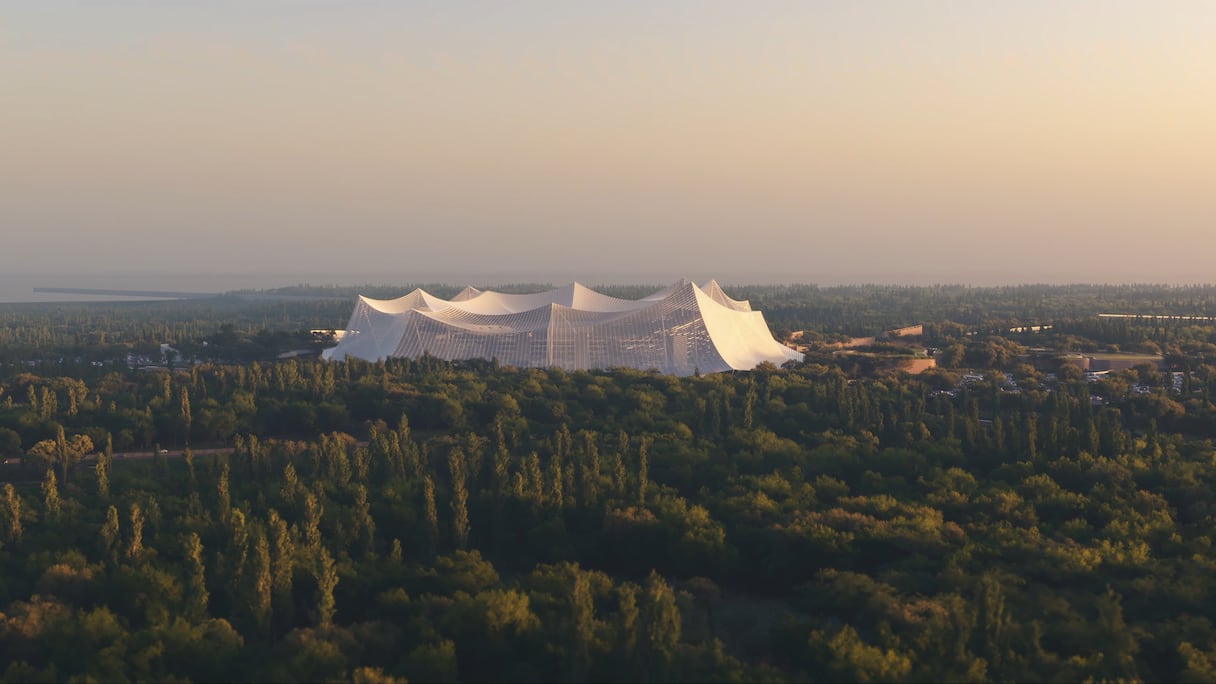
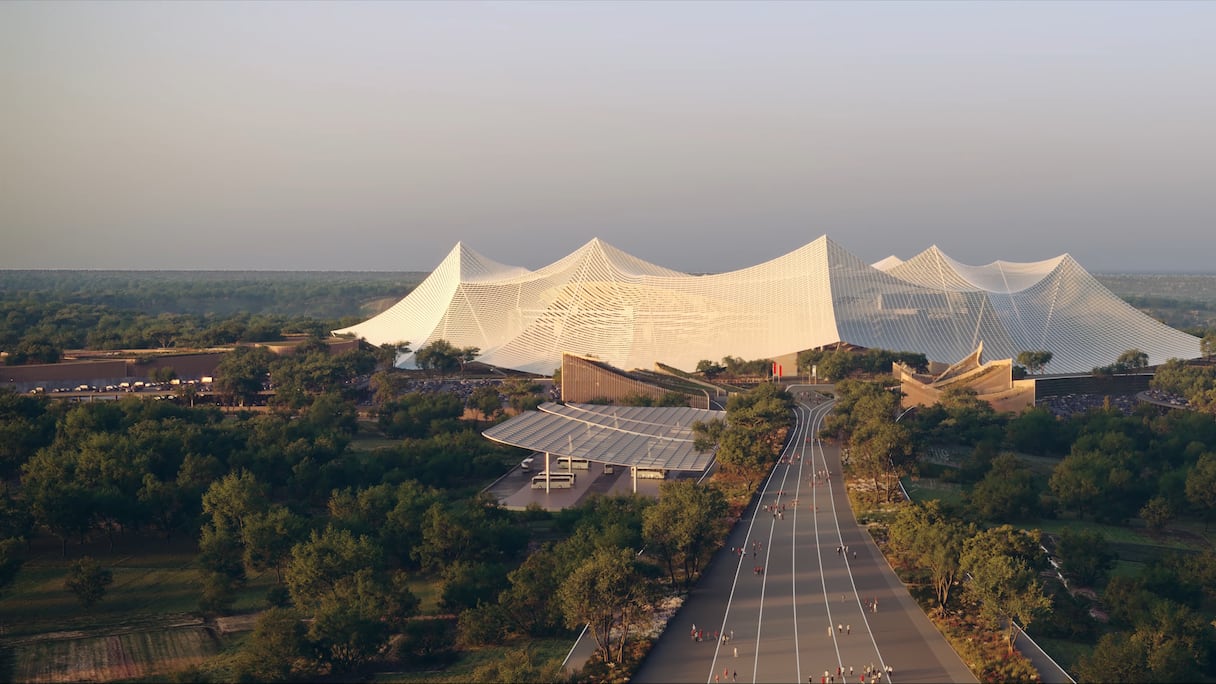
And the Moroccan candidate to host the final has enough to make the Santiago Bernabéu and Camp Nou nervous. In Benslimane, Morocco is building the Grand Stade Hassan II, a 115,000-seat venue that is set to rank among the largest football stadiums in the world. Construction is progressing away from the media noise surrounding the battle for the final. The goal is clear: to have a venue capable of meeting the demands of the biggest match in world football and competing with Spain’s two giants.
But the project is not limited to the stands. An entire ecosystem is being designed around the stadium, with facilities adapted to the needs of a competition of this scale, as well as transport, access and systems for managing the different flows of spectators.
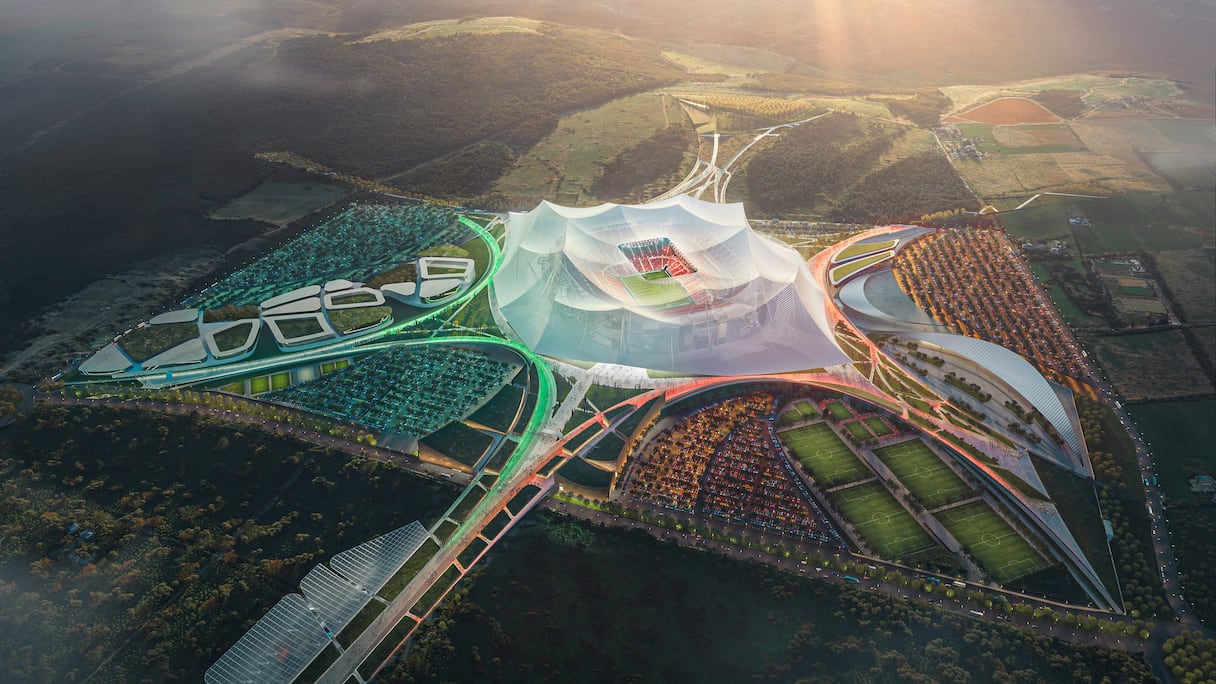
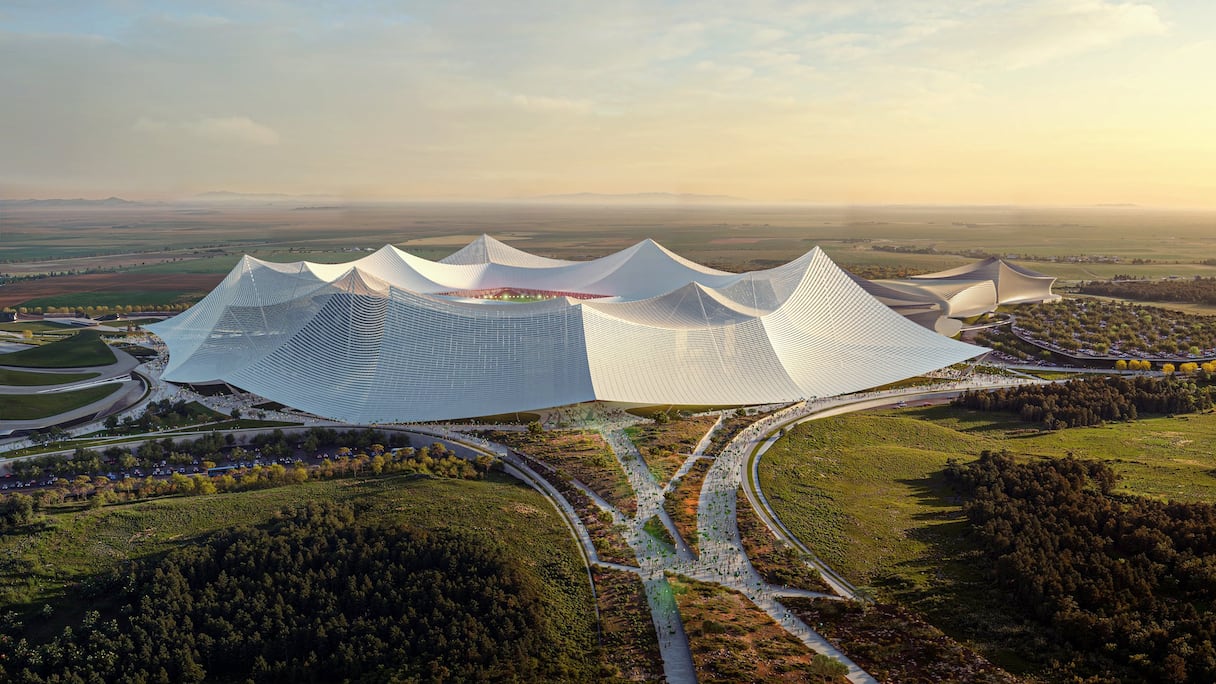
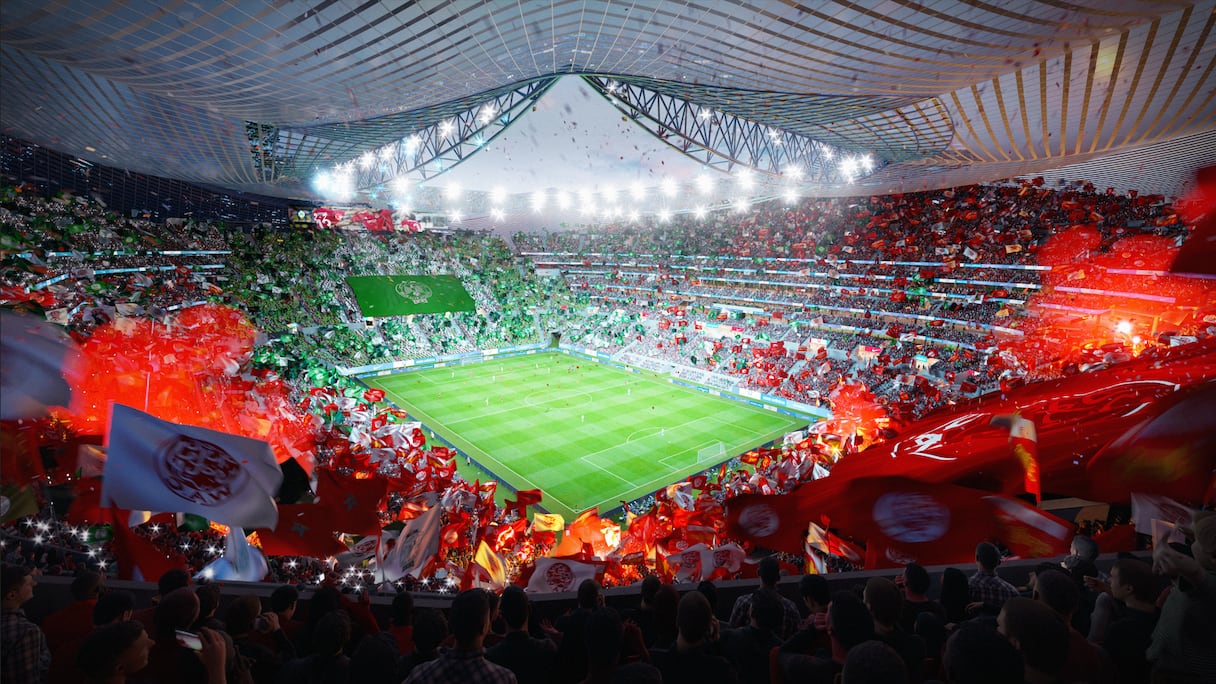
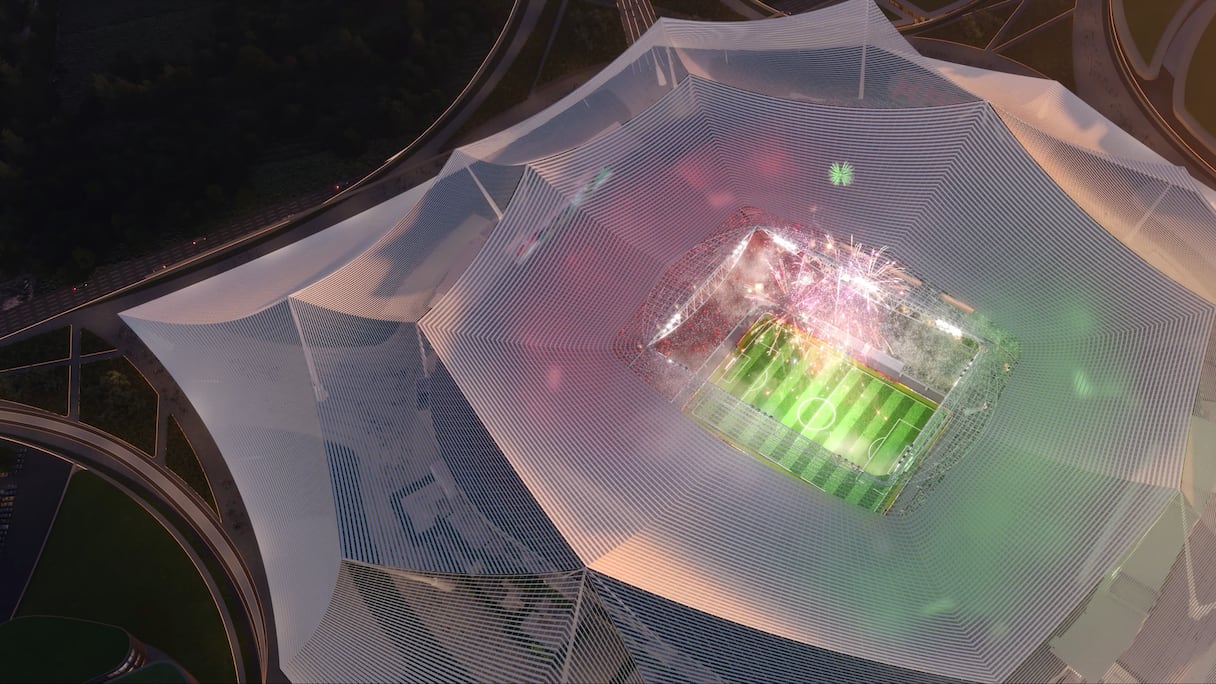
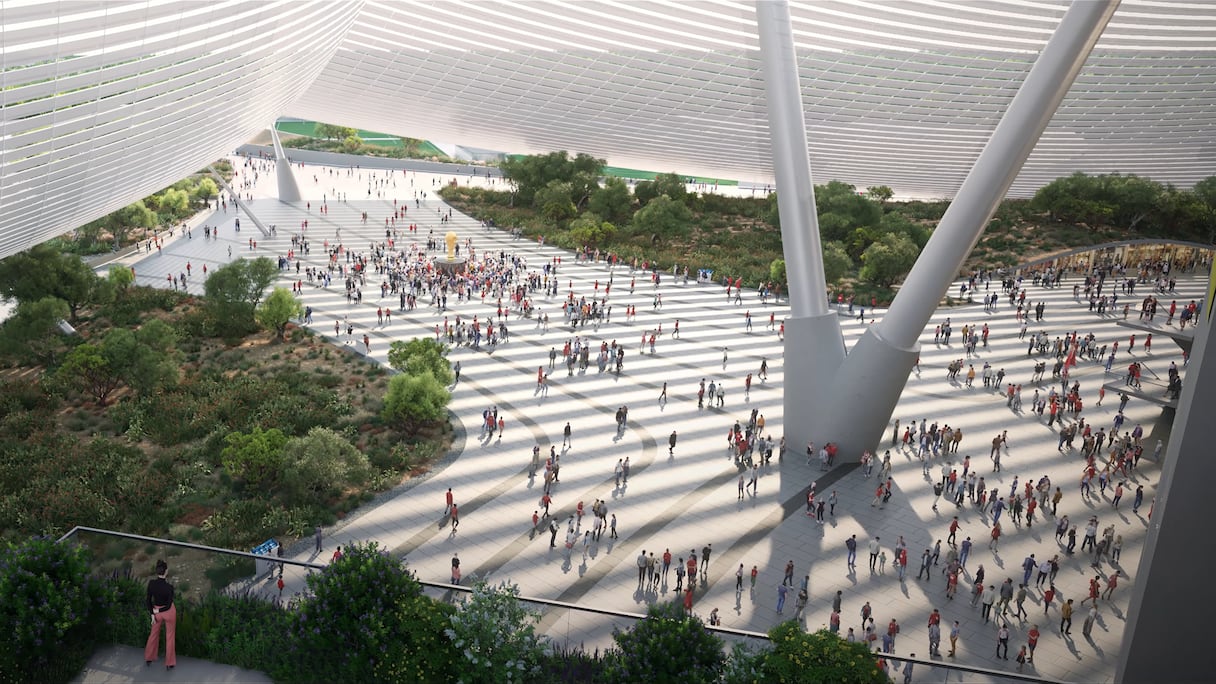
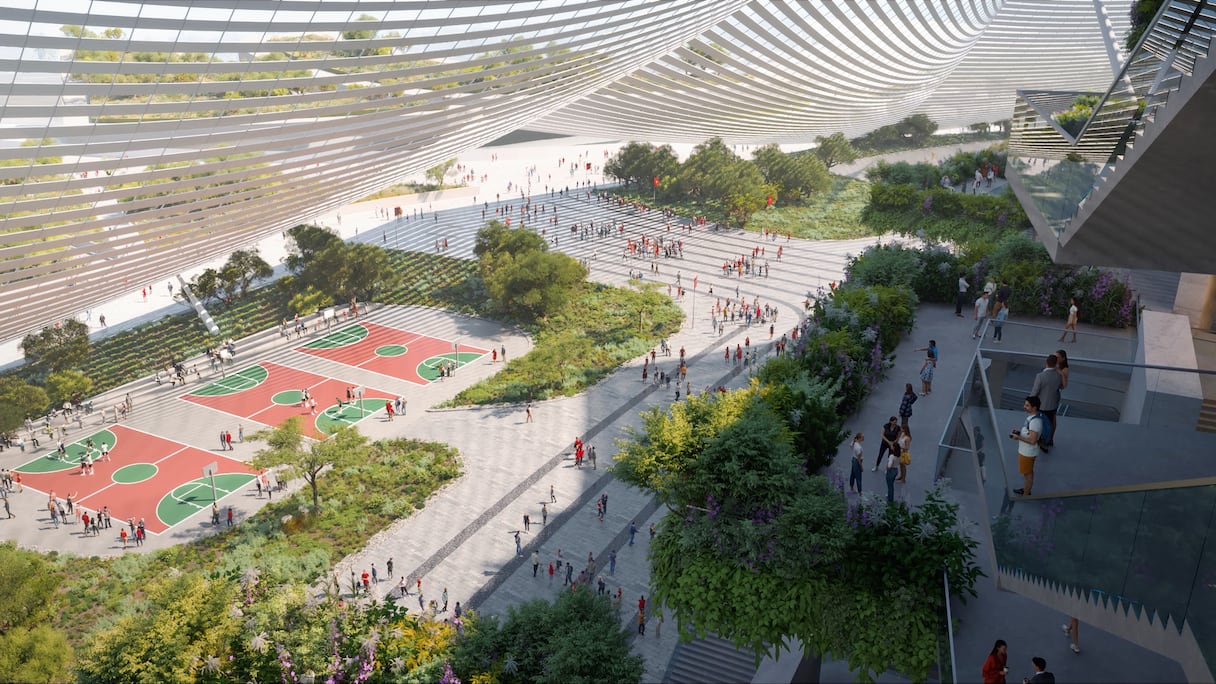
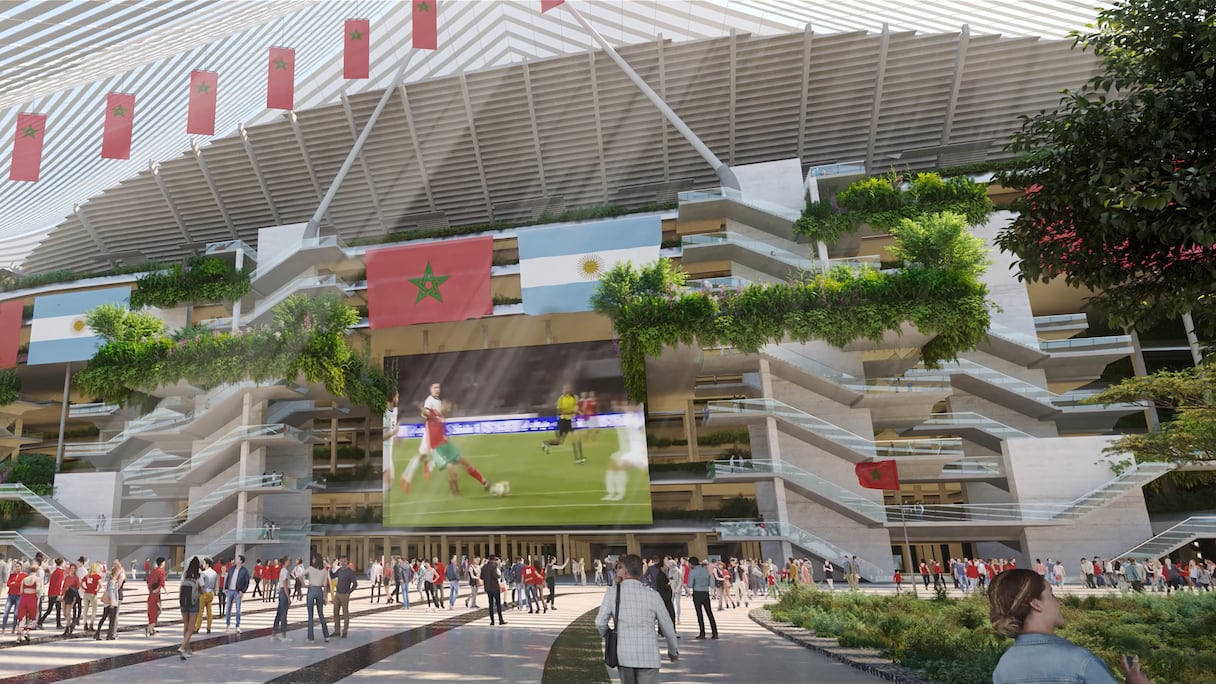
Even the Skyboxes, the high-end suites intended in particular for guests and partners, tell the same story. The Grand Stade Hassan II is expected to offer 2,533 seats in this category, compared with 2,371 at its Madrid counterpart.
The venue was also designed to withstand the weather conditions that could occur during the competition. This argument takes on particular significance after images showed Camp Nou taking on water during Barça-Feyenoord, the first Champions League match played at the renovated stadium.
The Santiago Bernabéu has not been spared either. Its waterproofing problems have also been highlighted on several occasions, with images showing parts of the stadium affected by significant leaks during heavy rainfall.
Read also : No hedging from Lekjaa: 2030 World Cup final will be in Benslimane
And if the Grand Stade Hassan II is causing so much irritation on the other side of the Mediterranean, it is probably not only because of its size or a project designed down to the smallest detail. It is also because it embodies a Moroccan ambition that goes far beyond the 2030 World Cup: that of a country that now intends to carry greater weight in world football. But it is also the ambition of a continent demanding a place commensurate with its weight in the sport.
With that in mind, seeing Africa host a second World Cup final, in Morocco, 20 years after Johannesburg, would clearly make perfect sense.
