Tous les articles correspondant à #Abdelmadjid Tebboune

Algeria: Tebboune promised to stop printing money. Instead, he put the presses into overdrive
Algeria boasts that it owes nothing to the IMF. Yet its domestic debt exceeds 17 trillion dinars, or $126 billion at the official exchange rate. Who does it owe the money to? Its own banks and, above all, its central bank. And the state prints dinars so freely that a dollar costs 80% more on the black market than at the official rate. A state lending to itself with money it prints itself: the presses started rolling under Bouteflika in 2017, and Abdelmadjid Tebboune has never switched them off. On the contrary, he has made the arrangement permanent.
Tebboune, the warmonger looking for a war
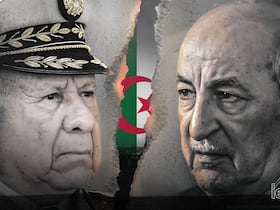
A military budget more than doubled, boasts about the “balance of power”, a failed military parade, reprisals promised and then forgotten, a Constitution tailored to send troops beyond Algeria’s borders and, now, threats to strike at the “source” of drugs: since 2019, Abdelmadjid Tebboune has spoken like a wartime leader. All he lacks is a war. And some, even in Algiers, suspect he is looking for one to stay in power.
Tebboune threatens to bomb drug sources abroad, but the trail leads to his own palace and military high command
Algeria’s president has found the culprit behind the drug epidemic ravaging his country: a foreign “source” he vows to strike in the name of “self-defense.” We wish him luck with the hunt. Because finding it will not require him to mobilize the air force. The biggest cocaine case in Algerian history has been gathering dust in the country’s judicial files for eight years, his own son was implicated in it, and his chief of staff, Saïd Chengriha, has for years been accused by former regime insiders of knowing the trade from the inside.
Algeria: Tebboune looks for potatoes at cabinet meeting, finds… cows instead
With potatoes in desperately short supply, Abdelmadjid Tebboune convened his ministers yesterday to rescue agriculture. Yet the official statement does not mention the word “potato” even once. The culprits, it turns out, are fallow fields, farmers holding on to their harvests and cows eating maize. It was left to a senator appointed by the president to propose the remedy: eat grass.
Algeria: Tebboune promises to double wages as the black market halves their value
The dollar is now approaching 250 dinars on Algiers’ black market, while the Bank of Algeria quotes it at 136. The gap between the official dinar and the real dinar exceeds 80%. Yet the government has based its 2027 budget on an exchange rate of 131 dinars to the dollar. A rate that no longer exists anywhere except in its spreadsheets.
In Ekker and Gara Djebilet: Algeria’s regime cleans up nuclear sites on camera and mines iron ore on screen
On November 1, Algeria’s international television channel aired a film about the “decontamination” of the site of France’s Béryl nuclear test at In Ekker: a banner, a procession of technicians in white protective suits, idle cranes—and no actual decontamination. It is a well-rehearsed routine. The same approach has kept the Gara Djebilet mine alive on screen for years, though nobody has seen it operating. The film also leaves out the most important fact: most of France’s nuclear tests in the Sahara took place after Algerian independence, with Algiers’ consent.
Algeria: Tebboune adviser’s Geneva trip exposes power struggle between presidency and military
On October 24, Abdelatif Belkaïm, a presidential adviser close to Abdelmadjid Tebboune, made a same-day return trip from Algiers to Geneva for a meeting lasting just minutes with a man implicated in the Farid Bencheikh affair, a high treason case under investigation by Algeria’s military judiciary. Photographs of the encounter surfaced that evening. Beyond the trip itself, the episode has brought the power struggle between the presidency and the military high command into the open.
Troops abroad, mass mobilization, state of war: Algeria’s temptation to invoke emergency powers
Algerian lawmakers have been summoned by text message to an emergency parliamentary session to authorize the deployment of troops abroad. Exiled opposition figures fear the move could be the first step towards something more troubling: a government turning to war as the only constitutional means of suspending the Constitution and extending the president’s term. The legal machinery is in place. So is the political climate.
A “100% Algerian” car by 2028? Tebboune promises wheels while Algerians search for tires
Algerian President Abdelmadjid Tebboune has promised a homegrown car by the end of 2028, complete with a locally made gearbox and wheels. The Algerian press has echoed the announcement in unison. Yet in the very same country where Tebboune is promising to build a car in less than two years, people must register on an online platform and wait for months in the hope of getting two tires.
Polisario turns on De Mistura as UN Security Council decision looms
The Polisario is threatening to cut ties with the UN Secretary-General’s Personal Envoy, accusing him of siding with Morocco. Staffan de Mistura is open to criticism on many counts. Partiality is not one of them. But the real significance of the statement lies elsewhere. It is the latest sign of the mounting anxiety that has gripped the Polisario and its backers in Algiers in recent weeks. With another Security Council resolution approaching, it is now the other side that has reason to be afraid.