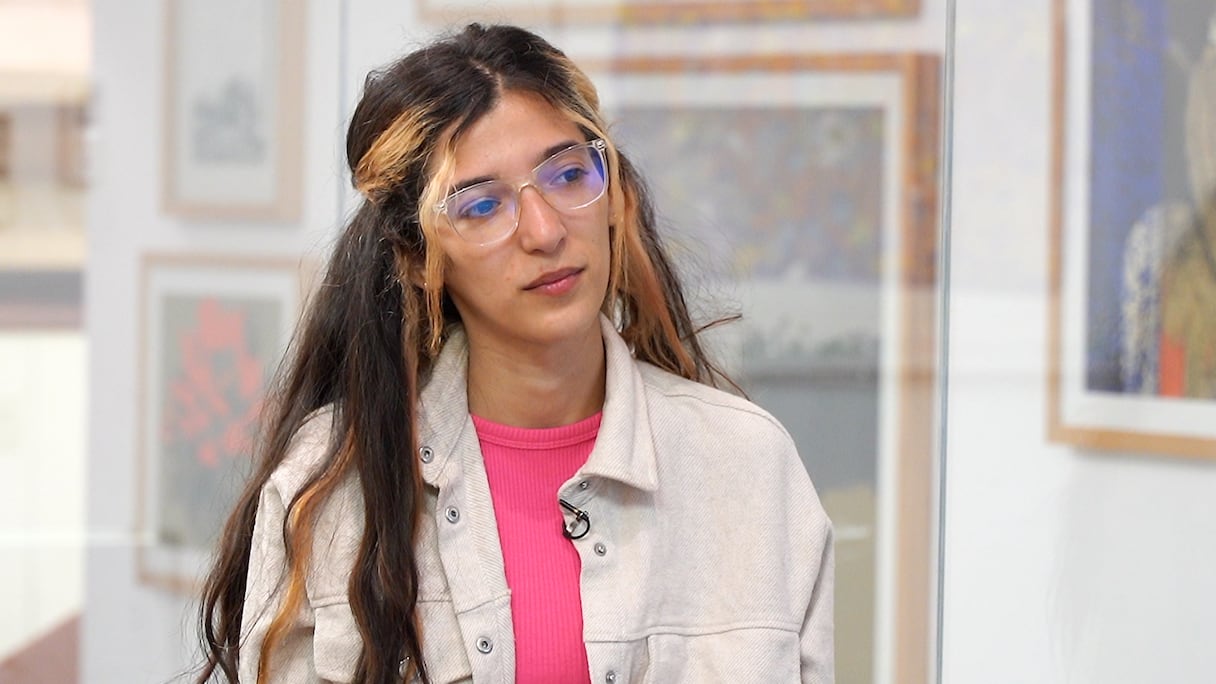
From studying cinema in Ouarzazate—often referred to as the “Hollywood of Africa”—to working on the sets of major international productions, Samah Saoui’s career reflects the rise of a remarkably talented young Moroccan artist. As a set decorator, she has helped create everything from monumental set pieces to the smallest details that bring scenes to life on screen. Although she had already worked on prestigious productions, including Ridley Scott’s Gladiator II, The Odyssey holds a special place in her career for one reason above all: it allowed her to work under her favorite filmmaker, Christopher Nolan.
Le360: Before joining a production of this scale, what was your journey like?
Samah Saoui: I started by studying applied arts in high school. From an early age, I knew I wanted to work in cinema, but taking that first step wasn’t easy. I first studied computer graphics in Agadir before joining the Specialized Institute for Film Professions in Ouarzazate (ISMC), where I specialized in set design.
How were you recruited to join the team behind The Odyssey, and what was your first reaction?
Initially, I was contacted by Rabaa Rahmouni, the set designer I regularly work with. She was the one who invited me to join the project. In this profession, relationships are extremely important. It’s an industry where many people work freelance, so you have to prove yourself on every production. When people recognize your commitment and professionalism, they open doors for you.
At first, we didn’t even know which film we would be working on, or who was directing it. When I found out it was a Christopher Nolan project, I could hardly believe it. I’m a huge fan of his films. I love the way he tells stories, his directing style, and the way he constructs his scripts. So the thought of seeing my name in the credits of one of his films felt completely unreal.
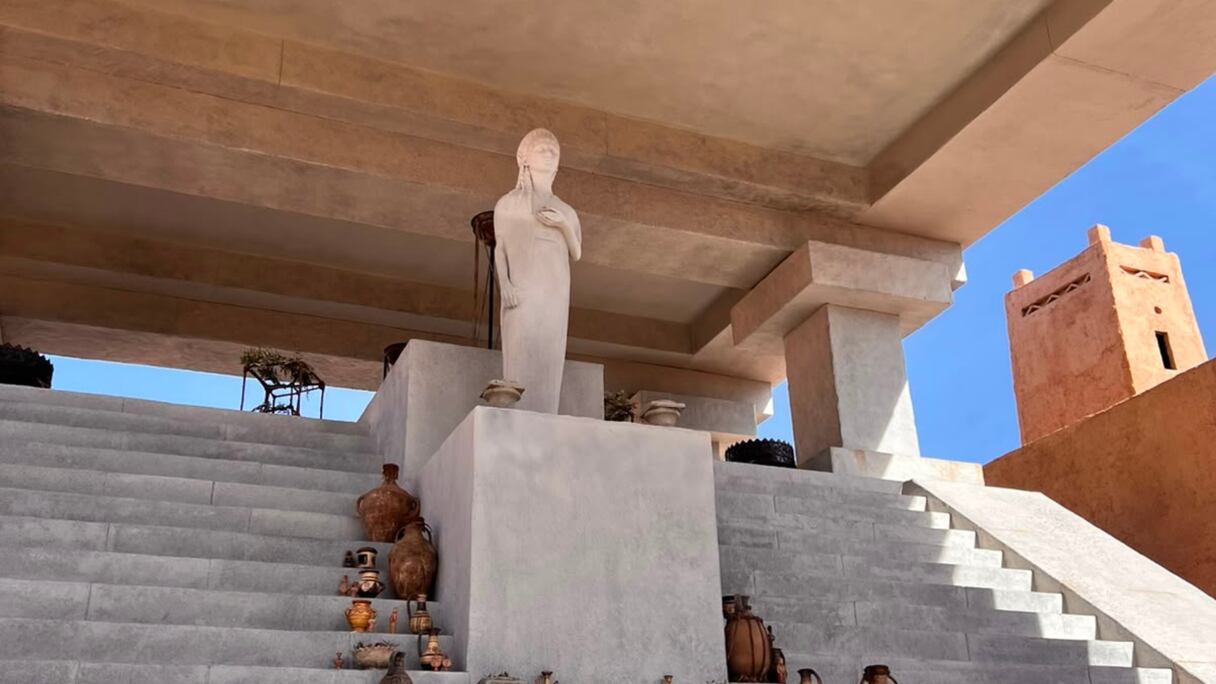
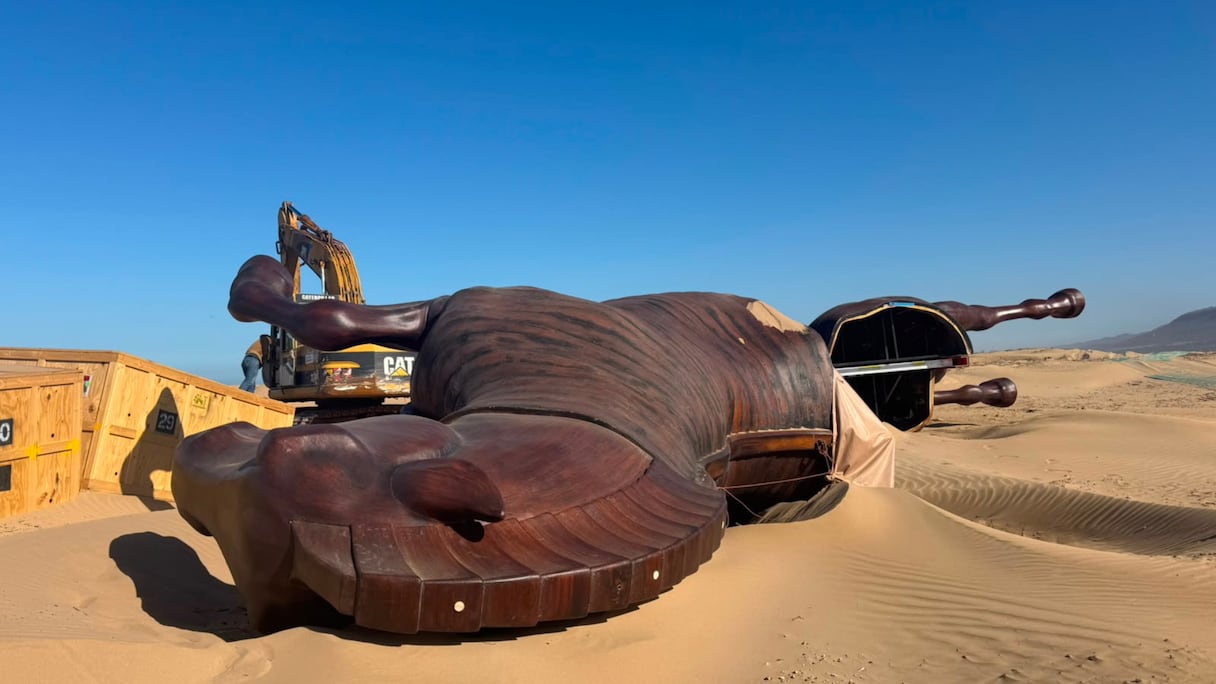
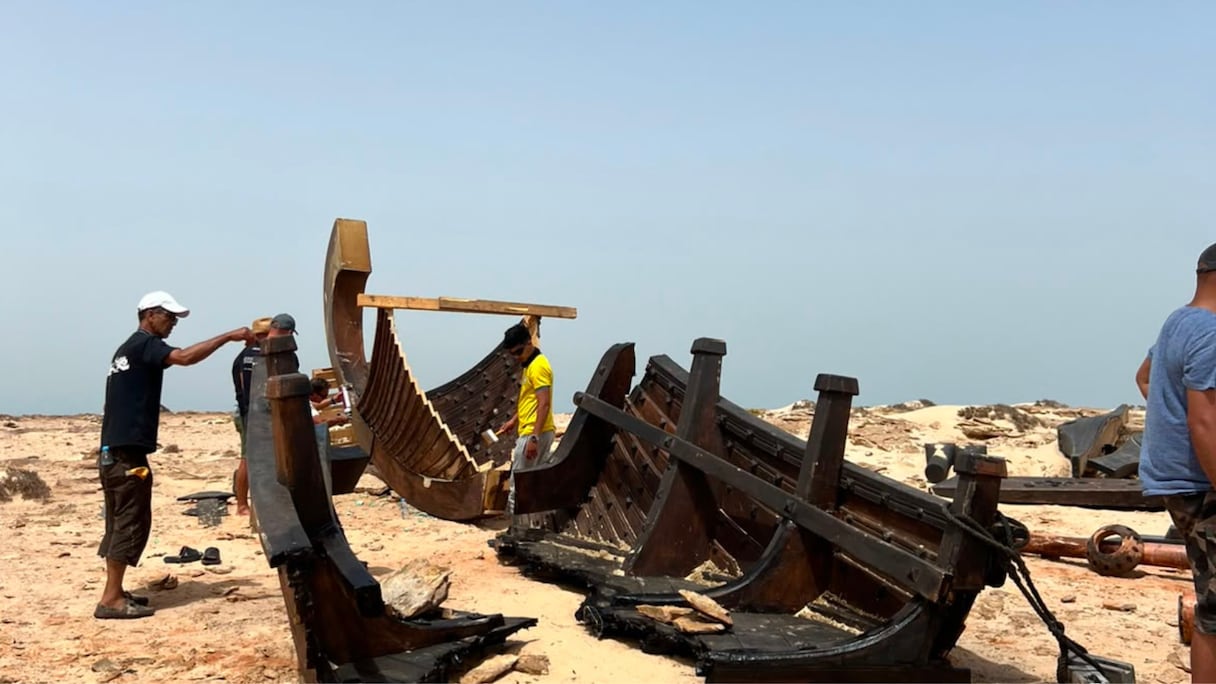
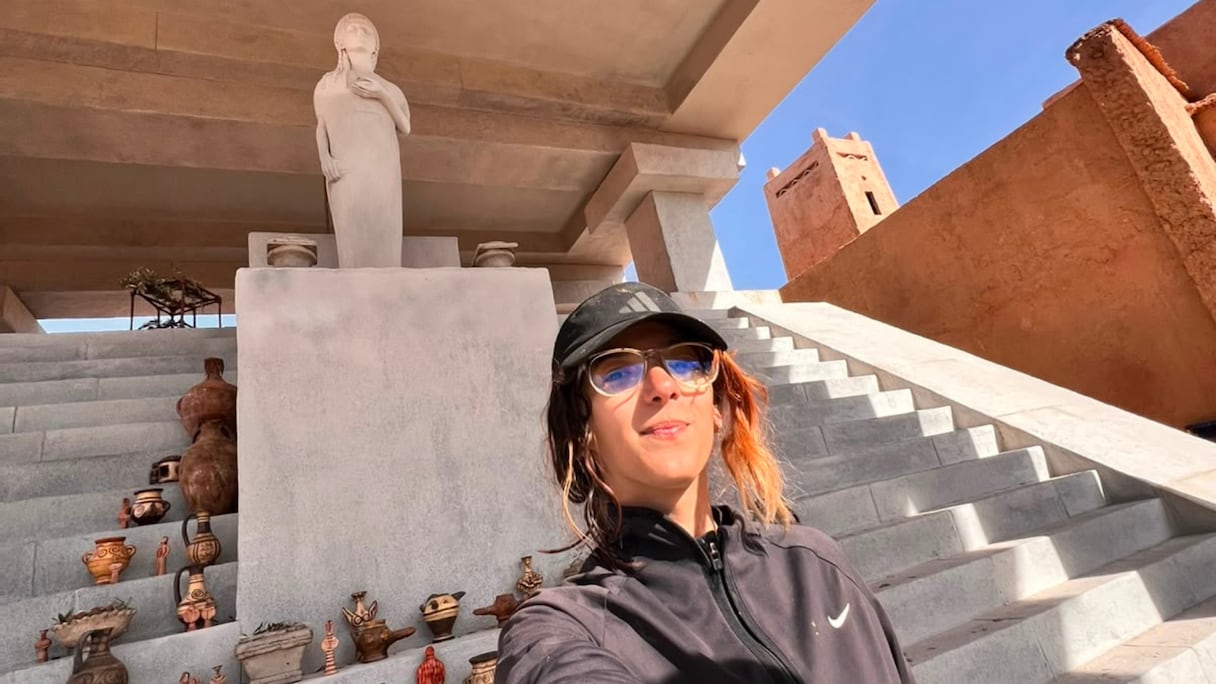
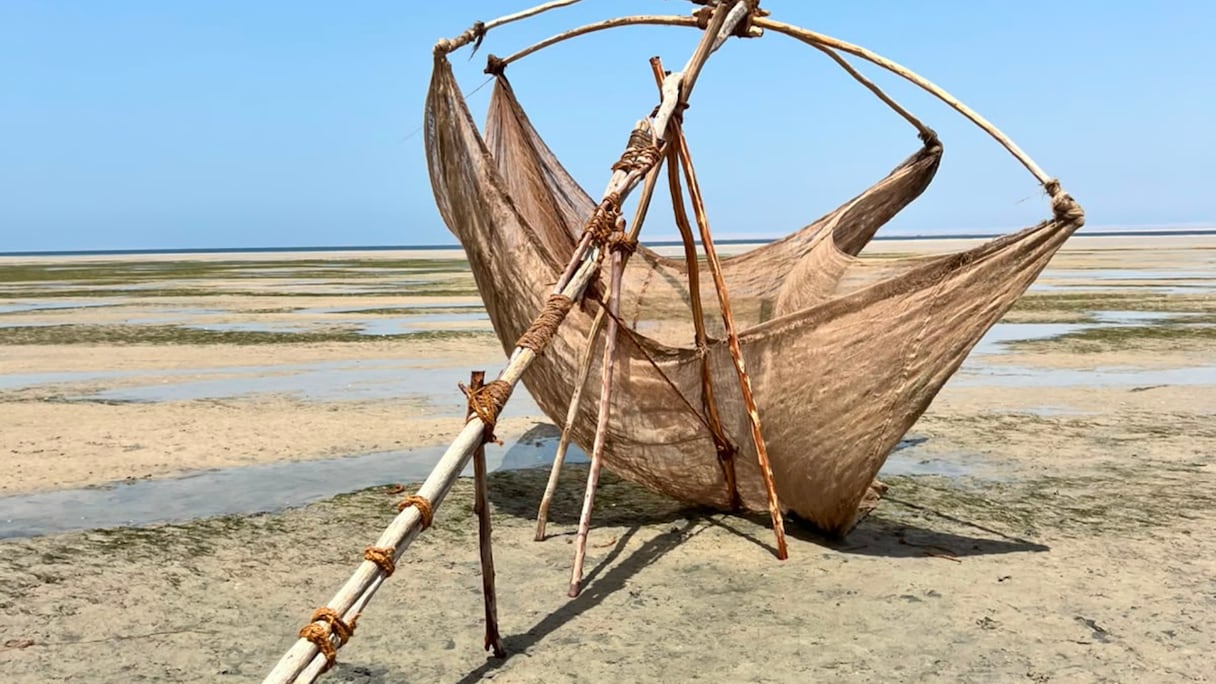
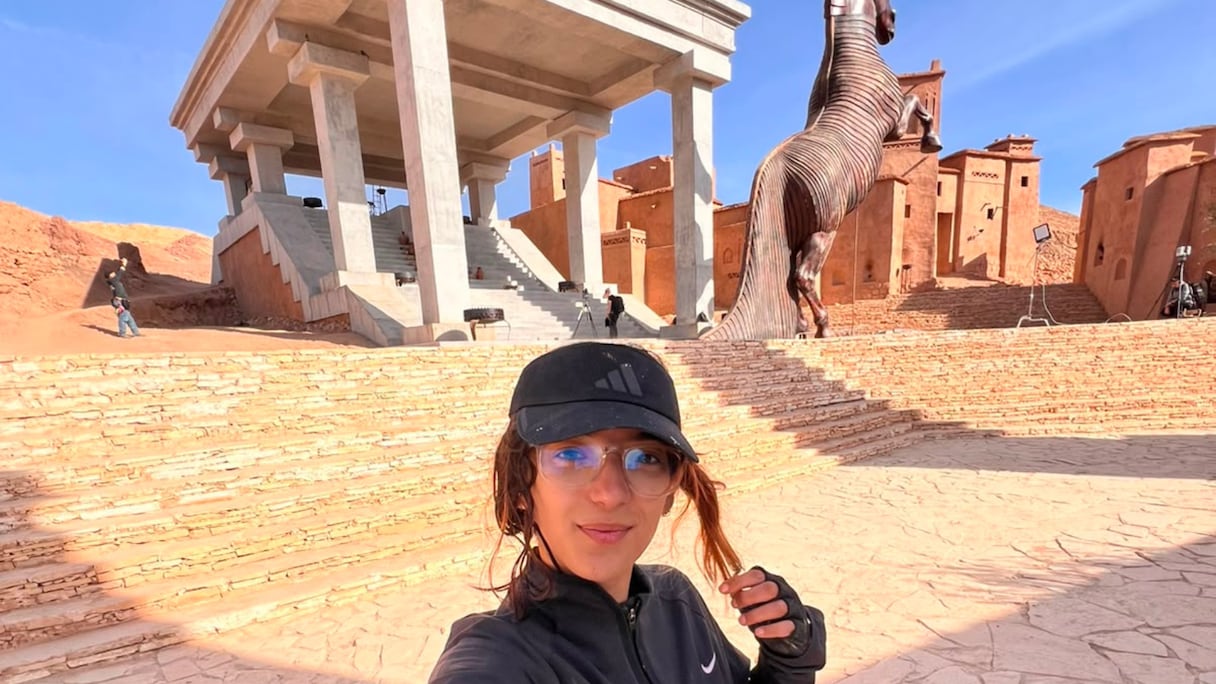
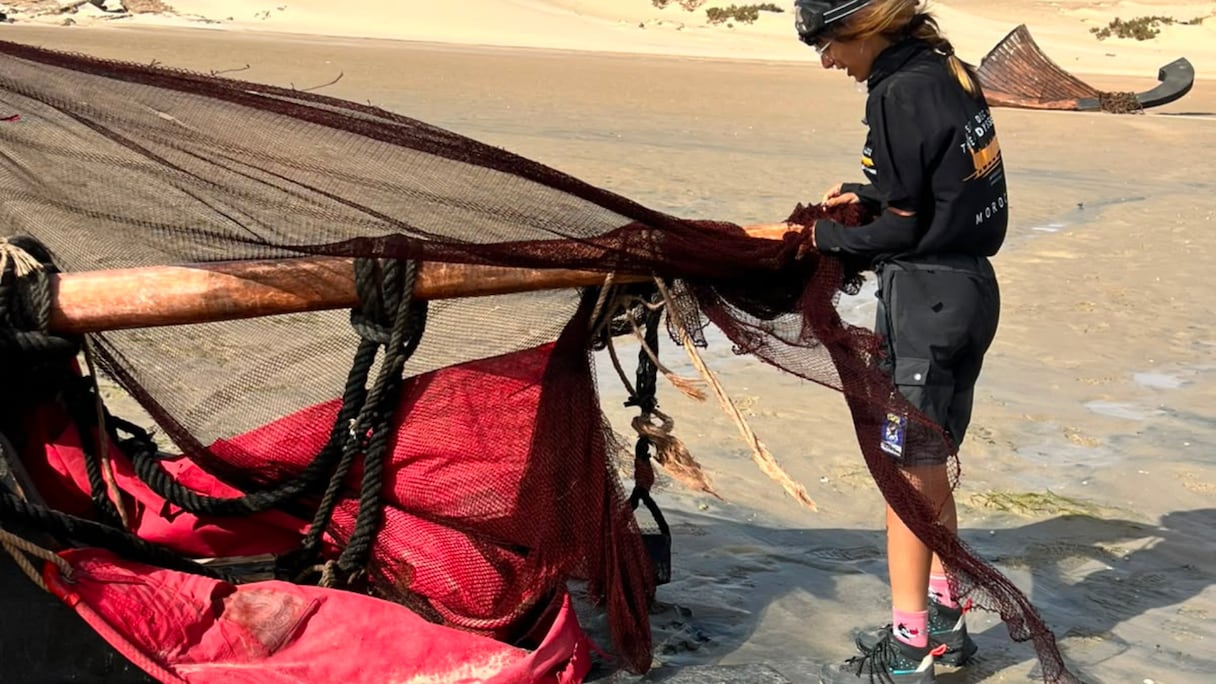
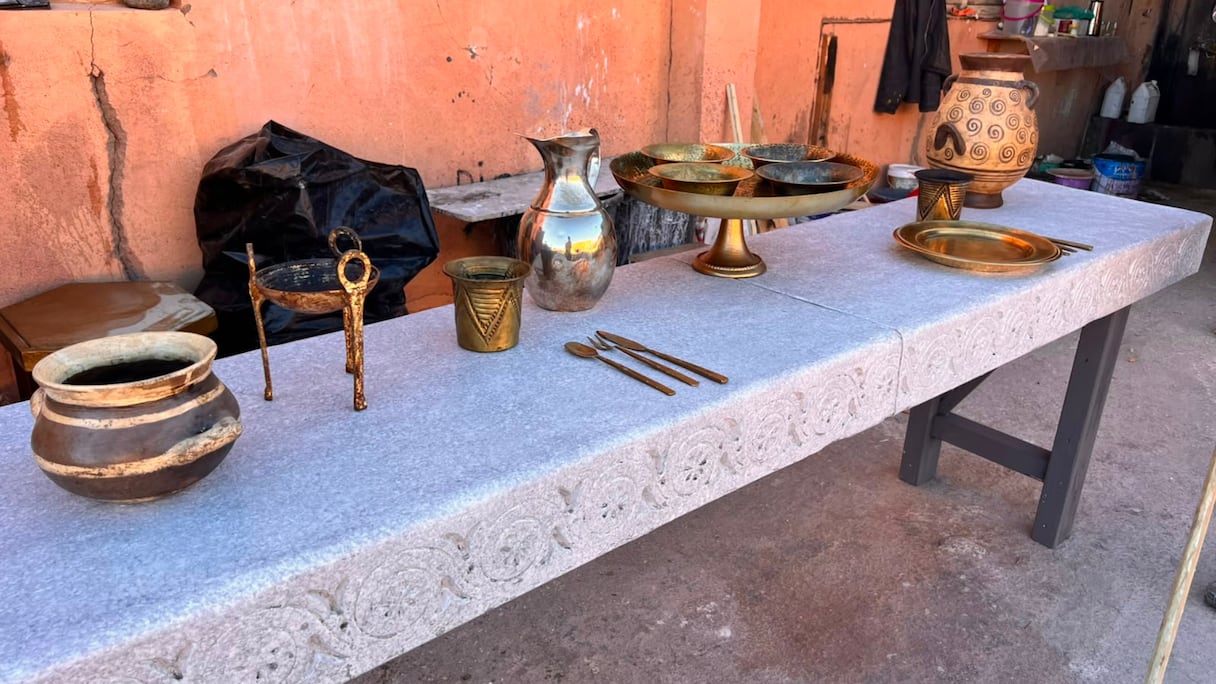
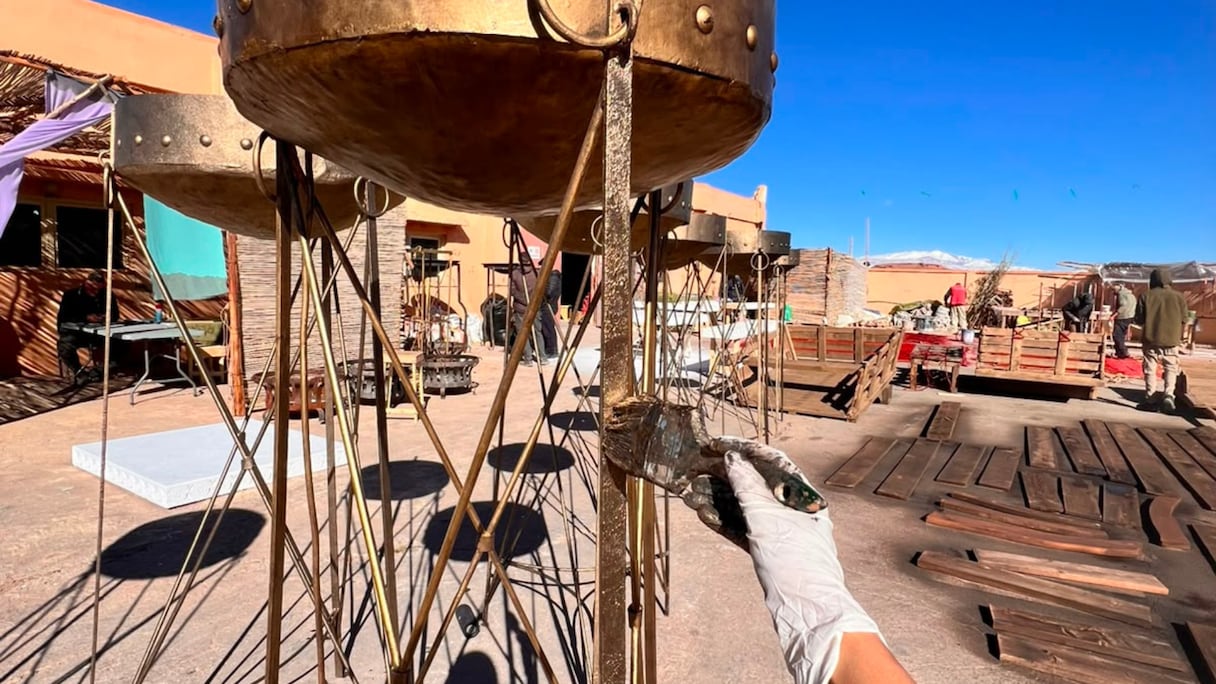
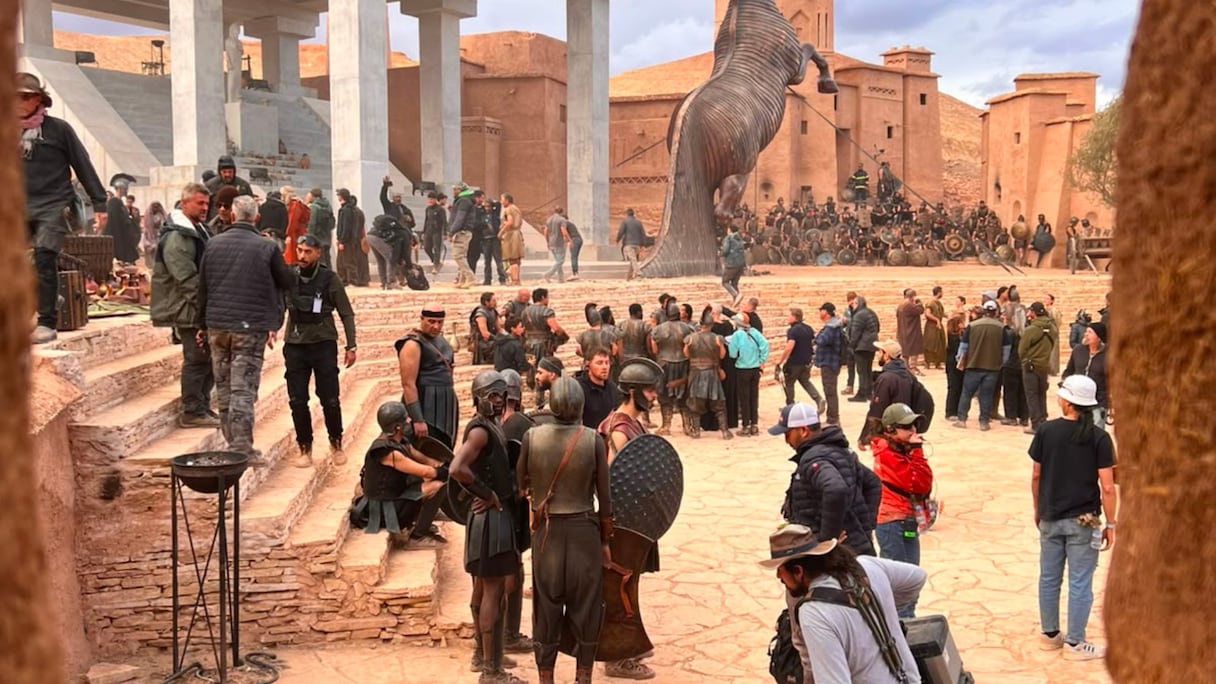
Set preparation during the filming of The Odyssey in Morocco. (Samah Saoui)
The general public knows the actors and directors, but far fewer people know the artisans who bring film sets to life. What exactly does your work involve on a film set?
I had two roles during the production.
As a scenic painter, I painted every element created by the carpenters, sculptors, and costume teams, giving them the most realistic finish possible. We recreated textures, weathering effects, and the natural appearance of wood, stone, and metal. I especially remember painting nearly 300 to 400 resin fish. By the end of the project, I felt like I was seeing fish everywhere.
My second role, as a junior assistant, mainly involved coordinating between the production designer, her assistant, and the different departments, including props, set decoration, and painting. I ensured information flowed smoothly between teams and monitored every stage of production so everything would be ready on schedule. On a production of this scale, time is one of the most valuable resources.
Which set are you most proud of working on today?
Without hesitation, the pottery. We produced hundreds of pieces, and when I watched the film, I was delighted to see that they genuinely contributed to the overall look and atmosphere of the sets.
I also think of the enormous chandeliers made in Marrakech. The metalworkers crafted them, and we were responsible for their finishing touches. Seeing them on screen fills me with immense pride.
Were there many Moroccan crew members involved?
Yes, a great many. In the Set Decoration and Props departments alone, several hundred Moroccans worked on the production. Local talent was very well represented throughout the project.
Who left the biggest impression on you during filming?
Without hesitation, Matt Damon, who plays Odysseus. He was always smiling, in a good mood, and incredibly approachable. In fact, he was the only actor I asked to take a photo with.
Then there was Christopher Nolan. His presence alone commanded enormous respect.
Do you have any memorable anecdotes involving either of them?
Yes. One day, I was serving myself food at the catering area when Christopher Nolan walked up beside me. I was so overwhelmed that I could barely pick up a piece of chicken!
Another time, we had to enter a set through a very narrow entrance. Christopher Nolan was standing in front of it. Naturally, I didn’t dare ask him to move. He looked at me and simply gestured for me to go through before him.
It may seem like a small moment, but I went home that evening with the biggest smile on my face.
What was the most stressful moment of the shoot?
Without a doubt, creating a massive table that we worked on for several weeks.
We had to redo the textures several times because the art department wanted to reproduce, as faithfully as possible, the appearance of a type of stone that had been identified abroad. Every time the tabletop was modified, we also had to rework the benches to maintain complete visual consistency.
It was an extremely demanding task. When I finally saw that table on screen, I felt an overwhelming sense of pride as I remembered all the effort that had gone into it.
Is this the biggest production you’ve worked on?
Without question. Everything was on an extraordinary scale: the size of the crews, the technical resources, the sets, and the filming locations.
We worked in places such as Aït Ben Haddou and Dakhla, sometimes under difficult conditions, surrounded by mountains and sand dunes, with vehicles frequently getting stuck in the sand. At every stage, we felt we were part of something truly exceptional.
How would you compare your experience on The Odyssey with Gladiator II?
Gladiator II will always remain a wonderful experience, but The Odyssey holds a special place in my heart—simply because Christopher Nolan is my favorite director.
What did you take away from working on this production?
I learned an enormous amount. Some of those lessons are difficult to explain because they are more about instincts, working methods, and ways of solving problems—things you only acquire through experience.
I’m convinced that everything I learned on this production will stay with me for years to come.
Beyond the professional aspect, there’s also a sense of pride. I know that decades from now, I’ll still be telling my children and grandchildren about this adventure. It’s an experience that will remain with me for the rest of my life.
Christopher Nolan has insisted that audiences watch The Odyssey in IMAX 70mm. Why is that so important?
Because that’s the format the film was conceived and designed for.
If you don’t see it in IMAX 70mm, you don’t experience the framing the way Christopher Nolan intended. You lose part of the scale of the images, the composition of the shots, and the level of immersion he wanted to create for the audience.
IMAX Laser, such as the one at Pathé Casablanca, is currently the closest available alternative, even though it is not true IMAX 70mm.
