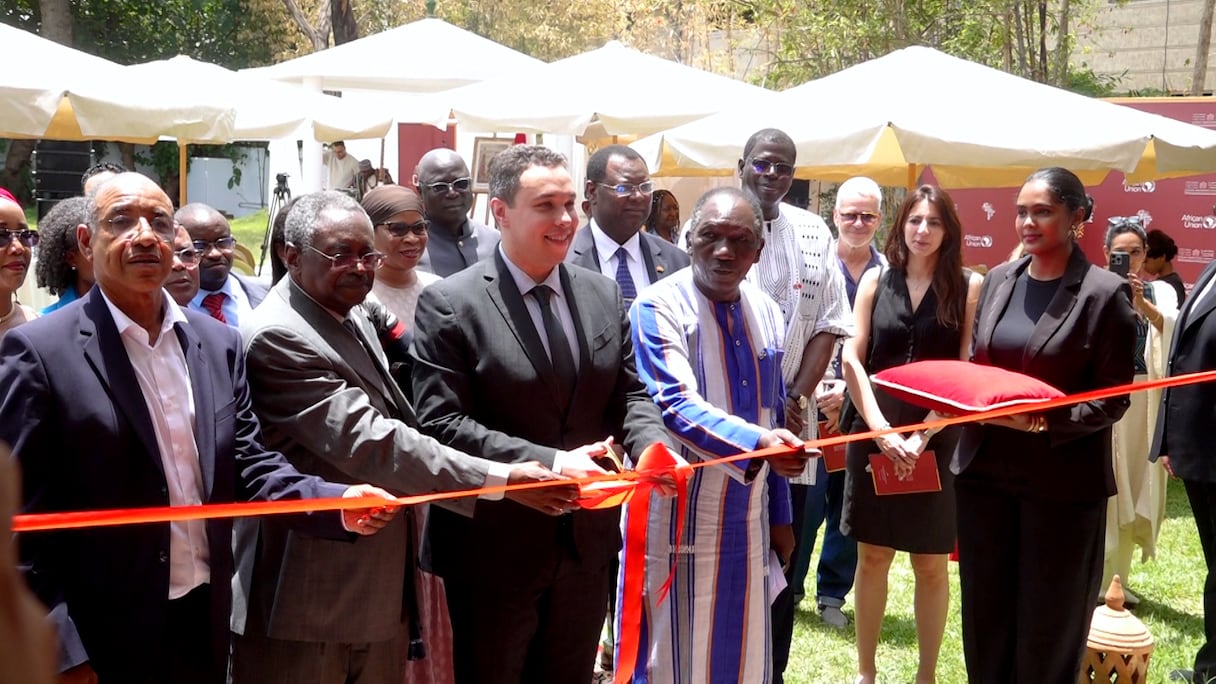
Located in the Souissi district of Rabat, the headquarters—made available by King Mohammed VI—houses a collection of artworks and cultural objects from different parts of Africa, reflecting the richness and diversity of the continent’s heritage.
The official inauguration took place on Thursday, June 18, and brought together cultural leaders, representatives of the creative industries and African ambassadors accredited to Morocco.
In a message read on his behalf by Salaheddine Abkari, acting secretary-general of the Ministry of Youth, Culture and Communication, Minister Mehdi Bensaïd said that hosting the headquarters represented “a powerful symbol,” illustrating both “the confidence enjoyed by the Kingdom” and Morocco’s determination to provide Africa with a platform dedicated to intercultural dialogue, cooperation and coordination of initiatives aimed at promoting African cultures.
According to several participants, Rabat was selected from among several candidate cities to host the institution.
“I am convinced that culture is not a luxury but a lever for social cohesion, economic development, transmission and innovation,” the minister said in his message.
Malian cultural figure Adama Traoré, president of the African Capitals of Culture Committee, noted that the concept of a cultural capital—illustrated by Rabat in 2022 and Praia, Cabo Verde, which has been designated for 2028—builds on a model that has been successfully implemented in other parts of the world for decades.
Through the program, he said, the ambition is to provide cultural actors, creators, institutions and local authorities with the tools needed to make culture a vehicle for territorial development, cooperation and social transformation.
The initiative, led by United Cities and Local Governments of Africa (UCLG Africa), was established during the eighth Africities Summit held in Marrakech in November 2018, at the initiative of elected officials and representatives of local governments across the continent.
Speaking to Le360, Khalid Tamer, executive director of the African Capitals of Culture Secretariat and head of the new headquarters, said the program is aligned with the African Union’s strategic priorities in culture, creativity, heritage promotion and sustainable development.
According to him, the establishment of the permanent headquarters further strengthens Rabat’s position as a hub for African cultural exchanges and a platform for cooperation among the continent’s cultural ecosystems.
For her part, Senegalese committee member Aminatou Lo Pay praised Morocco’s commitment to advancing African cultural action, saying the hosting of the institution provided tangible proof of that engagement.
Senegal’s ambassador to Morocco, Seynabou Dial, and Rwanda’s ambassador, Shakilla K. Umutoni, also expressed their gratitude to the Kingdom for making the headquarters available, describing it as an important milestone in efforts to preserve, promote and transmit Africa’s cultural heritage.
