The initiative comes from Mehdi El Fakir, a chartered accountant and managing partner at AD Value, who is proposing to reinstate the provisions of Articles 7, 8 and 8 bis of the 2024 Finance Act. His proposed amendment seeks to extend the voluntary regularization schemes from January 1 to December 31, 2027, giving affected taxpayers and individuals another opportunity to bring their affairs into compliance.
The chartered accountant has presented his proposal to several parliamentary groups, which are understood to have expressed support for the principle. Some have reportedly undertaken to put the initiative before the Finance Committee during its examination of the 2027 draft Finance Bill.
The proposal comes as the parliamentary timetable enters a decisive phase. Amendments to the draft Finance Bill are due to be submitted on Tuesday morning, while the Finance Committee is scheduled to vote on amendments to the first part of the bill tomorrow, Wednesday, November 11.
A means of boosting bank liquidity
In support of his proposal, Mehdi El Fakir points to several economic and financial considerations. He believes that a new regularization window, accompanied by a nationwide information and awareness campaign, would help strengthen trust between the tax authorities and taxpayers while fostering a stronger culture of tax compliance.
Read also : 2027 Finance Bill projects 15.6% rise in tax revenue to 22% of GDP
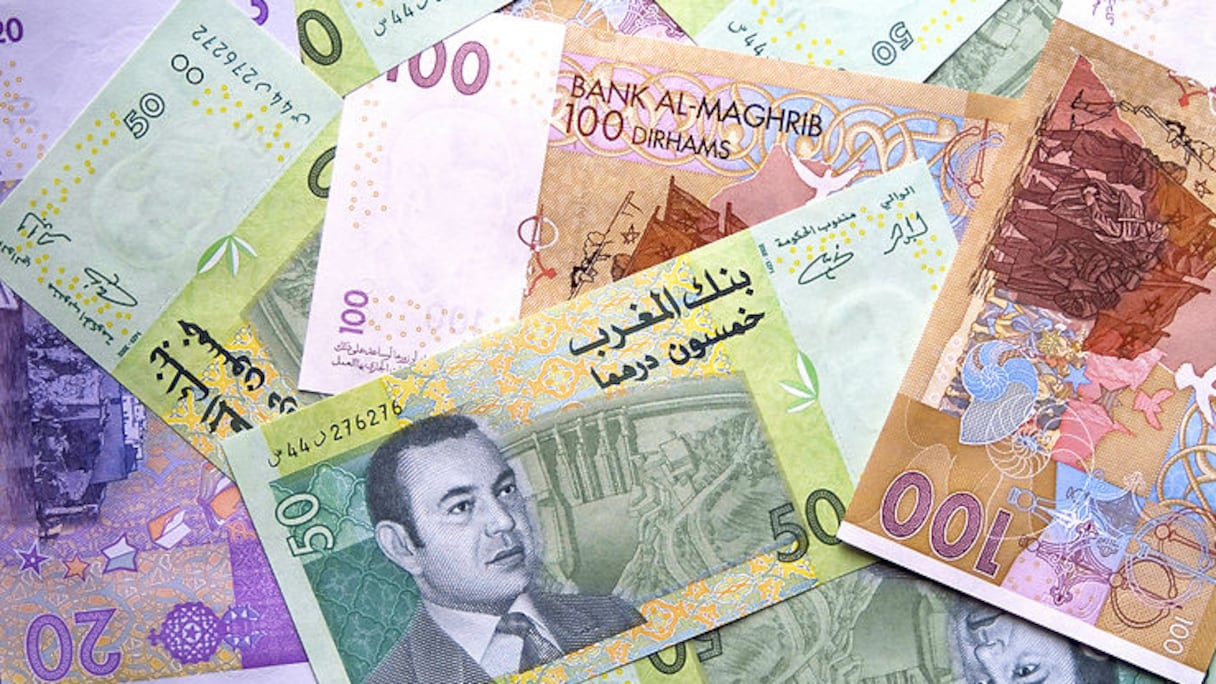
Beyond the tax dimension, the proposal also seeks to mobilize cash that currently remains outside the banking system. According to Bank Al-Maghrib data cited in his proposal, banknotes and coins circulating outside banks are estimated at approximately MAD 550 billion. Around MAD 300 billion of that amount accumulated between 2019 and August 2026, he says.
The case for the measure also rests on the liquidity pressures facing the banking system. According to Bank Al-Maghrib figures, the banking liquidity shortfall reportedly reached MAD 135.8 billion during the first ten months of 2026.
Against this backdrop, reinstating the scheme could help channel some of the cash in circulation back into the banking system by encouraging holders of undeclared funds to regularize their position. The aim would be to mobilize financial resources that banks particularly need.
Read also : Who stands to gain from income tax reform? Why Lekjaa’s MAD 10,000 figure is causing confusion
The other component of the proposal concerns the resolution of check payment incidents, which have become a serious problem for the business community.
Bank Al-Maghrib’s figures for 2025 illustrate the scale of the problem. A total of 462,617 check payment incidents were recorded, involving MAD 16.6 billion. At the end of 2025, the number of people barred from issuing checks stood at 691,000, up from 677,000 a year earlier, an increase of 14,000.
More worrying still, the accumulated number of unresolved check payment incidents rose by 1.8% in 2025 to reach 3.5 million cases, compared with 3.4 million in 2024. Individuals account for 82% of those banned from issuing checks and 72% of outstanding unresolved incidents.
For the chartered accountant, reinstating the regularization scheme would give individuals and legal entities another opportunity to settle their outstanding check payment incidents and regain their full standing as economic operators.
The measure would also make it easier for them to access financing and help sustain economic and social activity. It would, moreover, build on the reform of the Commercial Code introduced by Law No. 71.24, which came into force on January 29, 2026, and notably amended the rules governing check payment incidents.
