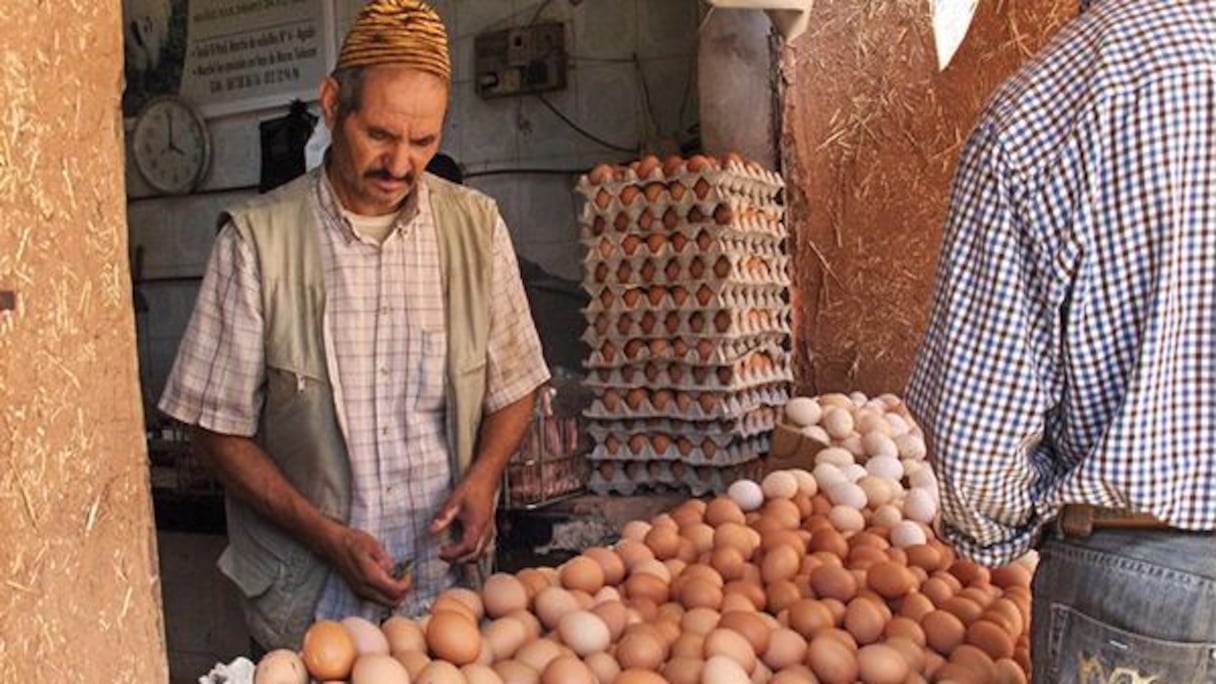
In this regard, Khalid Zaïm, president of the National Association of Table Egg Producers, told Le360 by phone that “producers are facing a difficult contradiction: the farm-gate selling price does not exceed 90 centimes for large eggs and 60 centimes for small eggs, while they are sold at retail for a much higher price that does not match the purchasing power of Moroccan consumers.”
Zaïm stressed that producers are suffering from this gap between production and retail prices. “We are suffering because we sell our product at or below cost, while it is sold to consumers at a high price, and we do not know the reasons behind this. As producers, we completely and unequivocally disassociate ourselves from the high prices paid by citizens. There is no longer any connection between the price at which we sell, which is 60 or 90 centimes, and the prices recorded in the markets, as we continue to sell our product at or below cost.”
Read also : Beef at MAD 120, lamb at MAD 160 as food price pressure spreads to chicken, eggs
Zaïm attributed this imbalance to an oversupply compared with the sharp decline in consumers’ purchasing power, adding: “Supply exceeds demand, and purchasing power is extremely limited. Ordinary consumers are struggling with school expenses and back-to-school needs. Since a large share of our products goes to middle- and low-income households, any strain on the pockets of ordinary Moroccan consumers directly affects demand for our product.”
The same speaker added: “We believe our prices are very reasonable. In fact, they barely cover production costs, if they cover them at all. We disassociate ourselves from the prices consumers pay for this product, which we make considerable efforts to deliver to consumers in the best possible condition.”
Regarding communication with the authorities, the speaker said: “The ministry intervenes and asks questions only when prices rise, to ask about the reasons behind this. Since the ministry is the competent authority and has full knowledge of all developments and every detail, it is fully aware of the difficulties we are facing. We recently held a meeting with the secretary-general of the Ministry of Agriculture in July, during which we explained to him the extent of the difficulties facing the sector.”
Read also : Sardine prices rise to MAD20 per kg
Zaïm concluded by warning that the current situation could have negative consequences in the future. “These difficulties will ultimately hurt both us and consumers because continuing to incur losses leaves us with only one option: reducing production. We can no longer finance machinery and no longer have the financial capacity to maintain the same pace of production.”