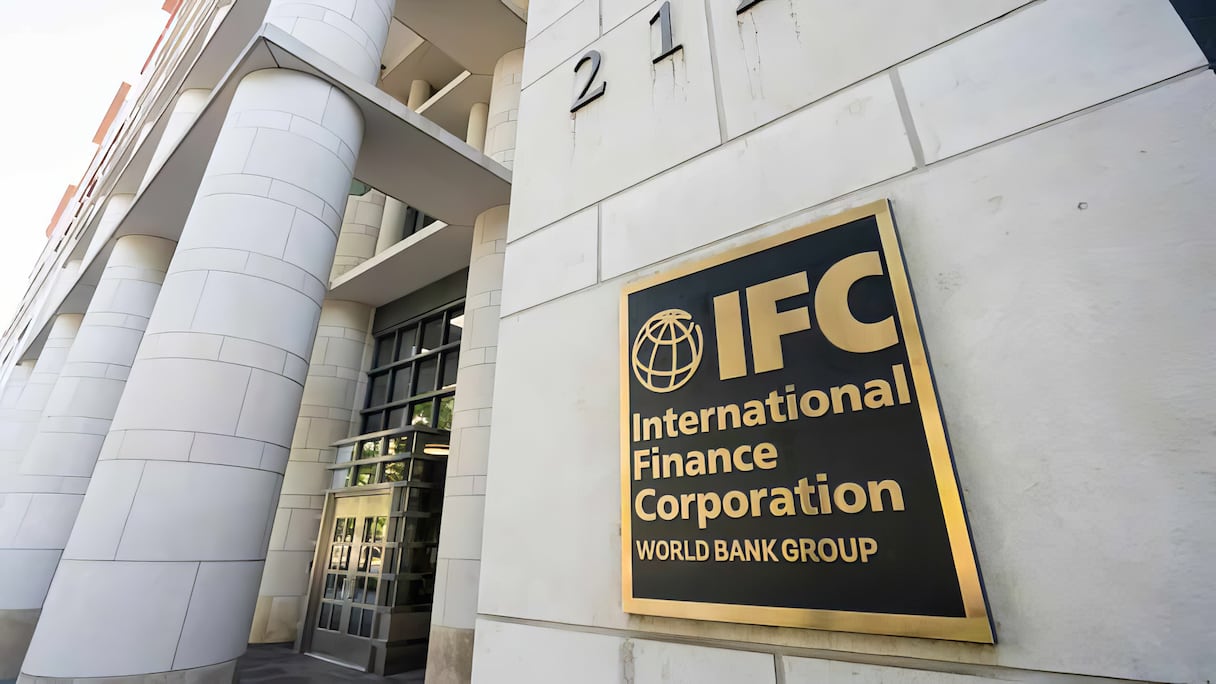
The International Finance Corporation and Germany’s EOS Holding are planning a €60 million facility to acquire non-performing loans and bank-owned real estate from Moroccan financial institutions, opening a new channel for lenders to clear distressed assets from their balance sheets.
The World Bank Group’s private-sector arm plans to commit up to €30 million to the facility, with EOS providing an equivalent amount on equal terms, according to project information disclosed by IFC on August 17.
The investment is still pending approval, with a projected IFC board date of October 15, 2026.
Read also : Morocco’s non-performing bank loans hit record MAD 106 billion
The facility will target non-performing retail, SME and corporate loans, along with real estate-owned assets held by financial institutions. It would be IFC’s first investment under its Distressed Asset Recovery Program, or DARP, in the country.
The project comes as the stock of bad loans held by banks continues to grow. Non-performing loans reached MAD 105.97 billion between January and May 2026, up 4.9% from the same period last year, according to the latest figures from Bank Al-Maghrib.
That follows a 5.2% increase in 2025, when outstanding NPLs reached MAD 103 billion, after rising 2.8% in 2024.
The increases, however, remain below the average annual growth of 6.8% recorded between 2015 and 2023, according to the 2025 Financial Stability Report.
And while the absolute amount of troubled debt is increasing, its weight within overall bank lending has edged lower. The banking sector’s NPL ratio stood at 8.3% in 2025, against 8.4% a year earlier, marking a second consecutive year of improvement in asset quality.
Against that backdrop, the proposed IFC-EOS vehicle would give financial institutions another route to dispose of troubled loans and release capital for new lending.
IFC and EOS to put in €30 million each
The facility will be funded through equal equity commitments from IFC and EOS, with each investing up to €30 million equivalent.
EOS specializes in acquiring, pricing, and managing distressed debt portfolios and real estate-owned assets. Headquartered in Germany, the company has more than 50 years of experience in the sector and handles both secured and unsecured retail debt as well as SME and corporate non-performing loans.
The company is wholly owned by Otto Group, the German retail, e-commerce and services group.
EOS is also an existing IFC client, giving the two institutions an established relationship as they prepare to enter the local distressed-assets market.
Beyond providing capital, IFC expects the partnership to bring technical know-how into the market. Local debt servicers and law firms working with EOS are expected to benefit from knowledge transfer as the facility acquires and manages portfolios.
Giving banks another route to deal with bad loans
The planned investment is built around a relatively simple proposition. Non-performing loans consume capital and resources on financial institutions’ balance sheets, while disposing of them can allow lenders to redirect part of that capacity towards new financing.
IFC expects the facility to provide capital relief to participating institutions by purchasing NPL portfolios and other distressed assets.
Read also : Central bank report: Moroccan banks post stronger profits but urged to remain cautious
That capital can then be recycled into fresh lending, potentially increasing the resources available to households and businesses.
The project also targets the other side of the equation — borrowers whose debts have fallen into non-performing status. IFC expects specialized management of these portfolios to help some debtors regularize their financial obligations.
The facility could therefore contribute to the development of a more structured secondary market for distressed debt, with specialized investors purchasing and managing assets that banks no longer want to retain on their books.
IFC says its participation should also help mobilize private capital into the sector and increase competition in a market where specialized distressed-asset investment remains relatively limited.
Real estate also on the shopping list
The facility will not be restricted to loans.
It will also be able to acquire real estate-owned assets, or REOs, from financial institutions. These are generally properties that have come under a lender’s ownership following debt recovery or enforcement procedures.
That gives the planned vehicle a broader mandate than simply purchasing portfolios of unpaid consumer or business debt.
The investment strategy will nevertheless be subject to IFC eligibility requirements.
The project has been classified as FI-2 under IFC’s environmental and social framework, reflecting what the institution considers limited environmental and social risks associated with the investment.
The facility will be required to screen the assets it acquires against IFC standards and local environmental and social regulations.
Activities appearing on IFC’s exclusion list will not be eligible, while coal-related activities will also be excluded.
Additional screening will apply to borrowers involved in higher-risk activities, including those associated with involuntary resettlement, significant environmental or community impacts, biodiversity or cultural heritage risks, major retrenchments or serious occupational health and safety risks.
The acquisition of blind pools of corporate debt will also be restricted.
First DARP investment in the country
The project would mark IFC’s first deployment of its Distressed Asset Recovery Program in the Moroccan market.
IFC expects its participation to help bring more private capital into distressed assets while strengthening the ecosystem of specialized companies, servicers and legal professionals involved in managing them.
Read also : Cash in circulation hits record MAD 491 Billion in Morocco, central bank Says
For financial institutions, the facility would introduce another mechanism for removing problematic assets from their books. For borrowers, it could provide a structured route towards resolving debts that have already fallen into non-performing status.
The next step will come in October. If the project secures approval, IFC and EOS will each be able to commit up to €30 million to begin acquiring eligible NPL portfolios and real estate-owned assets from financial institutions.