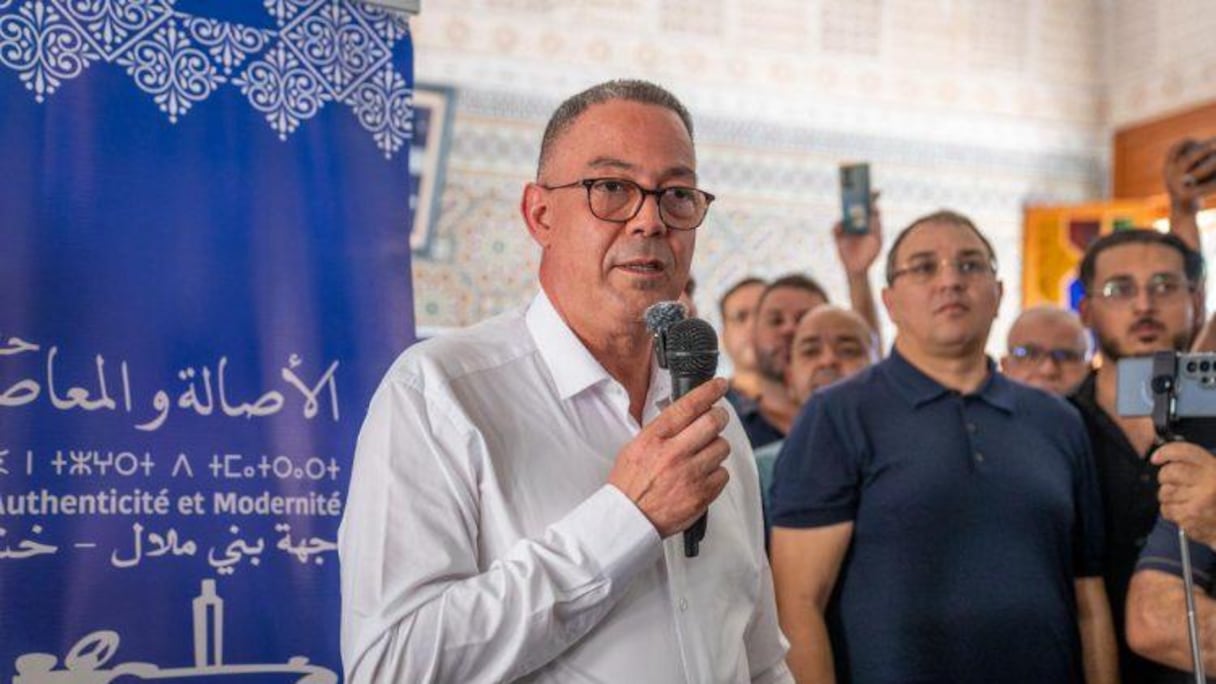
Days after Fouzi Lekjaa blamed livestock intermediaries and importers for contributing to soaring prices ahead of Eid Al-Adha, RNI figures have turned the argument back on the budget minister, questioning why he did not act when the exemptions were approved.
Lekjaa is now defending the limits of his own role in those decisions, arguing that allocating public funds is different from deciding how they are spent and implemented.
The government measures, which included VAT and import-duty exemptions for livestock imports, represented nearly MAD 13 billion in tax expenditure. Yet red meat remains expensive months after Eid Al-Adha, with prices reaching around MAD 150 per kilogram.
RNI turns the question on Lekjaa
The latest confrontation began after Lekjaa took aim at livestock intermediaries and importers during a meeting in Fkih Ben Saleh on August 27.
He blamed them for contributing to the surge in livestock prices ahead of Eid Al-Adha and described those who had “spoiled” the occasion for families as the “real terrorists.”
RNI parliamentary group leader Yassine Oukacha challenged Lekjaa directly the following day during a party rally in Oujda.
His argument centered on Lekjaa’s own position in government: if the budget minister now believes the livestock measures failed, why did he not prevent them when they were adopted?
Lekjaa addressed that criticism in a video released on Sunday evening, setting out what he described as the legal limits of his responsibilities.
“Ministers work within a framework defined by law, in coordination and under the leadership of the head of government,” he said.
“As minister delegate in charge of the budget, I carry out my duties under the administrative authority of the minister of economy and finance, within the general framework led by the head of government."
Lekjaa said his responsibilities cover state revenues, including direct and indirect taxes, as well as determining allocations under the Finance Bill.
But once Parliament approves the budget, he argued, responsibility for spending and implementing individual projects rests with the minister in charge of the relevant sector.
“My role consists of determining, in consultation with the various departments and according to the priorities set before the beginning of the year, the budget allocations assigned to them,” he said. “Once the Finance Bill is adopted by Parliament, responsibility for spending and implementing projects falls to the minister concerned.”
“Each minister has responsibilities and powers defined by law. None can act outside that framework, even when they believe a decision or position would be appropriate,” he added.
Meat policy ‘did not achieve its objectives’
Lekjaa also rejected suggestions that his criticism of the government’s approach to meat prices was new.
“This is not the first time I have spoken about it. I have already done so before both houses of Parliament,” he said.
“I clearly said that the resources mobilized by the government to keep meat prices at reasonable and affordable levels for citizens had not achieved their objectives.”
Lekjaa said the sector now required a deeper rethink and “objective solutions” capable of bringing meat prices back towards previous levels.
He also linked the constraints of his government role to his decision to join PAM, saying the move would give him greater room to debate economic policy and contribute his three decades of experience to its preparation and implementation.
From meat prices to the battle over Finance
The dispute comes as relations between RNI and PAM are already strained over the next government and, increasingly, who could control the Economy and Finance Ministry after the September 23 elections.
A leaked recording attributed to House of Representatives Speaker and RNI figure Rachid Talbi Alami added fuel to that rivalry after he reportedly said Nadia Fettah would remain at the head of the ministry and that Lekjaa would not get the portfolio.
Lekjaa now says the dispute over livestock policy is one of several issues on which positions within the governing majority have diverged.
“This is one of many issues on which we have had different views and positions,” he said.
“I think the accumulation of these differences, however numerous, has made my exclusion from the Ministry of Economy and Finance a strategic objective for a political actor.”
