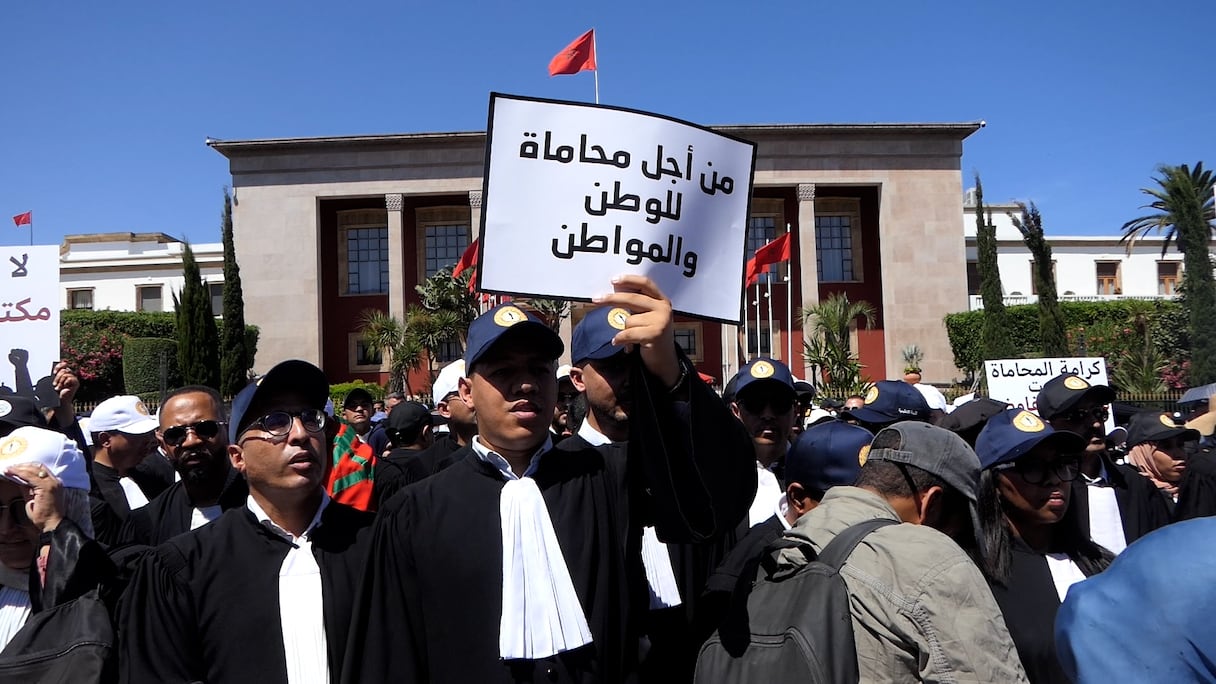
The Association of Bar Associations of Morocco (ABAM) announced that the suspension of professional services would continue, with a detailed statement on the decisions taken at Thursday’s extraordinary meeting expected separately.
The decision came after a meeting that stretched deep into the night. ABAM’s council began talks at the Rabat Bar Association Club at 10:30am and wrapped up around 8pm. Its executive then remained in session until 2am before announcing that the suspension of professional services would continue from Friday, August 28.
Thursday’s meeting had been closely watched for signs that lawyers could return to court, particularly after the new law governing the profession was published in the Official Gazette on August 20.
Instead, the strike goes on.
Lawyers first stopped work in January and February before launching an uninterrupted walkout on June 15. The two phases have now added up to 77 strike days since the start of the year.
The consequences are increasingly visible in courtrooms.
Courts feel the strain
Criminal, civil, commercial, social and family hearings have been repeatedly adjourned, with some of the most difficult cases involving defendants who remain in custody while waiting for their trials to proceed.
The disruption had already prompted a warning from the King’s Prosecutor General at the Settat Court of Appeal. In a July 29 letter, he described a “near standstill” in the handling of cases caused by the refusal to provide legal representation.
Read also : As Morocco’s lawyers strike, thousands of court cases are put on hold
For families, businesses and other litigants, every adjournment can carry an additional cost. Some people travel long distances only to find their hearings postponed, losing a day’s work and paying transport expenses without seeing their cases move forward.
Divorce proceedings have been left pending, while businesses are waiting for rulings on urgent applications and disputes with potentially significant financial consequences.
There is another complication: the clock has not stopped because lawyers have.
Statutory deadlines remain in force during the strike, including time limits for some appeals, leaving litigants facing procedural deadlines even as access to legal representation remains disrupted.
The standoff is taking a toll on lawyers too. Some firms have seen revenues fall sharply or dry up altogether while rent, staff salaries and other running costs continue to pile up. Limited financial assistance has been made available to some lawyers and trainees struggling during the walkout.
Read also : Morocco: Controversial lawyers’ law gazetted as nationwide strike nears 100 days
New law fails to end standoff
Publication of the new lawyers’ law in the Official Gazette on August 20 had raised the question of whether continuing the strike could still change the course of the reform.
ABAM’s answer, for now, is yes.
The association had already announced on August 18 that lawyers would continue both their strike and the suspension of legal aid services, while promising a “progressive struggle” involving other forms of protest.
With the law now adopted and published, the battle is moving to its implementation. Lawyers are continuing to contest provisions of the reform and are turning their attention to the implementing regulations that will determine how parts of the new framework are applied.
