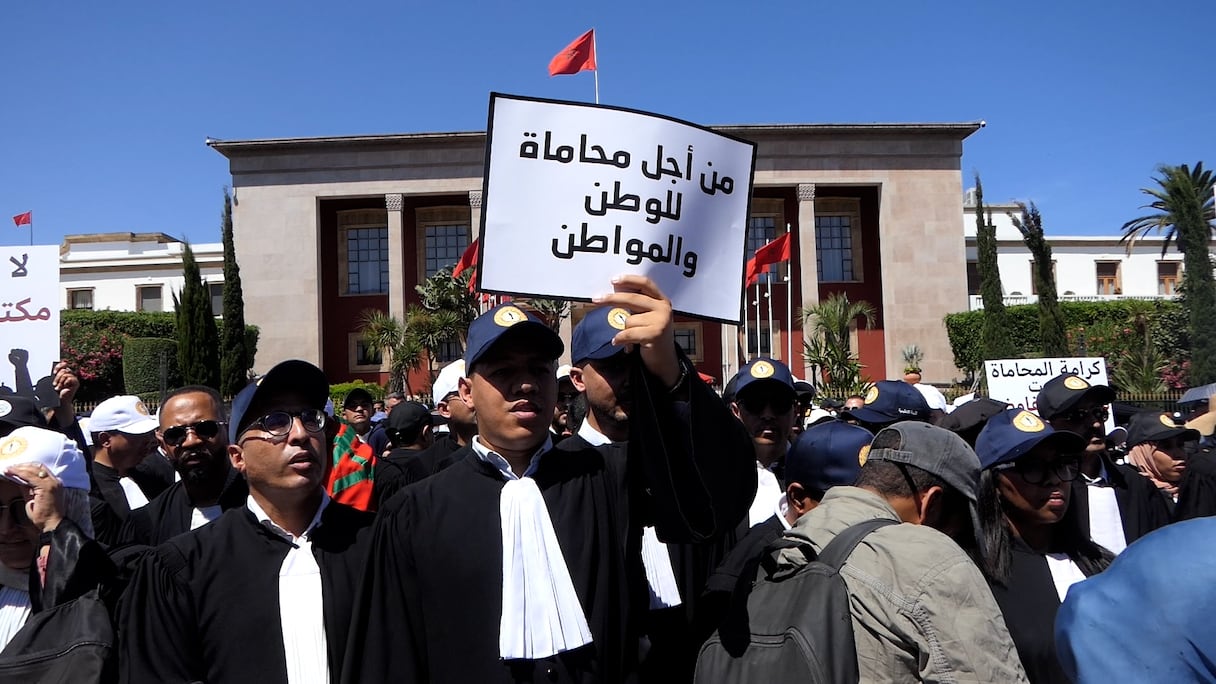
The National Council of the Association of Moroccan Bar Associations, its deliberative body, is due to meet from around 10 a.m. at the Lawyers’ Club in Souissi.
The closed-door session comes after the new law governing the legal profession was published in the Bulletin Officiel, bringing it into force despite opposition from the country’s 17,000 lawyers. No media will be allowed into Thursday’s meeting. The association is expected to issue a statement once deliberations conclude.
The key question is whether the profession should maintain its open-ended strike now that the legislation it sought to block has entered into force.
Two positions have emerged. One camp wants the strike to continue, maintaining pressure for changes to provisions lawyers say undermine the independence of the profession.
The other favors returning to court while keeping the demand for amendments alive, potentially taking up the issue with the next government after the September 23 legislative elections.
Those backing a return argue that lawyers can continue challenging the legislation without prolonging the disruption to judicial proceedings and litigants.
Which position commands a majority at Thursday’s meeting remains unclear.
Read also : Rabat bar chief vows to fight ‘unjust’ lawyers’ law
The official publication is part of the constitutional process for promulgating and publishing legislation. For some lawyers, the law’s entry into force has now changed the nature of the dispute.
“If lawyers choose to continue the strike, that would mean they are putting themselves outside the laws they defend,” a Rabat lawyer told Le360 on condition of anonymity. “If common sense prevails, the right to seek changes to the law remains legitimate, but it must now be pursued through other channels.”
Read also : Morocco: Controversial lawyers’ law gazetted as nationwide strike nears 100 days
That position is far from unanimous.
The Association of Young Lawyers has come out against ending the strike, keeping pressure on the national leadership to maintain the protest.
The disagreement comes after months of disruption in courts, with hearings postponed and cases accumulating. Litigants have borne much of the impact, including people in pretrial detention whose cases have repeatedly been deferred.
Independence at heart of dispute
Lawyers have opposed Law No. 66.23 over a series of provisions they say weaken the independence of the profession and alter the balance between lawyers, Bar institutions and the public prosecution.
Among the contested provisions are rules governing agreements between lawyers and clients, the prior determination of legal fees and changes that opponents say reduce the role of Bar presidents in favor of the public prosecution.
The legislation also provides for Court of Auditors oversight of certain funds linked to the profession.
Some lawyers have also raised concerns that the new framework could facilitate a greater presence of foreign law firms, with potential consequences for domestic practices.
The Justice Ministry has defended the legislation, saying it establishes a “more comprehensive and clearer legal framework” for the profession while preserving its specific characteristics and independence.
It has also presented the law as a means of strengthening professional governance and accountability and adapting the profession to changes in judicial and legal practice.
