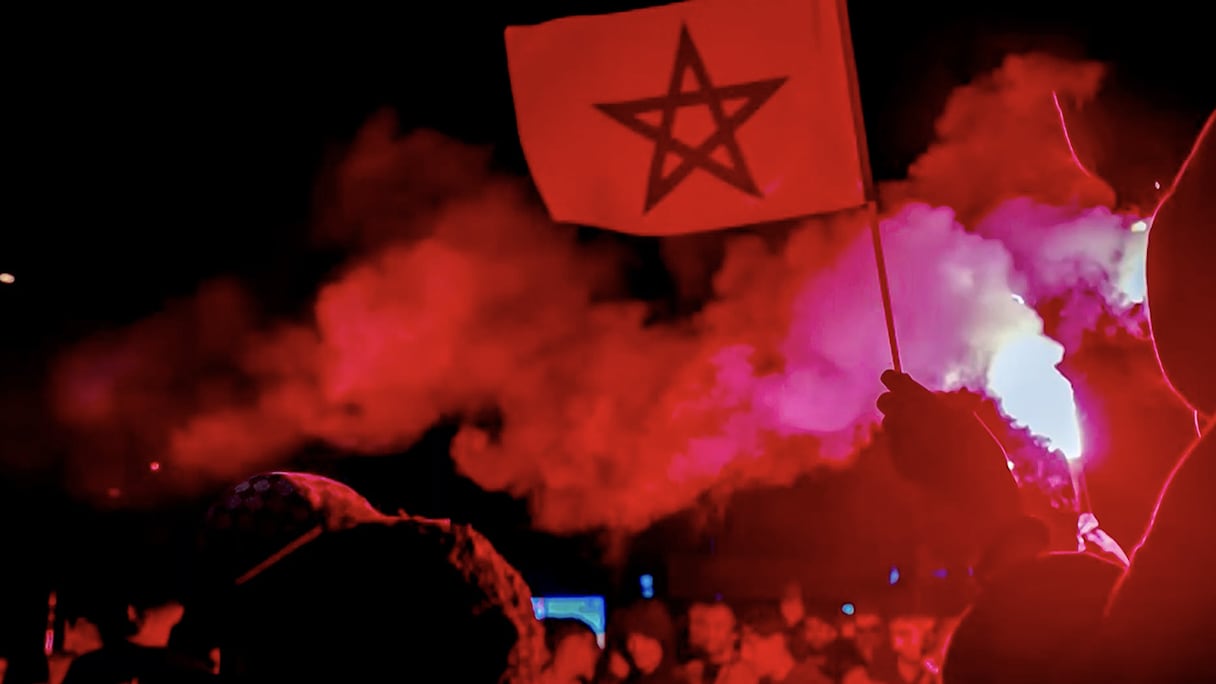
We’ve come a long way. For decades, Latin America was considered a stronghold of separatist propaganda. Today, however, the broader geopolitical landscape is marked by overwhelming alignment with Morocco’s sovereignty and its Autonomy Initiative for the Sahara. Yet amid this continent-wide shift, some South American states continue to fall for the separatist siren song, maintaining ties with the pseudo-“SADR” in defiance of realities on the ground. The stark contrast exposes a Latin American divide between modern political realism and ideological dogmatism inherited from another era.
This assessment has once again come into focus following Colombia’s recent major shift, a landmark event and a major geopolitical rupture across Latin America. Formalized on Friday, August 7, 2026, Bogotá’s recognition of the Moroccan identity of the Sahara marks the defection of a key regional power to the side of legitimacy. This strategic shift is rooted in an unprecedented economic, human and cultural rapprochement, as Farida Loudaya, Morocco’s ambassador to Colombia, explained in an exclusive interview.
For her, Colombia’s reversal puts a definitive end to the outgoing Gustavo Petro administration’s isolated and personal choices, restoring a five-decade bilateral relationship fully aligned with the overwhelming support of the Colombian Congress and people. The unequivocal affirmation of the Moroccan identity of the Sahara was accompanied by the immediate withdrawal of recognition of the artificial entity, as well as Bogotá’s commitment, as a non-permanent member of the UN Security Council, to provide it with no support in international forums.
Read also : Exclusive — Colombia: Morocco’s Ambassador to Bogotá Farida Loudaya explains historic shift on Sahara
Yet Colombia’s breakthrough also highlights the resistance of certain countries on the continent, which persist in ignoring the global trend of support for Morocco. Their stance runs counter to the international consensus consolidated by the United Nations Security Council. In Resolution 2797, adopted on October 31, 2025, the Council establishes Morocco’s 2007 Autonomy Initiative as the sole basis for a political solution and rules out any self-determination referendum in favor of negotiations based on the Moroccan plan. Algeria, repeatedly identified as a party to the conflict in the resolution, is called upon to engage fully and responsibly in the political negotiation process. And it has indeed been forced to do so by the United States, which has made resolving this issue a priority.
Despite this multilateral clarity, a handful of Latin American states continue to maintain diplomatic ties with the separatist entity. These last bastions include Mexico, Uruguay and Honduras, along with the ideologically aligned regimes of Venezuela, Cuba and Nicaragua. Ecuador was also part of this group for many years before taking a decisive turn. In May 2024, Quito officially suspended its recognition of the pseudo-SADR, joining the continent’s pragmatic majority and demonstrating that these alliances from another era can indeed be reversed.
Understanding this diplomatic resistance requires distinguishing strictly ideological motivations from economic constraints. In Mexico, a major regional power with a GDP exceeding $2 trillion, support for the Polisario is rooted in a rigid interpretation of the principle of self-determination, promoted by the left-wing executive. A well-informed source notes that Mexico’s position has always posed conceptual difficulties.
“Many countries on the continent point to Mexico as an argument to explain their own hesitation in supporting Morocco, even though the Kingdom continues to maintain good diplomatic and economic relations with Mexico,” our source acknowledges.
The same source explains that Mexico remains a major country deeply marked by old ideological frameworks, where the separatist narrative has historically taken root.
Read also : After four decades of diplomatic reversals: How Peru is preparing for a historic shift on the Sahara
The foundations of Mexico’s pro-Polisario position are numerous. First comes the Estrada Doctrine. Mexican foreign policy has traditionally been based on non-intervention and the right of peoples to self-determination. Historically, the Sahara issue has been viewed there through this single, rigid analytical lens.
The historical role of the Institutional Revolutionary Party (PRI) is also crucial. It was under the presidency of José López Portillo, a member of the same party, that Mexico recognized the SADR in 1979. For more than four decades, that recognition remained an institutional dogma. The left’s rise to power, with the arrival of Andrés Manuel López Obrador, followed by his successor Claudia Sheinbaum, has kept Mexico in the same camp, maintaining formal diplomatic channels with Polisario representatives.
A major shift in momentum is nevertheless beginning to emerge within the Mexican Congress and business circles. On February 26, 2025, the PRI executed a complete U-turn. Hosting Moroccan parliamentarians, its president Alejandro Moreno and other lawmakers publicly reaffirmed their support for Morocco’s sovereignty over its Sahara, describing Morocco’s Autonomy Plan as the most credible initiative.
“Despite this, as well as the presence of an active Moroccan embassy and major economic opportunities, successive Mexican governments have maintained an immovable position, making it necessary to consider a new strategic approach toward the country,” notes this analyst, who is well versed in the workings of diplomacy.
For Mexico and the rest of the continent, Algeria has long dominated the field, investing heavily for more than four decades to entrench the Polisario across South America. Algeria finances, among other things, the logistics of Polisario delegations and provides scholarships and training programs. Its ideological alliance with countries such as Cuba and Venezuela has done the rest. Havana and Caracas serve as strategic conduits for keeping the Polisario on the agenda of regional diplomatic networks, including ALBA, the Bolivarian Alliance for the Americas.
For some countries in the region, domestic political considerations or the pursuit of visibility within international progressive networks take precedence over an assessment of realities on the ground and UN resolutions.
Unlike Mexico, the position of countries such as Uruguay stems from economic vulnerability and fear of trade retaliation from Algiers. Morocco, meanwhile, has not traditionally ranked among their leading trading partners, limiting the economic cost of a diplomatic position unfavorable to Rabat.
Our source confirms that Uruguayan authorities prioritize their trade balance because of their significant interests with Algeria, thus yielding to direct economic pressure. This strategy of intimidation was also on display when Ecuador changed course in 2024.
Ecuador had long ignored Moroccan realities in favor of the Polisario narrative before successfully executing its diplomatic shift. But when Quito aligned itself with Moroccan sovereignty, Algiers immediately ordered a halt to imports of Ecuadorian bananas, even though it was their largest buyer on the African continent. The reasons behind Algeria’s banana shortage—and the astronomical prices this veritable luxury product reached in the neighboring country—are to be found in this standoff.
Despite the significant financial damage and immense pressure from Ecuador’s powerful banana lobby, President Daniel Noboa refused to backtrack, firmly maintaining his country’s position.
“Ecuador’s decision to withdraw its recognition of the Polisario was met with fierce retaliation. While President Noboa’s government had the courage to uphold its sovereign position without backing down, thereby allowing bilateral relations with Morocco to be consolidated on a lasting basis, other countries remain hesitant,” our source summarizes.
Read also : Polisario Front Terrorist Designation Act gains two more backers in US House
To reverse this trend once and for all, Moroccan diplomacy has major strategic levers that must be strengthened. As our informed source suggests, it is becoming necessary to rethink the diplomatic approach toward countries such as Mexico by relying on parliamentary channels and the institutional opposition, which already support the Autonomy Plan.
On the economic front, Morocco possesses a powerful tool of persuasion through the OCP Group, a guarantor of global food security and an indispensable supplier of fertilizers to Latin American agriculture. Expanding cultural soft power and intensifying parliamentary diplomacy are other key avenues for cementing this geopolitical shift.
In short, the complete shift of the South American continent in favor of the Moroccan identity of the Sahara is now only a matter of time. The subject of considerable public investment, a dedicated development strategy and growing international attention, the Sahara is set to undergo a lasting transformation, moving from a source of diplomatic friction to a hub of trade and prosperity.
This transformation lies at the heart of the Atlantic Initiative launched by King Mohammed VI, which notably aims to end the landlocked status of Sahel countries by giving them direct access to the Atlantic Ocean. Under this forward-looking framework, the future Dakhla Atlantic Port will serve as a pivotal piece of infrastructure. By connecting Latin America to African and European markets, this world-class port platform will demonstrate to Latin American chancelleries that the future lies in co-development and realpolitik, relegating separatist dogma to an anachronistic relic.
Further proof that the tectonic plates are shifting, a source well acquainted with South American realities predicts that the next change could come from one of the continent’s least expected countries: Venezuela.
“The evolving political context in Venezuela gives hope for an opening in the near future,” our source promises.
