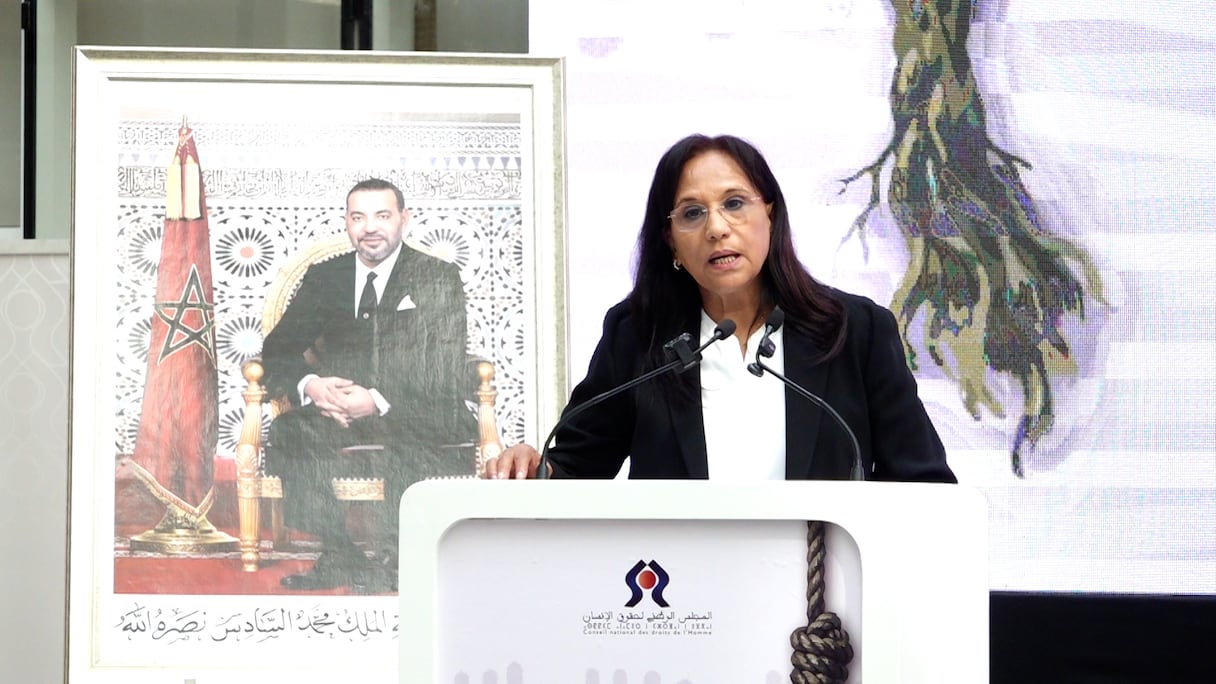
Speaking at a meeting in Rabat on Tuesday, October 20, CNDH President Amina Bouayach urged the government to take the necessary steps to end capital punishment in law. According to figures cited at the event, 56 people remain under death sentences in Morocco.
“Over the coming months, we will develop a joint action plan with the Moroccan Coalition Against the Death Penalty and various partners, setting an agenda and program aimed at abolishing this punishment,” Bouayach said.
She also pointed to Morocco’s candidacy to host the 10th World Congress Against the Death Penalty in Marrakech, a possibility announced by Justice Minister Abdellatif Ouahbi in Paris last June.
Bouayach recalled a shift in Morocco’s position at the international level. In December 2024, the Kingdom voted for the first time in favor of a United Nations General Assembly resolution calling for a universal moratorium on executions. The vote was welcomed by abolitionist organizations, although it did not itself abolish the death penalty under Moroccan law.
For the CNDH, the next step must be legislative reform. The council has repeatedly called for capital punishment to be removed from the legal system, citing Article 20 of the Constitution, which guarantees the right to life.
The issue remains contested, however, with some voices calling for the death penalty to be retained and enforced for the most serious crimes.
During Tuesday’s meeting, the CNDH also presented a book titled The Death Penalty: When Society Is Put to the Test of Its Humanity, which sets out nine arguments for abolition.
Raphaël Chenuil-Hazan, executive director of the French non-governmental organization Together Against the Death Penalty (ECPM), praised the work of Moroccan actors campaigning for abolition, particularly the CNDH. He described capital punishment as “terrible and inhuman.”
Read also : Human rights group urges next government to focus on implementation
ECPM campaigns for the worldwide abolition of the death penalty and organizes the World Congress Against the Death Penalty. Its ninth edition took place in Paris from June 30 to July 2, 2026.
Nouzha Skalli, a former member of Parliament for the Party of Progress and Socialism (PPS) and a prominent figure in the parliamentary abolitionist movement, called on members of the new legislature to join the network of parliamentarians against the death penalty.
She expressed hope that Morocco would legally abolish capital punishment by 2029, the year scheduled for the next World Congress Against the Death Penalty.
