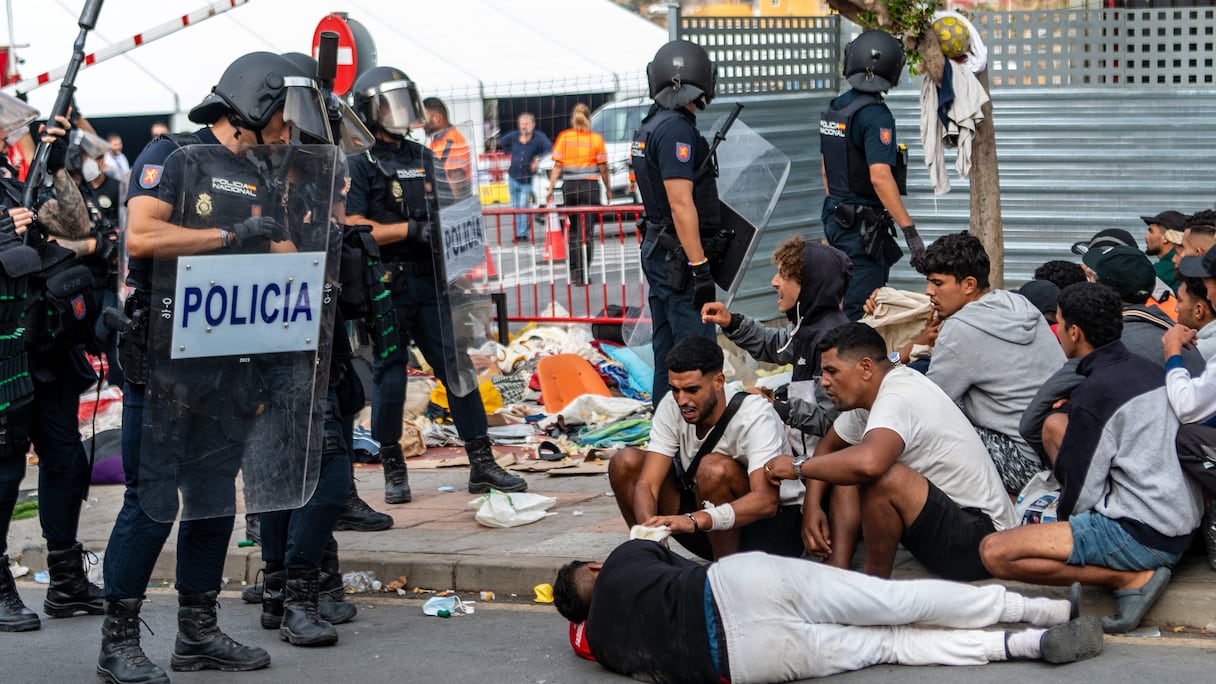
The Moroccan Human Rights Organization (OMDH) has called on the Spanish authorities to address human rights violations affecting migrants in Ceuta. Burned tents, racially motivated physical attacks, obstruction of humanitarian aid, and deprivation of food and water are among the acts denounced by the organization.
In a letter addressed to Spain’s ambassador to Morocco, a copy of which was obtained by Le360, the OMDH expressed its “deep concern” over these acts and called for urgent measures to protect migrants and guarantee respect for their fundamental rights.
The move follows a report presented by the OMDH on August 18 on human rights violations committed against migrants in Ceuta and Melilia during the events of last July. At the time, the organization announced its intention to refer the matter to international bodies to denounce these practices.
Read also : What Ceuta costs Europeans
In its letter, the OMDH said that the information and testimonies it had collected documented “racially motivated attacks as well as physical assaults targeting certain migrants present in the city.”
According to the organization, the reported acts include “the burning of the tents in which they were living,” as well as the obstruction of humanitarian assistance, including access to food aid and essential services.
“Such practices constitute a serious violation of human rights principles and international commitments concerning the protection of migrants and asylum seekers,” the OMDH said.
The organization stressed that “respect for human dignity and the protection of people in vulnerable situations remain a legal and moral responsibility that must not be subject to any form of discrimination.”
Read also : The conquest of Ceuta is centuries old. Its current borders are not
The OMDH called on the relevant Spanish authorities to take “the necessary measures to protect migrants against all forms of violence and assault,” launch “an impartial and independent investigation into the reported acts,” and initiate the necessary legal proceedings against those responsible.
The organization also called for “the relevant Moroccan human rights and humanitarian organizations to be authorized to observe and monitor the situation of migrants in Ceuta and to assess their humanitarian conditions.”
Through its appeal to the Spanish ambassador in Rabat, the OMDH seeks to convey its concerns and demands to the Spanish government so that “urgent measures guaranteeing the protection of migrants’ rights and the preservation of their human dignity, in accordance with international human rights standards,” can be adopted.
The move comes weeks after the National Human Rights Council (CNDH) published, on August 7, its preliminary findings on the collective crossings recorded in the Fnideq-Ceuta and Bni Ansar-Melilia areas on July 30 and 31.
Based on field monitoring, testimonies and digital monitoring, the CNDH documented injuries and bruises among people who returned from Ceuta, while also collecting testimonies of assaults, mistreatment and deprivation suffered during these events.
