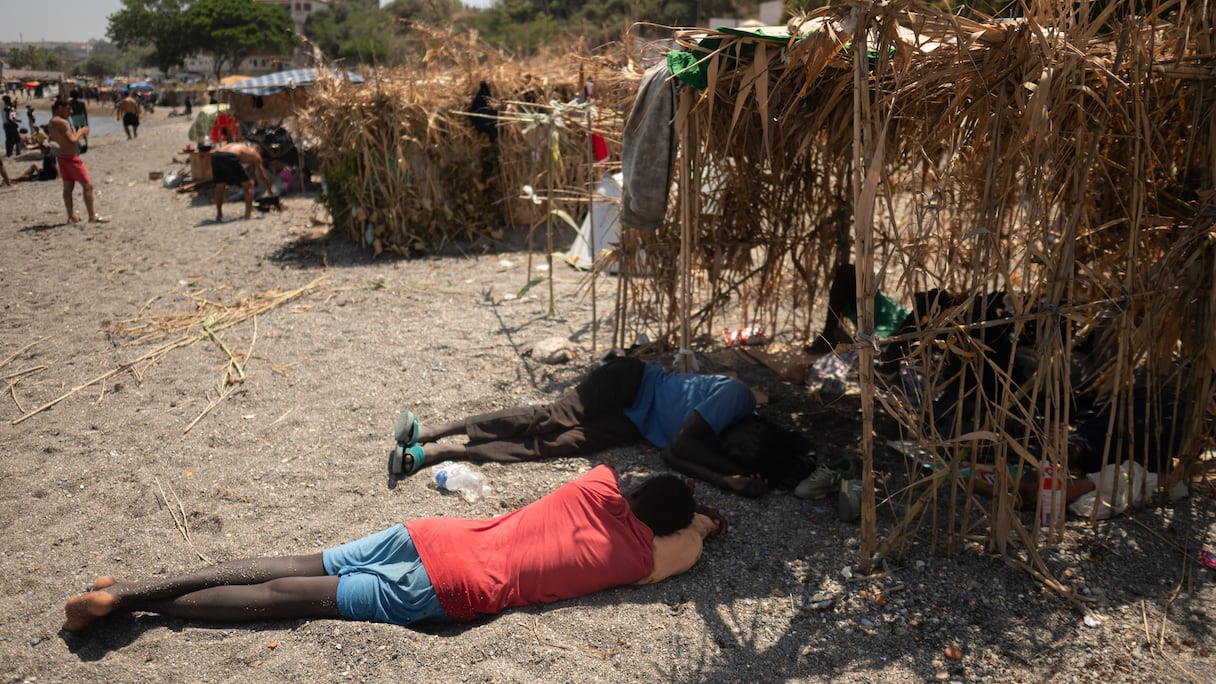
In Ceuta, tensions have reached a new level. Over the course of 24 hours, several groups of protesters attempted to drive migrants off the beaches, threw their few belongings into the sea, ransacked parts of their camps, set fire to several shelters and prevented the Red Cross from distributing food and water to them.
The first incidents broke out overnight from Wednesday into Thursday, when around 400 people headed toward El Trampolín beach, where hundreds of migrants have been living since the mass arrival at the end of July. Police blocked access routes to prevent the protesters from reaching them. Some nevertheless managed to throw blankets, mattresses and other belongings into the sea. According to RTVE, law enforcement had to use riot-control equipment to contain the crowd.
Read also : Ceuta: Protesters storm El Trampolín migrant camp, riot police intervene
These items were anything but superfluous. They were the only possessions of people who have been sleeping outdoors for weeks and are entirely dependent on humanitarian aid. They are people trapped in a city where they can neither settle permanently nor leave, while waiting for administrative procedures to be completed.
Humanitarian convoy forced to turn back
The situation deteriorated further on Thursday. Several dozen residents staged a sit-in on the road to Benítez, blocking a convoy heading to the El Trampolín distribution point. The vehicles were carrying the food rations and bottles of water that the Red Cross distributes every day to migrants on the beach, as well as those surviving in the hills and at various locations across Ceuta.
Sitting in front of the convoy, protesters chanted, “The Red Cross is a mafia.” One participant summed up the purpose of the demonstration clearly: “If we feed them, they will never leave.”
Police initially asked those gathered to clear the road. While some stood up, they continued moving slowly forward to keep the vehicles from moving. At the direction of law enforcement, the convoy ultimately had to abandon its attempt to reach the site and turned back without carrying out the planned distribution.
The protest was therefore no longer aimed solely at the Spanish government’s handling of the crisis. Water and food intended for vulnerable people were now being used as tools of pressure.
From chants to fires
After blocking the convoy, the protesters headed toward Benítez beach, next to El Trampolín. Several forced their way through the police cordon and entered a small camp. The migrants there fled toward the wall behind the desalination plant, while protesters ransacked their shelters and belongings.
Straw parasols that had been turned into makeshift shelters were set on fire. Other objects and personal belongings were also burned. As the situation spiralled, riot police intervened and charged the protesters to stop the destruction.
Waving a large Spanish flag, the protesters chanted slogans including “Invaders, get out” as they advanced toward the area where the migrants had taken refuge. The footage being circulated makes it impossible to portray these events as merely a demonstration by local residents. Destroying makeshift shelters, throwing mattresses into the sea and blocking the delivery of food are acts directed at real people, not at the authorities responsible for managing the crisis.
Morocco calls for their return as Spain gets bogged down in procedures
If these migrants are still being forced to live on Ceuta’s beaches, it is not because Morocco is refusing to take back its nationals. Moroccan Justice Minister Abdellatif Ouahbi has called on Spain to repatriate survivors of the mass arrival, as well as return the bodies of those who died. Rabat has also repeatedly called for the return of Moroccan minors and urged authorities to remove the “administrative and judicial obstacles” delaying their reunification with their families.
Spanish Foreign Minister José Manuel Albares has himself publicly praised Morocco’s cooperation in facilitating the return of all its nationals. He also stressed that Rabat had asked for nothing “in return.”
Read also : Ceuta: Sánchez calls National Security Council meeting
Yet nearly a month after the mass arrival, bureaucracy continues to dictate its own timetable. Spanish authorities must identify each person, determine who can be repatriated, examine asylum applications and apply special safeguards in the case of minors. The Spanish government itself acknowledges that these procedures involve significant “logistical and bureaucratic complexity.”
These legal constraints cannot, however, justify leaving thousands of people stranded for weeks on beaches and in the hills. As cases move forward at a slow pace, social tensions are worsening. And once again, migrants are paying the price, now exposed not only to extreme hardship but also to hostility and violence.
