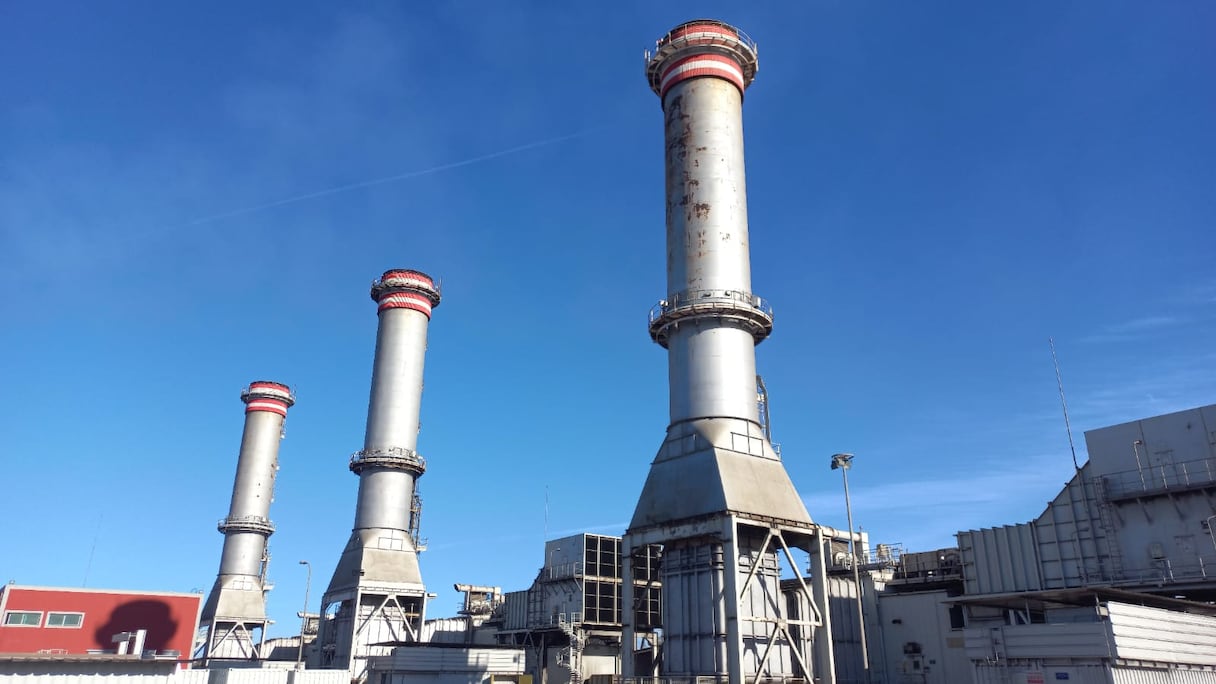
The recent decline in gas flows to Morocco through Spain is the result of lower electricity demand after the summer peak and has no connection with the migration crisis in Ceuta, a well-informed source told Le360.
Electricity demand, which climbed to around 8,400 megawatts in early July amid high temperatures and strong tourism activity, stood at about 7,400 MW on August 24.
The nearly 1,000 MW decline has reduced the need to operate the country’s gas-fired power plants at full capacity and, consequently, the amount of gas required by the electricity system.
“There are no restrictions on the Spanish side,” the source said.
The decline became more pronounced last week, when the August 20 and 21 public holidays pushed electricity demand down to around 7,600 MW. Milder temperatures and the gradual winding down of the peak summer season have since brought consumption lower.
Read also : Bloomberg: Morocco taps US Exim Bank, World Bank for African Atlantic gas pipeline financing
Morocco buys liquefied natural gas on international markets, including from the United States and Peru, and ships it to Spain for regasification. The gas is then transported to Morocco through the Maghreb-Europe Gas Pipeline, supplying the combined-cycle power plants at Tahaddart, near Tangier, and Ain Beni Mathar, near Jerada.
Gas typically accounts for around 9% of the country’s electricity mix, although its share varies from year to year. Import volumes therefore fluctuate according to how much the power plants are required to generate.
At the end of July, both gas-fired plants were operating at full capacity as the electricity system responded to peak summer demand. With consumption now falling, their output has been scaled back and gas requirements have declined accordingly.
Maintenance schedules at gas-fired plants and the cost of different generation sources also influence how much gas is used.
The National Office of Electricity and Drinking Water, or ONEE, dispatches available generation according to the needs of the power system and production costs. Renewable energy and coal are generally prioritized before the system turns to more expensive gas and fuel oil when additional generation is required.
The lower gas flows recorded in recent days therefore reflect changes in electricity consumption and ONEE’s generation mix rather than any shift in Spanish energy policy towards Morocco.
Madrid rejects talk of using energy as leverage
The figures have attracted particular attention because the decline coincided with the fallout from the migration crisis in Ceuta, prompting speculation that Spain could be using energy supplies to exert pressure on Rabat.
That speculation followed an August 18 report on Mañaneros 360, broadcast by Spanish public television channel RTVE. Against the backdrop of the Ceuta crisis, the program referred to a purported Spanish “emergency plan” under which Madrid could use energy as leverage, including the possibility of suspending gas supplies to Morocco in the event of another migration crisis.
Prime Minister Pedro Sánchez’s government rejected the report, denying that any plan or study was being prepared to impose economic retaliation on Morocco.
