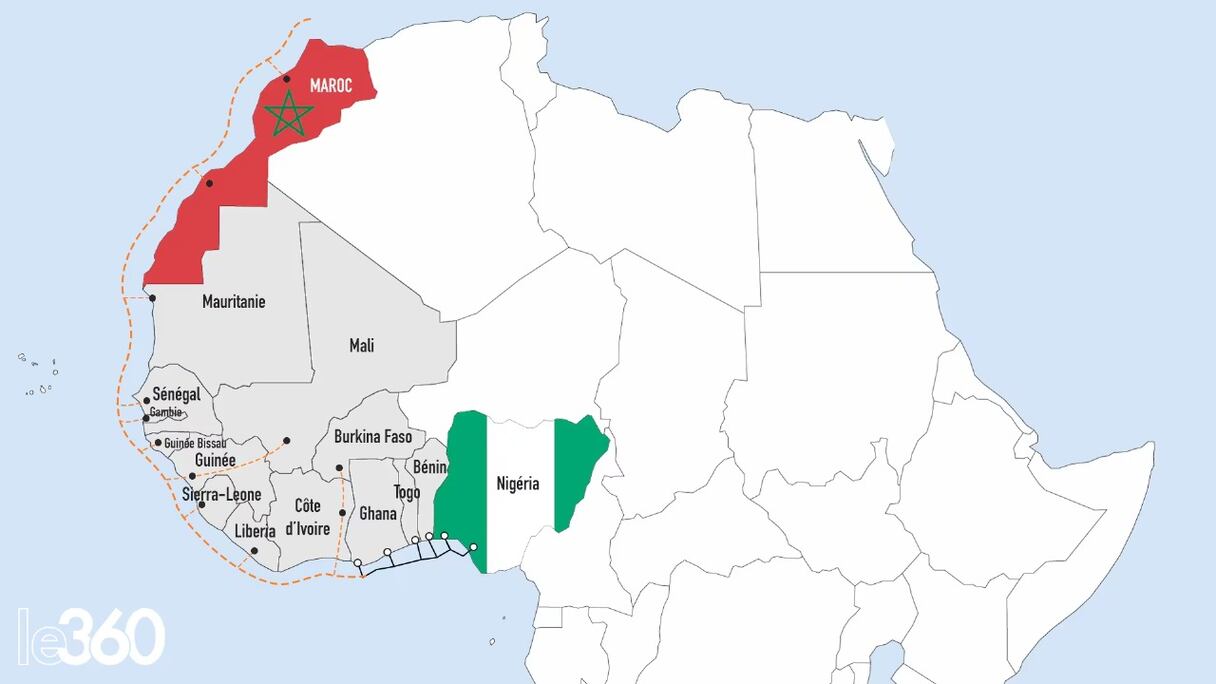
When King Mohammed VI and then-Nigerian President Muhammadu Buhari unveiled the African Atlantic Gas Pipeline in 2016, the project was widely viewed as an ambitious piece of energy infrastructure linking Nigeria’s vast gas reserves to Morocco and, ultimately, Europe.
Ten years later, the political vocabulary surrounding the project has fundamentally changed.
Following the signing of the Intergovernmental Agreement (IGA) by ECOWAS member states in Freetown on July 19, senior West African leaders no longer described the nearly 6,800-kilometer pipeline simply as an energy project. Instead, they repeatedly portrayed it as a vehicle for regional integration, industrialization and long-term economic sovereignty.
The shift is significant.
Rather than celebrating Morocco’s initiative from the outside, officials increasingly spoke as stakeholders in a collective regional undertaking.
ECOWAS Commission President Omar Alieu Touray offered perhaps the clearest expression of that evolution.
Calling the African Atlantic Gas Pipeline “one of the most transformative initiatives ever undertaken in the West African region,” Touray argued that it would do far more than transport natural gas. By linking coastal states through a common energy corridor, he said, the project would strengthen energy security, accelerate industrialization, create jobs and deepen economic interdependence across West Africa.
His remarks reflected a broader consensus emerging among ECOWAS leaders: infrastructure is no longer viewed simply as a development tool, but as the foundation of regional integration itself.
Read also : ECOWAS member states endorse Nigeria-Morocco African Atlantic Gas Pipeline
Officials from across the bloc echoed that message.
Liberian President Joseph Boakai described the project as “a transformative investment in the collective future of the entire region,” arguing that it demonstrates what African countries can achieve “when they prioritize cooperation over fragmentation.”
For Sierra Leone’s Foreign Minister Tomothy Kabba, the pipeline represents “hope for the entire West African region.” Welcoming the signing of the IGA, he said the initiative would generate new economic momentum and improve living standards across the region.
Ghana’s Foreign Minister Samuel Okudzeto Ablakwa likewise framed the project as an industrial policy rather than simply an energy investment.
“If we want to industrialize our countries for the benefit of our people, we must invest in infrastructure,” he said, describing the pipeline as a catalyst for deeper African integration.
Perhaps most striking was the recurring emphasis on connectivity.
Rather than focusing exclusively on gas supplies, several leaders highlighted the project’s role in physically linking economies that have historically remained fragmented despite decades of regional integration efforts.
Togo’s Foreign Minister Robert Dussey said the pipeline would create a corridor connecting ECOWAS member states while opening new access to European markets. He also stressed its importance for landlocked Sahel countries, reinforcing Morocco’s broader Atlantic Initiative aimed at providing Atlantic access to Burkina Faso, Mali, Niger and Chad.
The Gambia’s Foreign Minister Sering Modou Njie similarly welcomed what he called a “commendable initiative” that would connect ECOWAS countries while supporting their long-term development strategies.
The convergence of these statements suggests a notable evolution in how the African Atlantic Gas Pipeline is perceived.
For years, discussion largely centered on Morocco’s strategic ambition to become an energy hub between Africa and Europe. Following the Freetown summit, however, West African leaders increasingly presented the project as their own regional infrastructure agenda.
That political shift may ultimately prove as important as the engineering itself.
By signing the Intergovernmental Agreement, ECOWAS governments did more than establish the legal framework for a multibillion-dollar pipeline. They collectively embraced a vision in which regional integration is built not only through institutions and treaties but also through shared infrastructure capable of binding economies together over the long term.
If the first decade of the African Atlantic Gas Pipeline was defined by Moroccan diplomacy, the next may be defined by West African ownership. At Freetown, the language of the region’s leaders suggested that the project has crossed that threshold.
