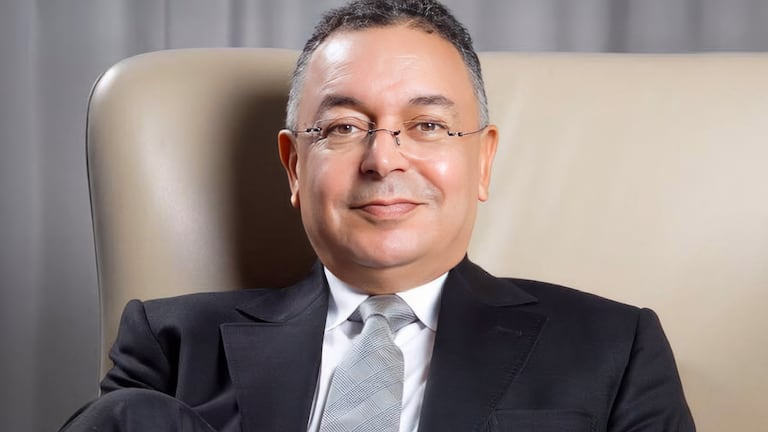
After publicly and persistently challenging the management of Spanish broadcasters Mediaset España and Cuatro, before appealing to the Spanish journalism profession as a whole, Lahcen Haddad has finally secured an initial institutional response. The Madrid Press Association (APM) has officially confirmed that it has referred his complaint to the Commission for Arbitration, Complaints and Journalism Ethics, Spain’s highest competent body for adjudicating breaches of journalistic ethics.
The referral follows the broadcast of a program on Spanish television channel Cuatro in which a guest called for the “political and economic destruction” of Morocco, without anyone on the panel challenging his remarks. “Is it acceptable to normalize on television the ‘political and economic destruction’ of a country? The Madrid Press Association has informed me that it has forwarded my submission to the Commission for Arbitration, Complaints and Journalism Ethics [...]. My position remains strictly journalistic and ethical,” Lahcen Haddad wrote in announcing the decision.
A Live On-Air Transgression
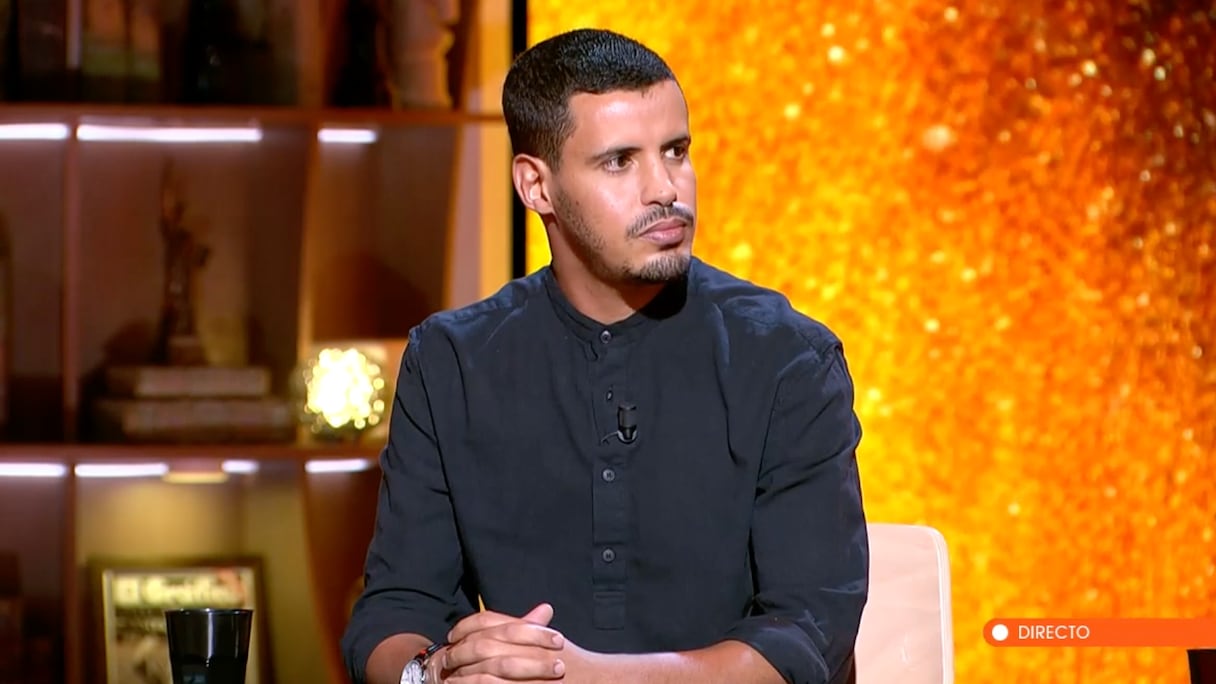
It all began on July 31, 2026. That evening, Spanish channel Cuatro aired the 256th episode of Season 6 of its current-affairs and debate program Horizonte, titled for the occasion “Special: Border Crisis.”
The program was co-hosted by its star presenters Iker Jiménez and Carmen Porter. The panel included several guests, among them Eduardo Inda, director of the newspaper OKDIARIO, commentator Rubén Pulido, and Taleb Alisalem, introduced on the program as a “Sahrawi activist.” During the debate, which focused on tensions at the border in Ceuta, Alisalem claimed that Spain had means of pressure at its disposal that, without resorting to military force, could “destroy Morocco politically and economically.”
Far from being an isolated incident or a fleeting remark made during a live broadcast, the segment was subsequently shared, promoted and archived on the program’s official website and Mediaset’s digital platform. Articles accompanying the replay also repeated Alisalem’s description of the Ceuta crisis as a “second Green March,” as well as his claim that Morocco was pursuing an expansionist policy targeting Ceuta, Melilla and the Canary Islands.
A Rhetoric of Collective Punishment
In response to these statements, Lahcen Haddad took the initiative of drafting a remarkably rigorous open letter, both legally and ethically, addressed directly to the management of Cuatro and Mediaset, the production team of Horizonte, and the program’s presenters and commentators.
In his initial letter, Haddad was careful to establish a very strict framework for his argument, stressing that his intention was in no way to restrict debate or challenge political opinions: “It is perfectly legitimate to criticize the Moroccan government. It is legitimate to challenge the Kingdom’s diplomatic positions. It is legitimate to support the Polisario or any other position on the Sahara. Freedom of expression must protect profoundly divergent opinions, even extraordinarily harsh ones. But speaking of the ‘political and economic destruction’ of an entire country belongs to a different category.”
He also recalled the human reality concealed behind such a formulation. “Morocco is not a diplomatic abstraction. It is a nation of nearly forty million inhabitants. To ‘destroy Morocco economically’ would necessarily mean affecting the jobs, incomes, businesses, families, public services, savings and expectations of millions of ordinary citizens [...]. At the very least, what we have here is a rhetoric of collective punishment that deserves to be examined with the utmost rigor,” he wrote.
The academic also grounded his reasoning in international human rights standards, namely Article 20.2 of the International Covenant on Civil and Political Rights (ICCPR), concerning advocacy of national hatred that constitutes incitement to discrimination or violence, and the United Nations Rabat Plan of Action, which provides criteria for assessing the severity of speech: context, speaker, intent, content, extent of dissemination and likelihood of harm.
A Culpable Silence
Haddad’s main criticism was directed not only at the guest, but also at the responsibility of the editorial team and the journalists present on the set, who allowed the remarks to go unchallenged. “I am not asking for censorship. I am asking for something far more basic: a journalistic and editorial explanation. When Mr. Alisalem spoke of ‘destroying Morocco politically and economically,’ what challenge was put to him? Was he asked what such ‘destruction’ would concretely mean for millions of Moroccans? [...] Was he asked whether he would accept the same reasoning if a guest appeared on a television program and proposed ‘politically and economically destroying’ Spain, Algeria, France, or any other nation?”
Read also : Ceuta, Melilla and the mirrors of history: the end of the status quo
Despite this detailed challenge, neither Mediaset, Cuatro nor Iker Jiménez’s production team responded to the open letter.
Faced with this complete lack of response, Lahcen Haddad reiterated his request before deciding to appeal directly to the Spanish journalism profession as a whole and to its press organizations and unions. He reframed the debate around the universal standards of journalism. “Is it journalistically normal for a guest on television to propose the ‘political and economic destruction’ of a country of nearly 40 million inhabitants without being immediately challenged over the human consequences of such a proposal? I am not asking for censorship. Nor am I asking anyone to share my positions on Morocco. I am simply asking whether the same journalistic standards would apply if someone proposed the ‘destruction’ of Spain, France or Algeria,” he stressed.
The positive response from the Madrid Press Association (APM) and its referral of the case to the commission responsible for journalistic ethics mark a turning point in the affair. By moving the dispute squarely onto the terrain of professional ethics and the obligation to provide a counterpoint, Lahcen Haddad raises a textbook question: can a television program, in the name of freedom of expression, provide a platform for and broadcast, without critical scrutiny, calls for the economic and social collapse of an entire people?
The position ultimately taken by the Commission could become an important reference point in the debate over the editorial responsibility of media outlets when guests make extreme statements on their platforms.
