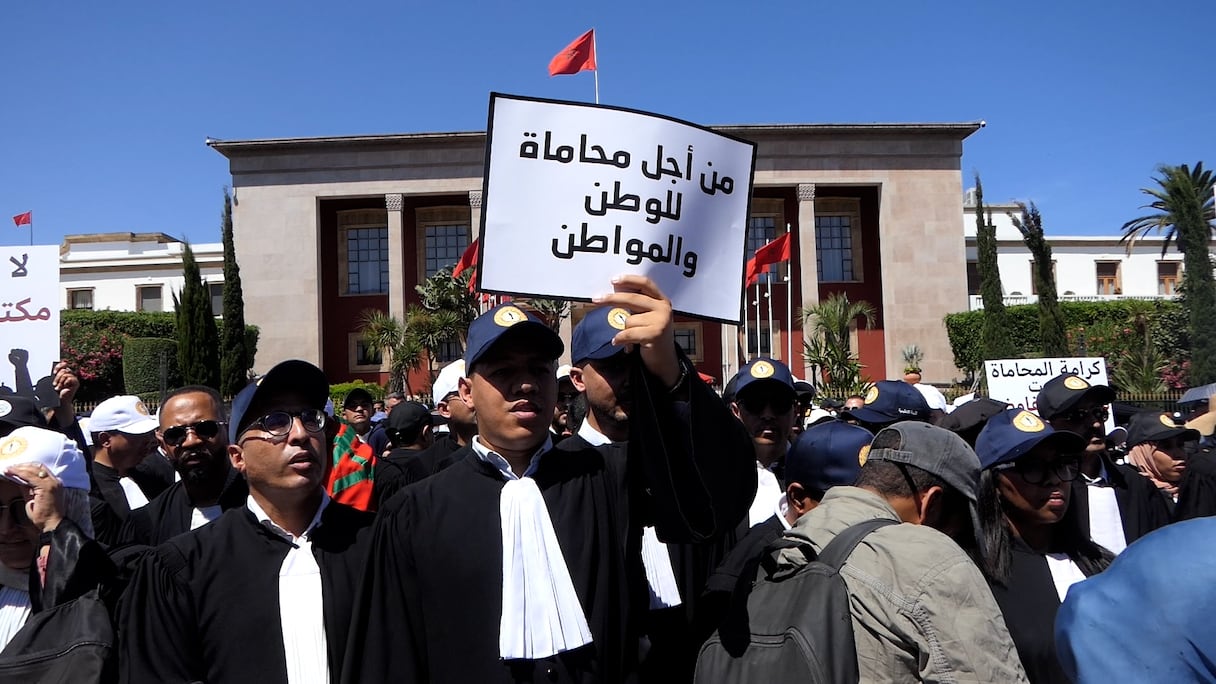
The Casablanca Bar Association’s decision to award an exceptional allowance of MAD 4,000 to registered lawyers and MAD 2,500 to trainee lawyers has triggered mounting discontent within the profession after nearly two months of nationwide strike action.
The strike, organized in protest against a draft law governing the legal profession, severely disrupted court activity across the Kingdom while depriving many lawyers of their primary source of income.
As the strike dragged on, many lawyers found themselves under growing financial pressure. Far from the image of large corporate law firms with substantial resources, a significant share of Morocco’s lawyers continued to shoulder fixed expenses—including office rent, staff salaries and operating costs—even as their professional activity slowed dramatically or came to a near-complete halt.
In a statement issued on July 28, Casablanca Bar President Mohamed Hissi said the exceptional payment was intended to help mitigate the impact of the suspension of professional activities undertaken in defense of “fair and equitable legislation governing the legal profession.”
Comparisons with other cities fuel criticism
The compensation package, however, has been poorly received by many lawyers in Casablanca.
In Meknès, for example, the local Bar Council decided at its July 23 meeting to grant MAD 10,000 to every registered lawyer and MAD 5,000 to trainee lawyers. The payments are financed through the Social Solidarity Fund as well as an exceptional contribution drawn from the Bar Association’s management account.
In Rabat, the financial assistance reached MAD 11,000 per lawyer.
Beyond the differences in the amounts awarded, many lawyers say the issue is one of unequal treatment.
Several bar associations across the country have already distributed financial assistance on at least two occasions, with cumulative payments reaching as much as MAD 20,000 in some cases, particularly around Eid al-Adha.
In Casablanca, by contrast, this is the first payment offered since the strike began, and many lawyers argue that it falls short given the higher cost of living in Morocco’s economic capital.
Application requirements add to frustration
Another source of frustration is the application process itself.
Unlike several other bar associations, where financial assistance is distributed automatically, lawyers in Casablanca must submit a written request before August 31, 2026, in order to receive the payment.
For many, that requirement is seen as unnecessary and undignified.
“Why should we have to apply for assistance from a fund that we ourselves finance?” one lawyer asked, criticizing what he described as an unnecessarily burdensome procedure at a time when tensions within the profession remain high.
The assistance is financed through the Social Solidarity Fund, which was established specifically to support lawyers facing financial hardship.
That has fueled further criticism among some members of the profession, who argue that the fund is being administered unevenly from one bar association to another.
