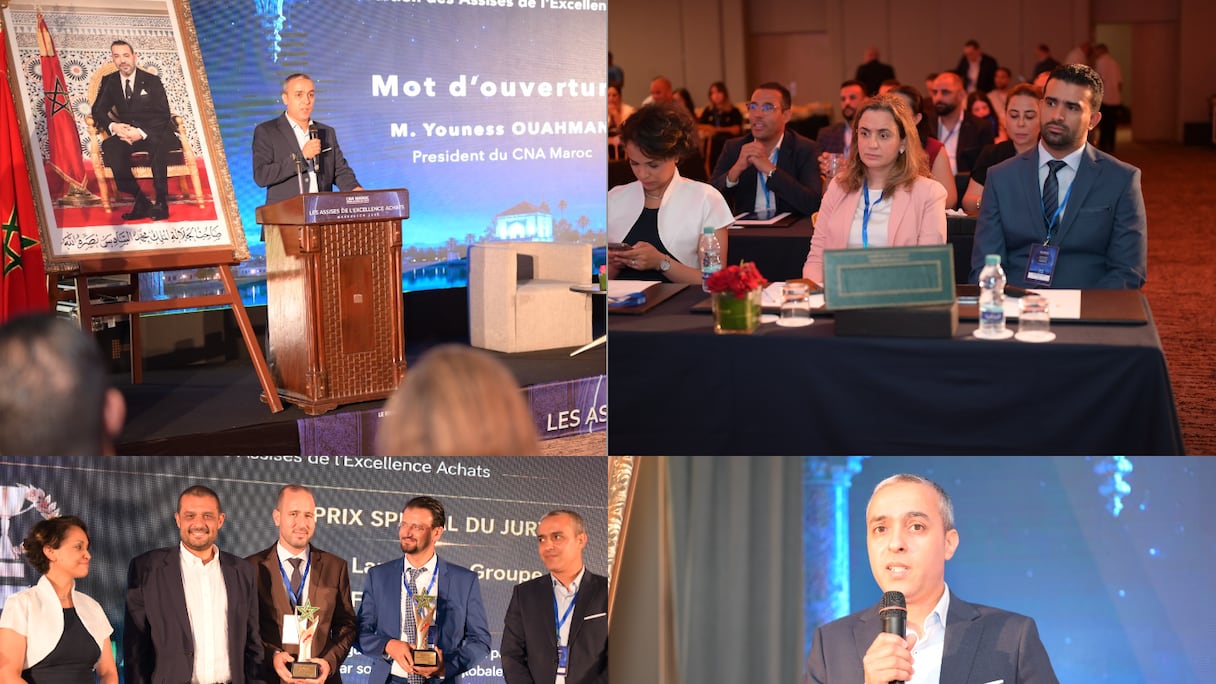
Long viewed as an operational function focused primarily on reducing costs, procurement is increasingly emerging as a strategic driver of business transformation. That shift was at the heart of the second National Procurement Excellence Conference, held on July 4 in Marrakech by the National Procurement Council of Morocco (CNA Maroc) under the theme: “Innovate – Collaborate – Perform in Tomorrow’s Procurement.” The event brought together business leaders, procurement executives, industrialists and experts to address a common question: how can Moroccan companies strengthen their competitiveness in an increasingly volatile economic environment?
“Procurement has become a strategic lever for competitiveness and economic sovereignty,” he said, arguing that geopolitical tensions, supply disruptions, the energy transition, digitalization and artificial intelligence are reshaping global value chains. In this new landscape, a company’s ability to secure its supply chains and build strong industrial partnerships has become just as important as controlling costs.
This transformation reflects broader changes within Morocco’s economy. Greater industrial integration, accelerated investment in manufacturing and the growing importance of supply chain management are steadily elevating procurement’s role in corporate decision-making.
The rise of strategic procurement also forms part of a broader discussion about Morocco’s position in the global economy.
One of the conference’s panel discussions focused on the France-Morocco corridor and the country’s emerging strategic role in international value chains. According to CNA Maroc, current global shifts present an opportunity to strengthen Morocco’s position as an industrial platform linking Europe and Africa. Achieving that ambition will depend not only on competitive logistics but also on building supplier networks capable of supporting industrial investment.
Ouahman believes Morocco possesses “unique strengths” that could make it a regional benchmark in subcontracting, industrial sourcing, innovation and competitiveness. The challenge now, he said, is to turn the country’s geographic advantages into lasting industrial advantages capable of supporting domestic growth while expanding Morocco’s economic influence across Africa.
He cautioned, however, that this strategy requires addressing several structural vulnerabilities, particularly excessive dependence on a limited number of suppliers. According to Ouahman, markets dominated by only a handful of suppliers gradually erode companies’ bargaining power, innovation capacity and resilience to external shocks.
Artificial intelligence is reshaping the procurement profession
The strategic transformation of procurement is unfolding alongside rapid technological advances that could fundamentally change how procurement departments operate.
Among the conference speakers, Abdelilah El Attari, CEO of SEMS E-Solution, focused on the emergence of agentic artificial intelligence, describing it as the next major stage in the evolution of digital procurement tools.
According to El Attari, artificial intelligence has evolved from robotic process automation (RPA) to generative AI through platforms such as ChatGPT, Copilot and Gemini, and is now entering a third phase.
Unlike earlier systems, agentic AI does more than generate responses. It can understand business needs, reason through complex tasks, plan actions, execute them autonomously and continuously improve through learning from available data.
In practical terms, an intelligent agent can manage much of the procurement process, from identifying business needs and sourcing suppliers to launching tenders, comparing bids, preparing contracts and processing invoices, all while operating within the governance framework established by the company.
For El Attari, this automation does not eliminate the role of procurement professionals. Rather, it fundamentally changes it.
Routine administrative tasks can be delegated to intelligent agents, allowing procurement teams to focus on higher-value activities such as procurement strategy, complex negotiations, innovation, supplier risk management, long-term partnerships and strengthening supply chain resilience.
SEMS said it has developed a comprehensive suite of intelligent agents covering the entire “Source-to-Pay” process. Specialized agents handle needs assessment, sourcing, tendering, supplier evaluation, negotiations, contract management, purchase orders, invoice processing and business analytics. Additional agents work alongside finance, legal, logistics, risk, ESG and IT departments to provide a comprehensive view of procurement decisions.
According to El Attari, tomorrow’s procurement professionals will spend far less time searching for suppliers or manually comparing bids. Instead, their role will increasingly revolve around making strategic decisions based on scenarios generated by artificial intelligence.
Data governance remains the foundation of AI adoption
Despite its potential, the widespread adoption of agentic AI still faces several challenges.
El Attari stressed that data quality remains the single most important prerequisite. Incomplete or fragmented databases directly limit the performance of intelligent agents. Robust data governance, cybersecurity, confidentiality safeguards and access controls are equally essential to ensure the reliability of automated decision-making.
The transition will also require procurement teams to develop new skills. Professionals will need stronger capabilities in data analysis, digital tools and governance frameworks in order to work effectively alongside AI systems.
According to the SEMS chief executive, the final challenge is trust. Companies will need to gradually build confidence in intelligent agents while maintaining an appropriate level of human oversight aligned with their internal governance standards.
The association plans to publish a White Paper on Procurement Excellence, offering practical recommendations for businesses and public institutions. It has also launched the Eco Buy Charter and the Eco Buy label to promote responsible procurement, transparent supplier relationships and shared value creation. Workshops, seminars and networking events will be organized from the start of the new season to help companies navigate this transformation.
Conference organizers said this year’s edition focused on three priorities: Morocco’s geopolitical position as a hub linking Europe and Africa, the reinvention of procurement skills by 2030, and stronger relationships between companies and suppliers. Together, they see these as the foundations of a procurement function that will play an increasingly important role in strengthening Morocco’s industrial competitiveness.
The conference’s ambitions extend beyond creating another professional gathering. By bringing together digital innovation, the development of local supplier networks and the upskilling of procurement professionals, CNA Maroc hopes to contribute to a broader transformation of Morocco’s economy.
