The Foreign Trade Department has launched an anti-dumping investigation into tomato sauce imports originating in Spain, following a complaint filed by Moroccan producers under the country’s trade defense legislation. A public notice published by the ministry on November 11, 2026, states that the investigation officially opened on November 12.
The complaint alleges that the Spanish imports are being dumped on the Moroccan market and pose a threat of significant injury to the domestic industry. After reviewing the evidence, the ministry found that the information submitted was objective and sufficient to justify opening an investigation. The decision followed consultation with the Import Surveillance Commission.
The complaint was filed by the Federation of Agricultural Food Canning Industries of Morocco (FICOPAM) on behalf of three companies: Vinaigrerie Moutarderie du Maroc (VMM), based in Casablanca; Agro Juice Processing (AJP); and Les Conserves de Meknès, both based in Meknes. The companies are seeking anti-dumping measures against tomato sauces originating in Spain.
The three companies account for 90% of Morocco’s domestic tomato sauce production. The ministry’s notice therefore recognizes them as representing the country’s domestic tomato sauce industry.
Read also : Morocco imposes up to 52.7% anti-dumping duties on steel wire imports From Egypt, UAE
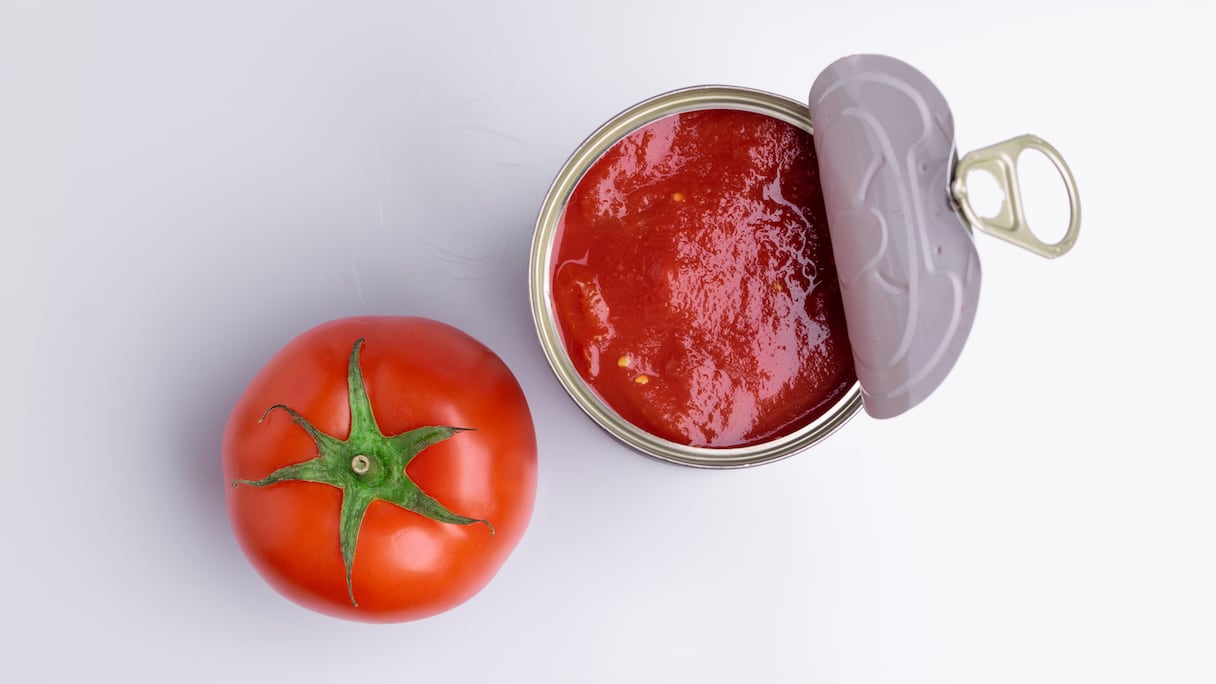
The investigation concerns ready-to-use tomato sauce, excluding tomato ketchup. The notice defines the product as a liquid or semi-liquid preparation used to improve the appearance, aroma, flavor or texture of tomato-based food products. The sauces are non-emulsified and are not classified as preserved vegetables.
They are used in households, restaurants and the food-processing industry, and fall under tariff heading 21.03.20.00.00 of Morocco’s national Harmonized System.
To support their dumping allegation, the complainants compared the normal value of the products with their export price, both calculated at the ex-factory level. The two figures were estimated using retail prices in large and medium-sized stores in Morocco and Spain in 2025, excluding taxes, and adjusted to reflect prices at the factory gate.
Spanish imports have been rising
Import data examined by the ministry show an upward trend in Spanish tomato sauce imports since 2023. The notice also identifies price undercutting during the period under review.
The ministry said these imports could expose domestic producers to significant injury, with potentially negative effects on the industry’s economic indicators.
The investigation will examine Spanish producers and exporters, Moroccan importers, domestic manufacturers and other interested parties. Its purpose is to determine whether Spanish tomato sauce is being dumped on the Moroccan market and whether the imports have created a threat of significant injury to the domestic industry.
Two periods have been set for the investigation. Dumping practices will be examined from July 1, 2025, to June 30, 2026, while the analysis of trends related to the threat of injury will cover January 1, 2023, to June 30, 2026.
Interested parties wishing to register or submit comments have until December 18, 2026, at 3 p.m. GMT. Submissions must be sent by email in both confidential and non-confidential versions. Postal submissions are also possible.
Read also : Morocco outperforms shrinking EU clothing market, raises share to 2.7%
Spanish producers and exporters are invited to take part in the investigation. They must provide their contact details, export and domestic sales figures, production volumes for the July 2025-June 2026 period, and information about their business activities and those of affiliated companies. They must also state whether they agree to respond to the investigation questionnaire. Selected companies will have 37 days from the date they receive it to submit their responses.
Moroccan importers must also register by December 18 at 3 p.m. GMT. They are required to report their tomato sauce imports from Spain and all other countries, in both tonnes and dirhams, as well as their sales on the Moroccan market. Selected importers will have 30 days to return the questionnaire. Known domestic producers will also receive questionnaires, which must be returned within 30 days.
The ministry said it remains available to hear arguments from interested parties. Any request for a hearing must be submitted in writing, explain the reasons for the request and specify the issues the party wishes to address.
Under Moroccan law, the investigation must be completed within 12 months of its opening, although this period can be extended to 18 months in special circumstances. Provisional measures may also be imposed if the required conditions are met, following a preliminary report establishing, on a preliminary basis, the existence of dumping, a threat of significant injury and a causal link between the two.
