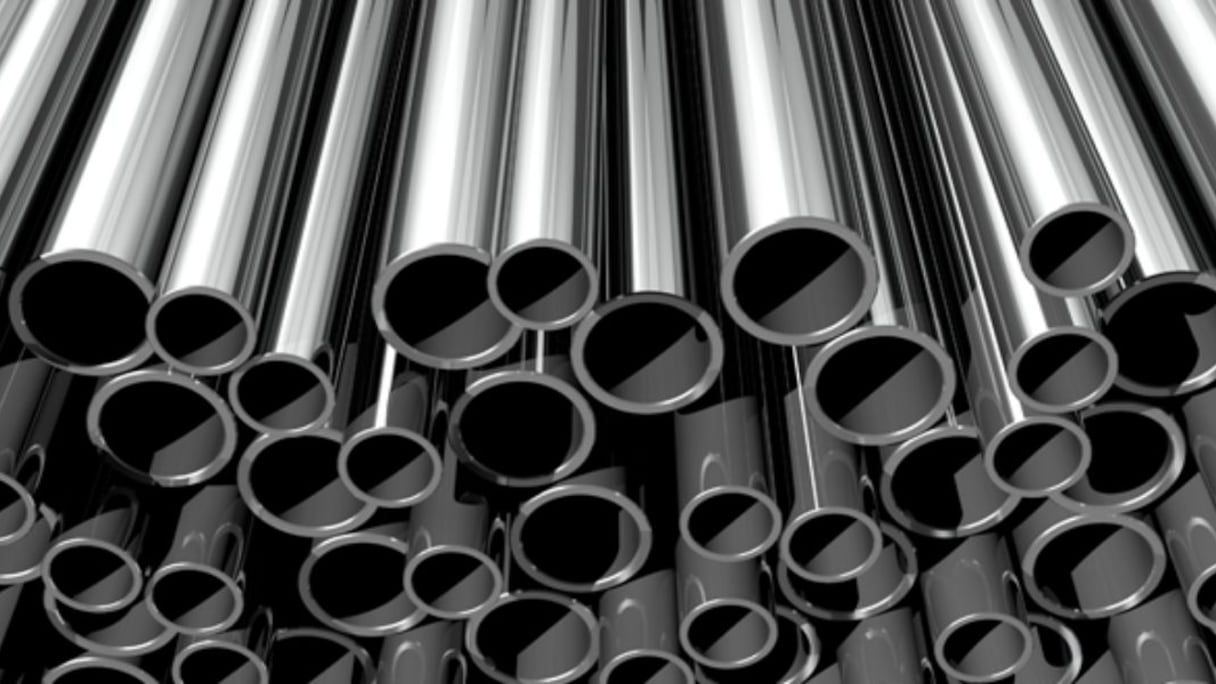
Morocco will maintain its safeguard measure on imports of iron and steel tubes and pipes for another three years. Following a review investigation launched on June 17, 2026, the Ministry of Industry and Trade has concluded that the legal conditions for an extension have been met, citing the state of domestic production and the risks posed by import trends.
The investigation sought to establish whether the measure remained necessary to remedy or prevent serious injury to the domestic industry. It also examined whether the producers concerned were continuing to make the adjustments needed to improve their competitiveness, as required under Moroccan safeguard legislation.
The products covered are welded iron or steel tubes and pipes, including conical or pyramidal shapes and circular, square or rectangular cross-sections, according to the ministry’s notice. They fall under 18 tariff headings within customs classification 7306, ranging from 7306191090 to 7306909099.
The ministry justified the extension on the grounds that imports of the products concerned had increased overall, both in absolute volumes and relative terms, despite the protective measure already in place.
Although the domestic industry recorded improvements in several performance indicators during the period under review, those gains have not yet translated into a lasting recovery. The ministry described the results as “extremely fragile and recent” and said they could not yet be regarded as structural improvements.
Read also : Morocco imposes up to 52.7% anti-dumping duties on steel wire imports From Egypt, UAE
The risk of a renewed surge in imports if the measure were lifted is also considered imminent. The ministry attributes this threat in particular to expanding global steel production capacity and the growing use of trade protection measures in several countries.
Maintaining the safeguard is therefore deemed necessary both to remedy the serious injury suffered by domestic producers and to prevent it from recurring. The extension is also conditional on local manufacturers continuing their efforts to adapt.
On that point, the ministry said the domestic industry had provided evidence that it was continuing to implement its adjustment plan. The measures outlined in that plan are still being rolled out, which, in the ministry’s view, warrants the temporary continuation of protection.
Additional duty to be phased out gradually
The extended safeguard will take the form of an additional ad valorem duty of 19%, applicable from November 6, 2026, to November 5, 2027. The rate will then fall to 18% from November 6, 2027, to November 5, 2028, and to 17% from November 6, 2028, to November 5, 2029. The additional duty will be abolished from November 6, 2029.
| Period | Additional duty |
|---|---|
| November 6, 2026, to November 5, 2027 | 19% |
| November 6, 2027, to November 5, 2028 | 18% |
| November 6, 2028, to November 5, 2029 | 17% |
| From November 6, 2029 | 0% |
The measure will not apply to imports originating in developing countries that are members of the World Trade Organization (WTO) and qualify for the exemption provided under the relevant regulations. The list of exempt countries is published in the same notice.
The ministry nevertheless reserves the right to revise that list based on available import data. Developing countries whose imports exceed the de minimis threshold of 3% could therefore become subject to the measure.
The decision extends a safeguard regime that was due to expire on November 5, 2026. Its continuation is intended to give domestic producers more time to adapt amid expanding global steelmaking capacity and the risk of intensifying import competition in the Moroccan market.
The review investigation was initiated at the request of nine domestic producers accounting for 96% of local output. The application was submitted by the Moroccan Association of Steel Tube and Profile Manufacturers, which argued that continued protection was essential to allow the industry to complete its restructuring efforts and fully restore its competitiveness.
Read also : Morocco outperforms shrinking EU clothing market, raises share to 2.7%
Domestic production remains fragile
Longofer, Comaprom, Maroc Fer, Tubes et Profil, Sofafer, Distrifer, SMM Socodam Davum, Unpipie & Profil and Batifer argued that “the serious injury caused by imports is beginning to subside but has not been fully remedied.” They stressed that the domestic industry remained “extremely fragile” and warned that local manufacturers might be unable to withstand import competition without the safeguard in place.
The applicants also emphasized the need to continue the adjustments already undertaken to improve their competitiveness. They warned of mounting import pressure as global steel production capacity expands and countries introduce trade defense measures to protect their own industries.
The original safeguard was introduced on November 6, 2020, for a three-year period, with an additional duty initially set at 25% and reduced by one percentage point each year. It was subsequently extended on December 14, 2023, for a further three years, starting at 22% and gradually declining to 20% in the final year of application.
