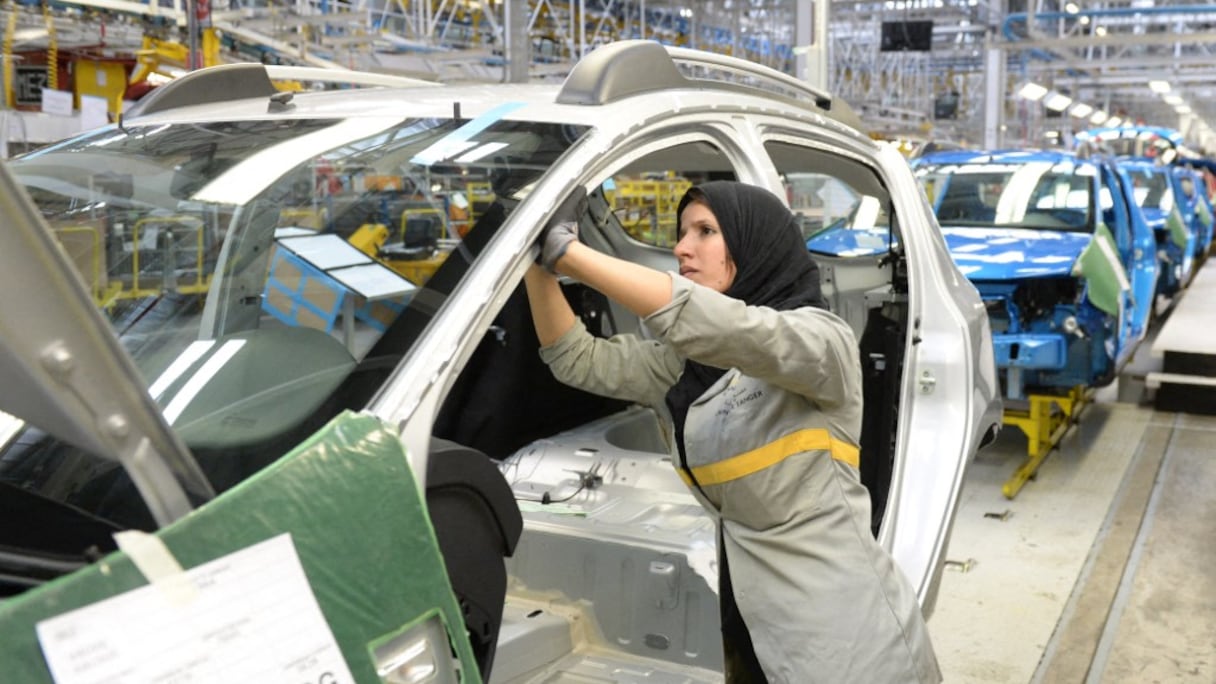
Starting in September, Renault Group’s Moroccan factories will begin producing the hybrid version of the Dacia Sandero, a move that underscores Morocco’s growing role in the transition to electrified vehicles.
“Our internal processes are already designed to accommodate electrified vehicles,” Mohamed Bachiri, director general of Renault Group Morocco, said during a special program broadcast on Medi1 TV to mark Throne Day. His remarks highlighted the readiness of Morocco’s industrial platforms to adapt to the technological transformation underway across the automotive sector.
The transition is already well underway. “In Tangier, we began manufacturing hybrid vehicles in 2025, notably the hybrid Jogger,” Bachiri said. The launch of hybrid Sandero production builds on that gradual electrification strategy.
The Sandero, Dacia’s flagship model, is central to that transformation. Europe’s best-selling passenger car in 2025, it recorded 289,295 sales, reinforcing Morocco’s position as a major automotive manufacturing hub. Most Sanderos sold in Europe are produced at the Kingdom’s factories, including the Renault plant in Tangier and the SOMACA facility in Casablanca.
“The Sandero, the best-selling retail passenger car in Europe, is a Made in Morocco vehicle,” Bachiri said, emphasizing Morocco’s key role in the global automotive value chain.
The addition of a hybrid version is expected to strengthen that position further. “We have already started adapting our production processes for this evolution,” he said, pointing to a carefully planned industrial transition.
Beyond its manufacturing capabilities, Morocco also benefits from an increasingly decarbonized energy mix, another competitive advantage as automakers seek to reduce emissions across their supply chains.
“We have access to cleaner energy, which allows us to reduce the carbon footprint of our industrial processes, benefiting both manufacturers and the broader automotive ecosystem,” Bachiri said.
The combination of industrial expertise and cleaner energy strengthens Morocco’s competitiveness at a time when the global automotive industry is accelerating its shift toward electrification.
“All the conditions are now in place to successfully navigate this technological transition, which is now at our doorstep,” he said.
For Dacia, the move forms part of a broader electrification strategy. Beginning in 2026, the brand plans to offer hybrid or electric versions across its entire lineup while introducing a new electric city car and expanding hybrid powertrains to larger models, including the Duster and the Bigster.
